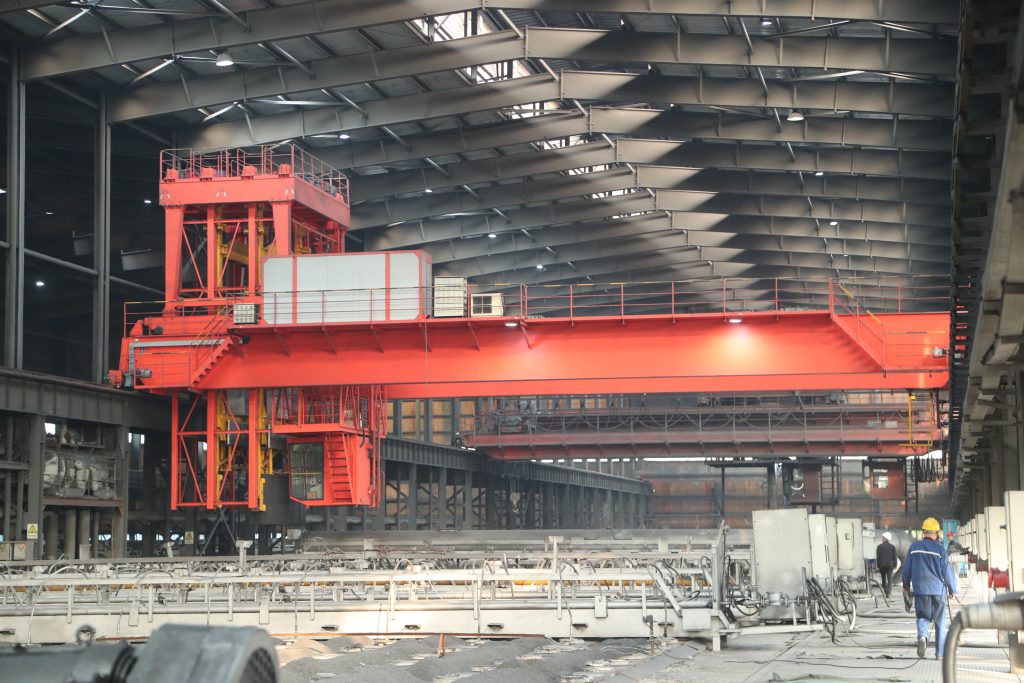

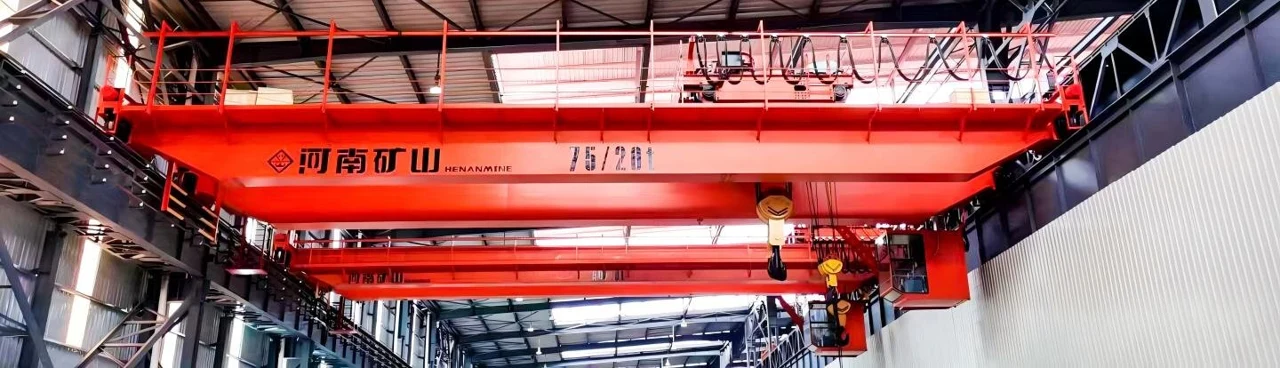

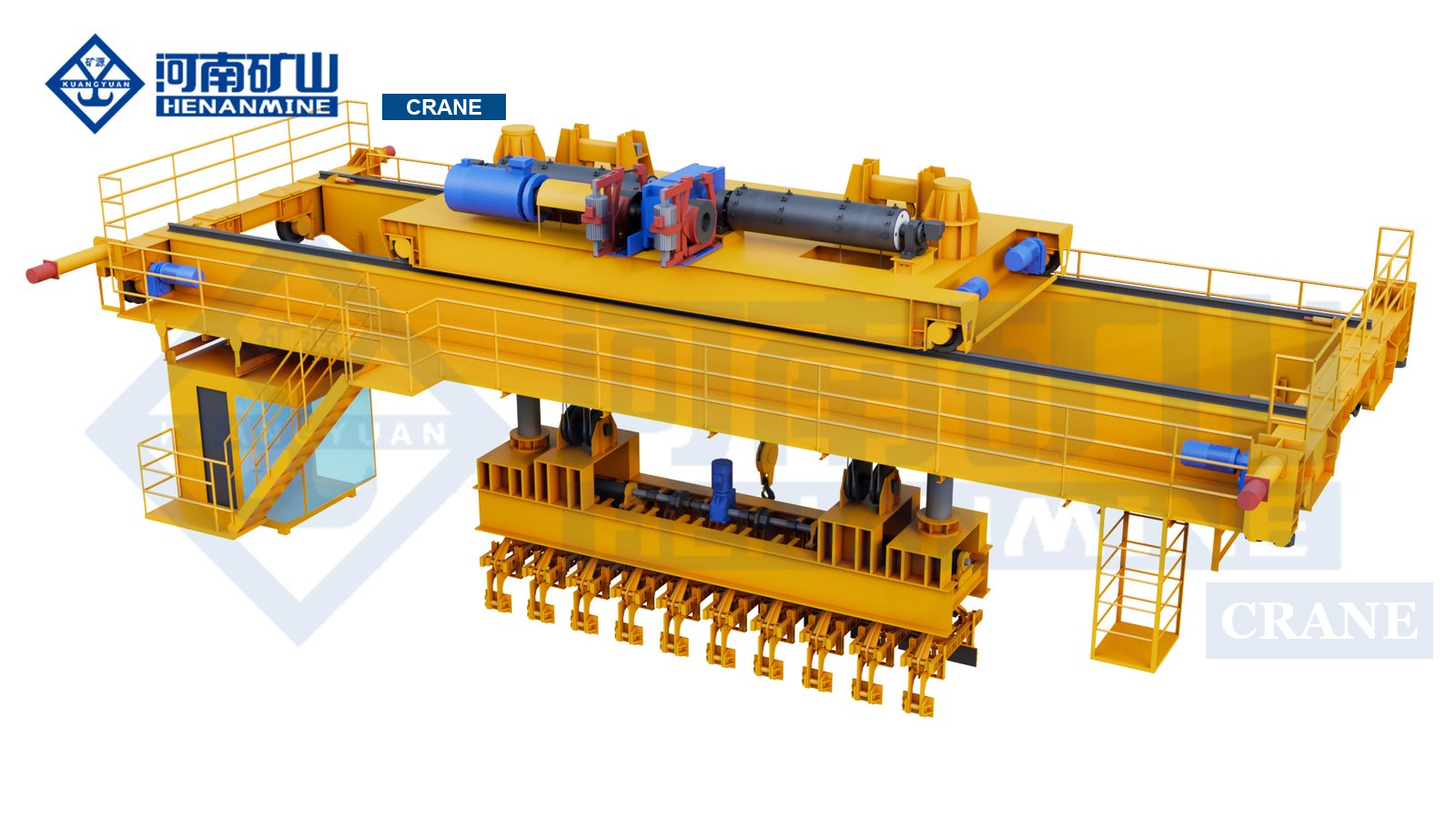
Where it is used
Anode warehouses
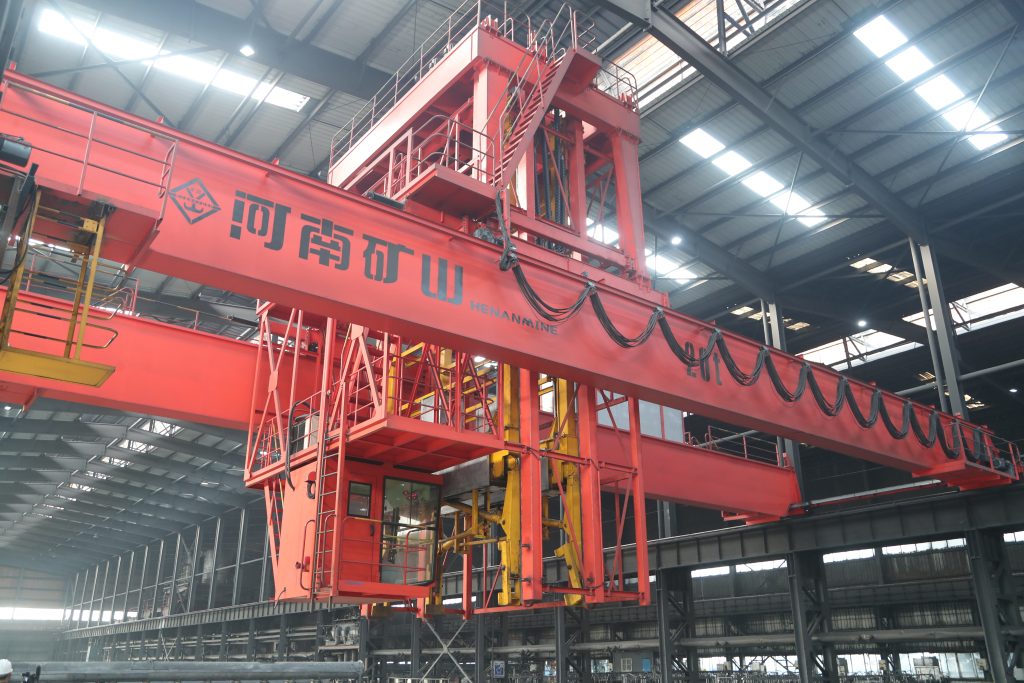
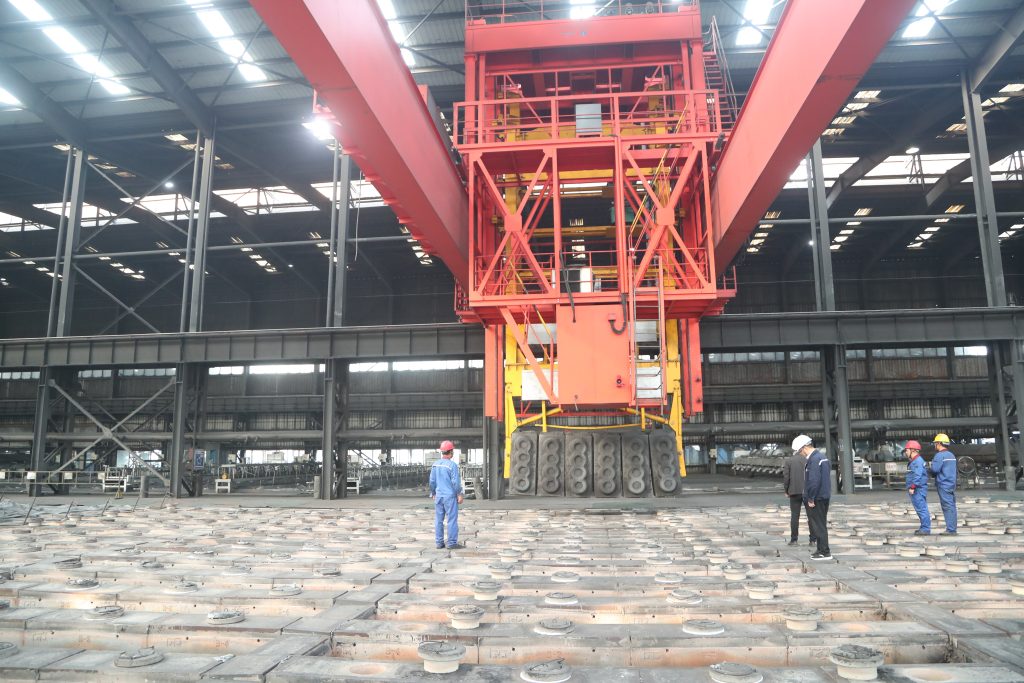
Stack and retrieve green or baked blocks in defined storage positions.
Carbon-plant transfer
Move blocks between production, storage and dispatch areas.
Production logistics
Connect handling movements to the agreed block identification and storage process.
Product features
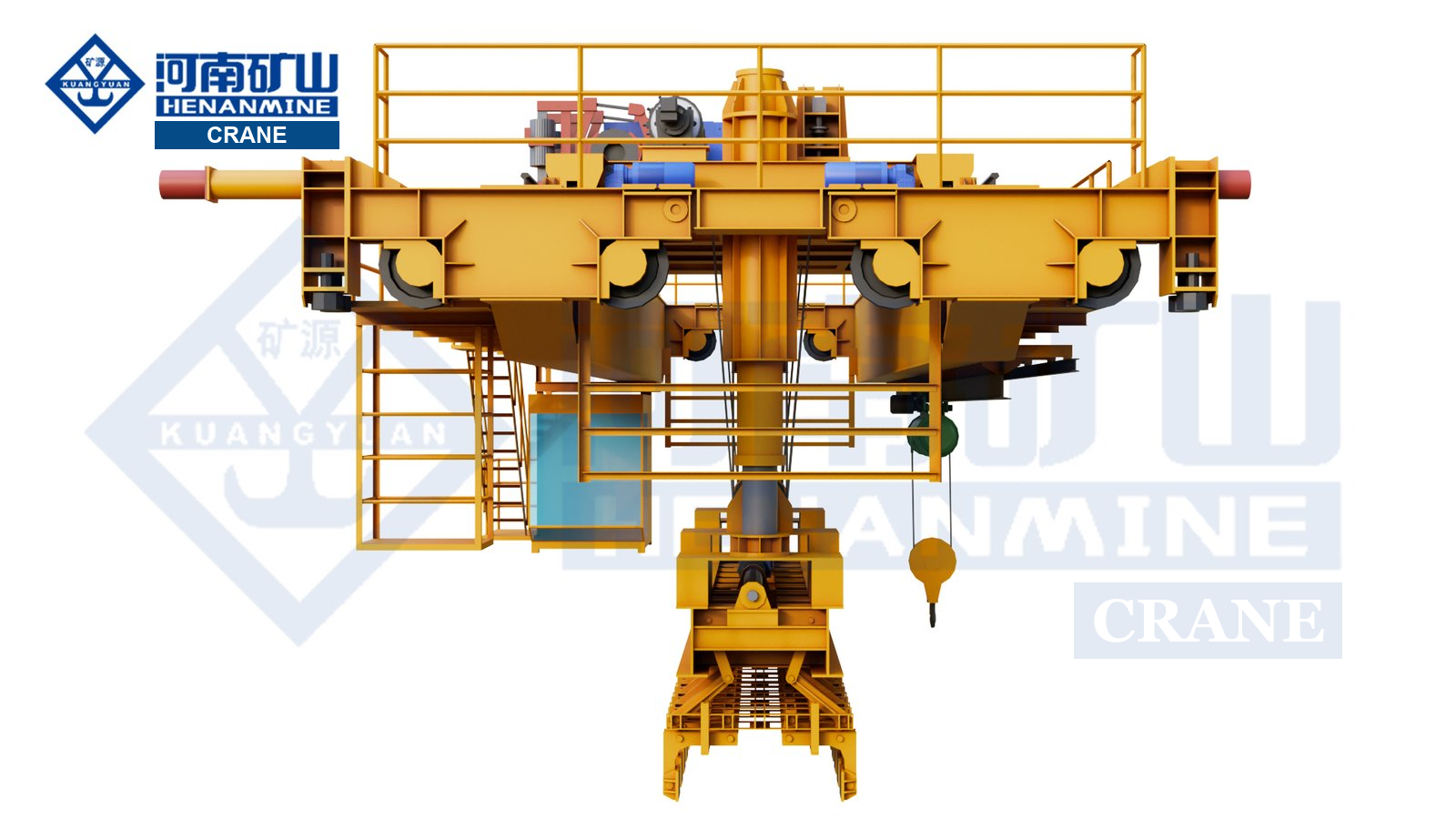
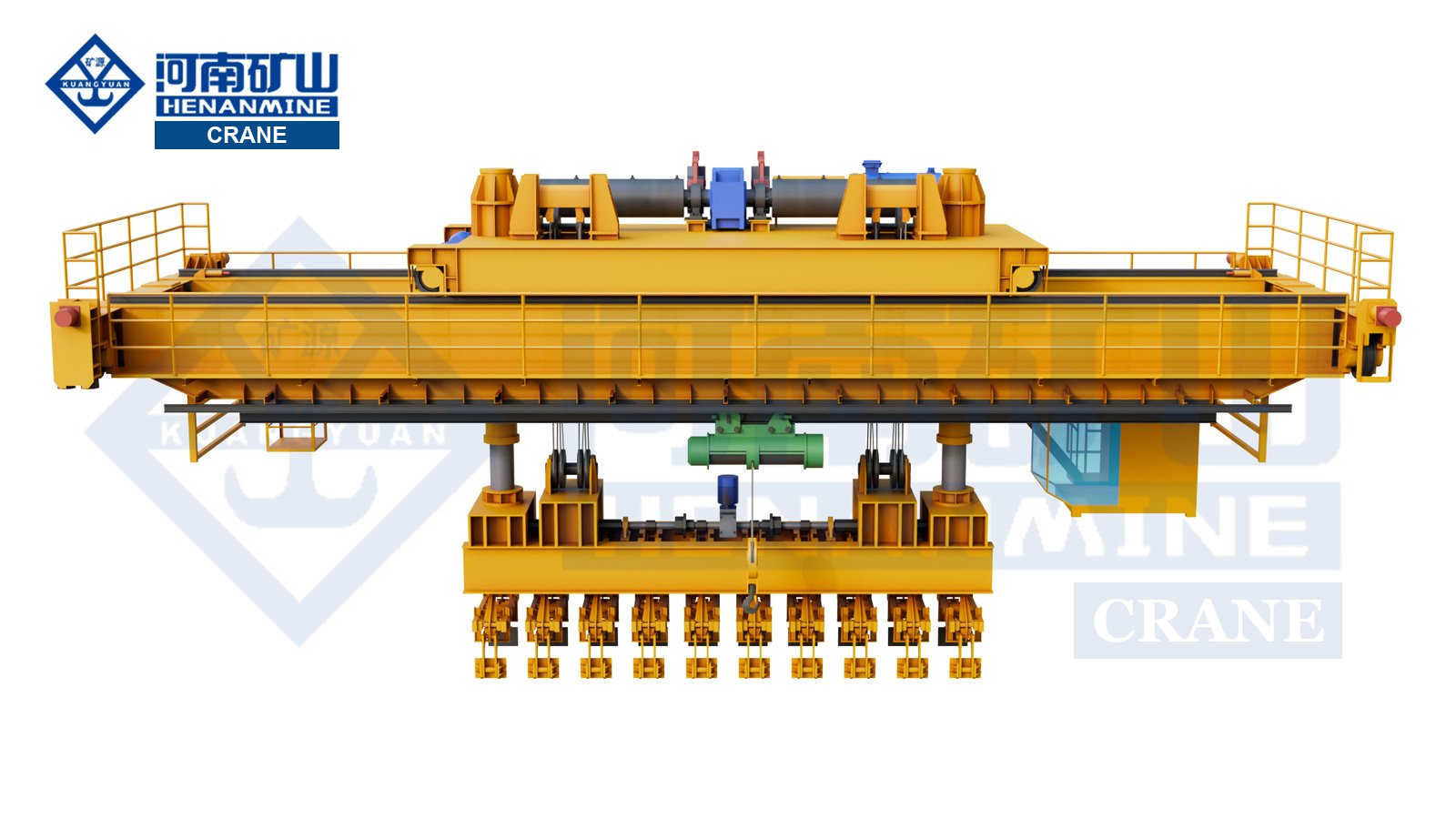
Dedicated block gripping
The clamp profile and gripping force are selected for the actual block geometry.
Storage positioning
Position feedback and control functions support repeatable stacking locations.
Plant interface options
Selected identification and production-system interfaces can support block tracking and movement control.
Technical specifications
Model: YDJ
| Model | YDJ |
|---|---|
| Speed regulation ratio | 1:10 |
| Lifting capacity | 10 – 30 t |
| Span | 13.5-40 m |
| Lifting height | 6 – 20 m |
| Working duty | A6-A8 |
| Hoisting speed | 2.5-6 m/min |
| Protection level | IP54 |
| Power supply | 220-690V, 50/60 Hz |
Published selection ranges are configuration dependent. Rated load, span, height, speed and duty are confirmed together in the project drawing.
Price guide
Request a configuration-specific price for this crane. The quotation is based on the lifting task, site dimensions and the equipment scope below.
What affects the price?
- Rated load, lifting attachment and duty cycle
- Bridge span, lifting height and runway length
- Motion controls, electrical supply and destination requirements
- Freight, runway structure, installation and commissioning scope
Typical configurations
Lifting Attachment
Dedicated contour-following mechanical / hydraulic clamp system
Match the pickup method to the material, load geometry and handling sequence.
Control System
PLC + HMI
Match transfer and final placement to the required operating sequence.
Main Functions
Block gripping, transfer, stacking, retrieval and occasional lifting
Match this arrangement to the load and the complete handling route.
Final capacity, dimensions and operating functions are agreed for your load and site.
Related project experience

Related anode-stacking project
Carbon-block stacking at a baking plant
- 20t carbon-block stacking crane for a Shandong baking plant.
- Two rigid-guide lifting devices.
- Dedicated handling for hot, dusty carbon-production conditions.
Block dimensions, green or baked condition, blocks per pickup and the stacking pattern determine the clamp and guide arrangement.
View project detailsCompare related models
Compare the lifting arrangement and site layout before choosing a model.
Configuration
Special hook crane using insulation pads, sleeves and plates to provide electrical isolation around energized electrolysis equipment.
Consider it when
The lifting process is located in a strong-current electrolysis area where electrical isolation is the primary crane requirement rather than automated carbon-block stacking.
Configuration
Automated grab crane designed around loose bulk-material pickup, transfer and stockpiling rather than solid carbon blocks requiring controlled clamping.
Consider it when
The handled material is loose bulk cargo and continuous automated grab handling is required.
Configuration
Modern hook crane for general machinery and component lifting with controlled motion, low-headroom configuration and expandable positioning functions.
Consider it when
Loads can be handled by conventional rigging and the process does not require an anode-specific multi-point clamp or block traceability.
Information for your quotation
Send green and baked block sizes, weights, allowable contact pressure and gripping restrictions. Include blocks per cycle, stack height, row spacing and storage layout.
Provide span, clamp travel, production rate and shift pattern. For automation, identify position references, plant interfaces, damaged-block handling and operator access requirements.
Frequently asked questions
Can one clamp handle green and baked blocks?
It can be evaluated against both conditions. Provide strength, dimensions and contact limits for each.
Is automatic stacking standard?
Operating mode is project-specific. Define the required pickup, identification and stacking sequence before selecting control functions.
How are blocks protected?
Clamp contour, contact area and force are matched to the block. State permissible pressure and any prohibited gripping surfaces.
Product views and components