









Where it is used
Bunker feeding
Repeat defined pickup and discharge cycles between the material bunker and feed hopper.
Bulk-material storage
Arrange stacking and transfer movements within a controlled stockpile area.
Automated production
Connect suitable handling sequences to the plant production or storage-control system.
Product features
Programmed handling cycles
Selected pickup, travel and discharge sequences can run through the configured control system.
Positioning and sway control
Position feedback and motion control help the grab approach the intended working point.
Manual operating modes
Manual and remote modes support maintenance, adjustments and exceptional handling tasks.
Technical specifications
Model: QZ
| Model | QZ |
|---|---|
| Lifting capacity | 5 – 50 t |
| Span | 10.5 – 31.5 m |
| Lifting height | 6 – 30 m |
| Working duty | A6 – A8 |
| Hoisting speed | 30 – 49 m/min |
| Trolley travel speed | 31 – 45 m/min |
| Crane travel speed | 76 – 94 m/min |
| Protection level | IP54 – IP55 |
| Power supply | 220-690V, 50/60 Hz |
| Control method | Remote / Cabin / Unmanned Auto |
Published selection ranges are configuration dependent. Rated load, span, height, speed and duty are confirmed together in the project drawing.
Price guide
Request a configuration-specific price for this crane. The quotation is based on the lifting task, site dimensions and the equipment scope below.
What affects the price?
- Grab volume, material condition and required throughput
- Positioning system, control interfaces and automatic operating modes
- Motion controls, electrical supply and destination requirements
- Freight, runway structure, installation and commissioning scope
Typical configurations
Material pickup
Four-rope grab on a double-girder bridge
Match bucket selection to bulk density, material behaviour and the required pickup.
Automated handling
Positioning, path planning and electronic anti-sway
Define stockpile, feeding and unloading sequences for the intended process.
Plant interface
Optional WMS or MES integration
Agree the required data exchange and operating responsibility with the plant system.
Final capacity, dimensions and operating functions are agreed for your load and site.
Related project experience
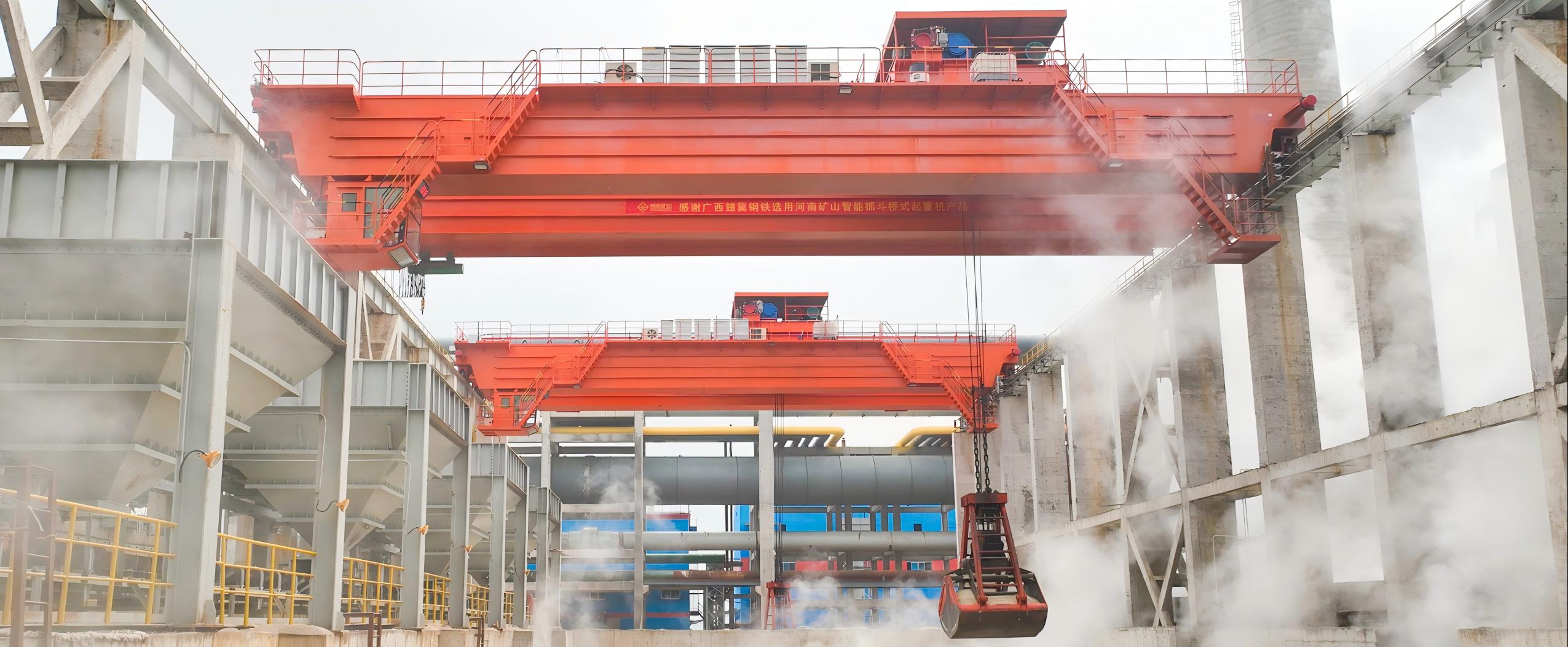
Related grab-handling project
Intelligent grab handling for blast-furnace materials
- Four 32t intelligent grab cranes within a 59-crane plant package.
- PLC control, positioning and anti-sway functions.
- Remote dispatch supports repetitive bulk-material handling.
The illustrated cranes are dedicated intelligent grab installations. A hook/grab or grab/magnet combination needs separate attachment-change procedures and operating modes.
View project details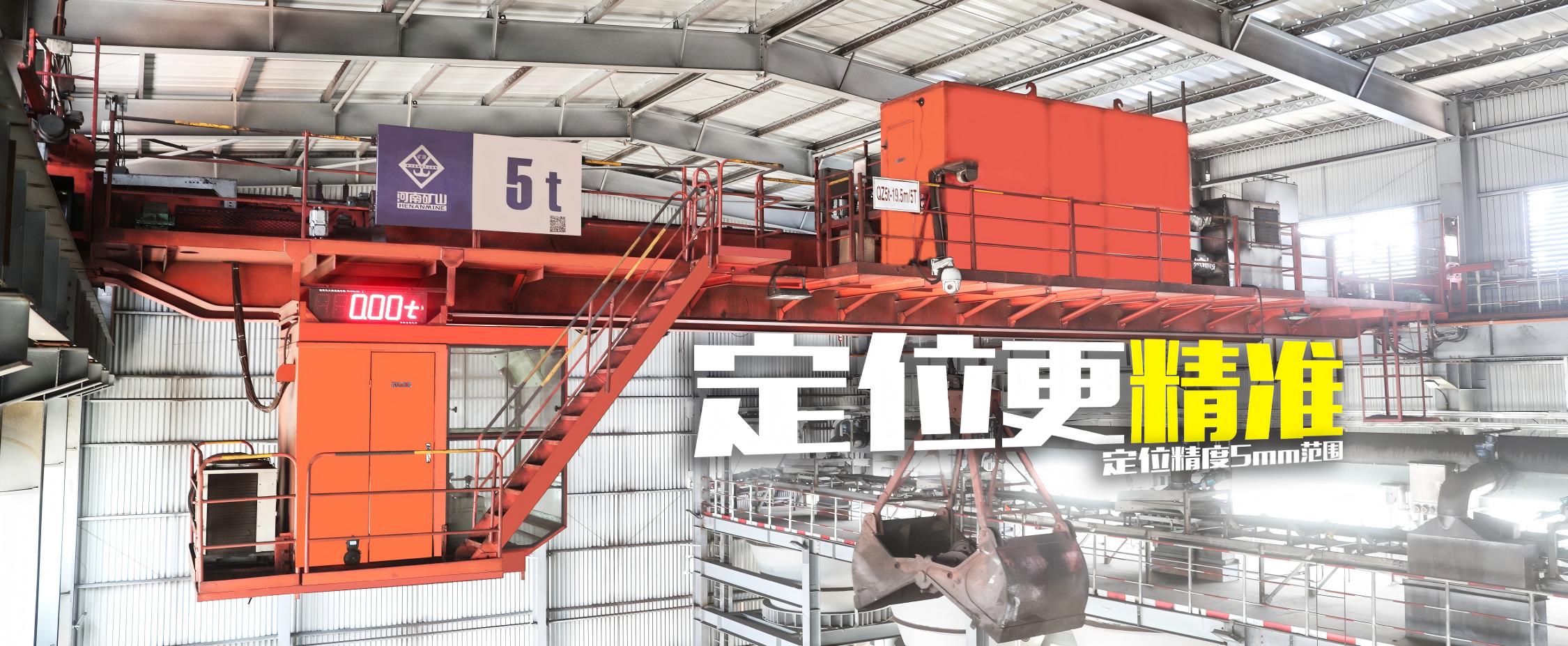
Related automated grab project
Unmanned grab handling at Baowu Shaoguan Steel
- Two unmanned grab cranes for the steelworks.
- 3D scanning supports stockpile recognition.
- Obstacle avoidance and remote monitoring support automatic operation.
Automation is engineered around the material, stockpile geometry, visibility and complete handling cycle. It is an application-specific control scope.
View project detailsCompare related models
Compare the lifting arrangement and site layout before choosing a model.
Configuration
Dedicated four-rope grab crane for repetitive bulk-material handling without requiring the complete intelligent automation package.
Consider it when
Ore, coal, coke, slag or similar materials require a dedicated grab crane, but manual or conventional controlled operation meets the process requirement.
Configuration
Combines a main grab system with an auxiliary electromagnetic lifting function for two different material streams.
Consider it when
One crane must handle both loose bulk material and magnetic steel rather than being optimized primarily for automated bulk-material flow.
Configuration
Changes among hook, grab and electromagnetic operating modes to serve several different material-handling tasks.
Consider it when
Hook loads, bulk materials and magnetic steel share one bay and process flexibility is more important than optimizing the crane for continuous automated grab cycles.
Frequently asked questions
Is grab volume equal to delivered payload?
No. Payload depends on bulk density, fill behavior and material conditions, together with the permitted suspended load and grab weight.
What is needed for WMS or MES integration?
Define exchanged data, job dispatch, location information, handshakes, communication protocol and fallback behavior. Agree which functions belong to the crane and which to the plant system.
Product views and components


