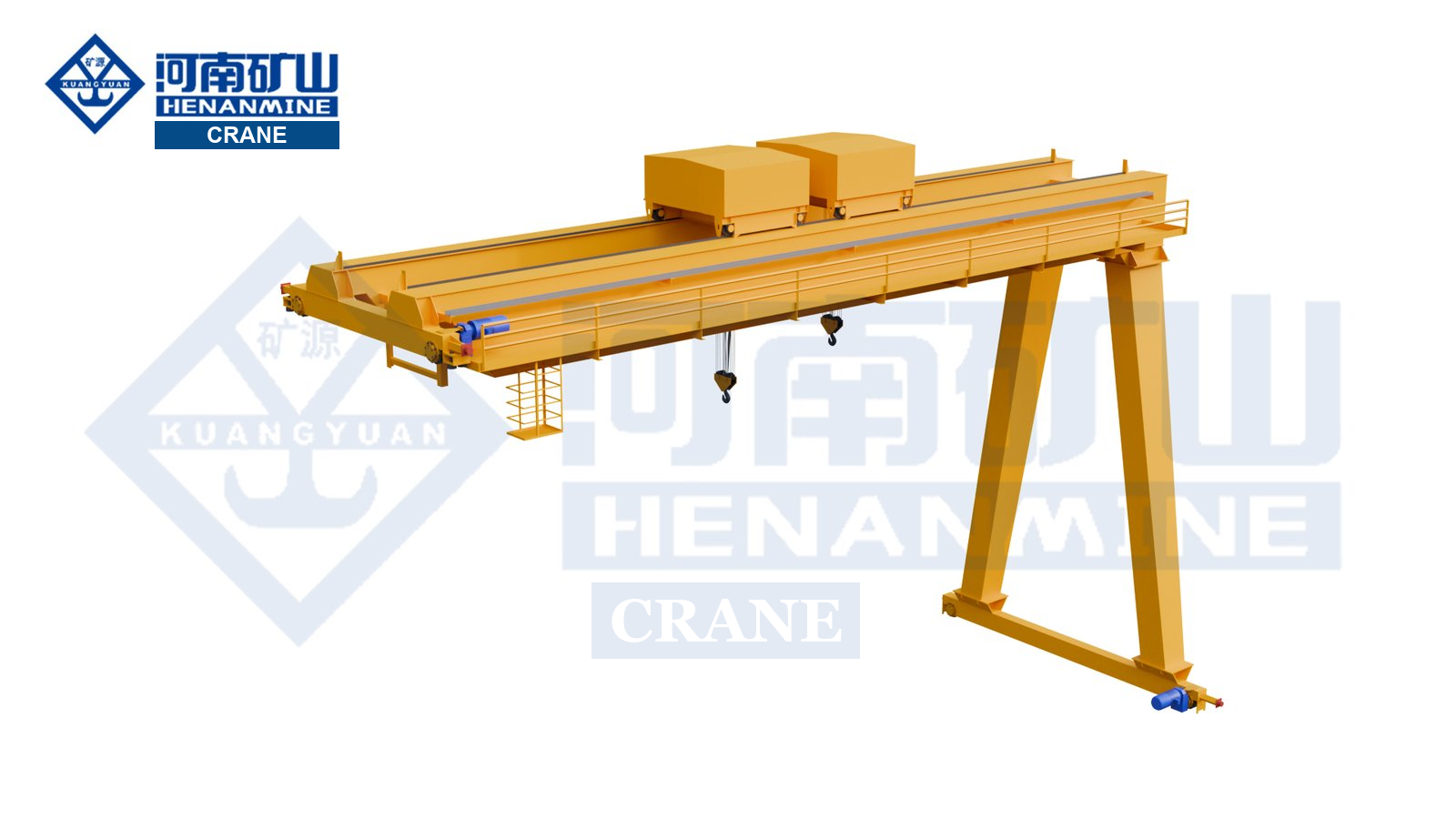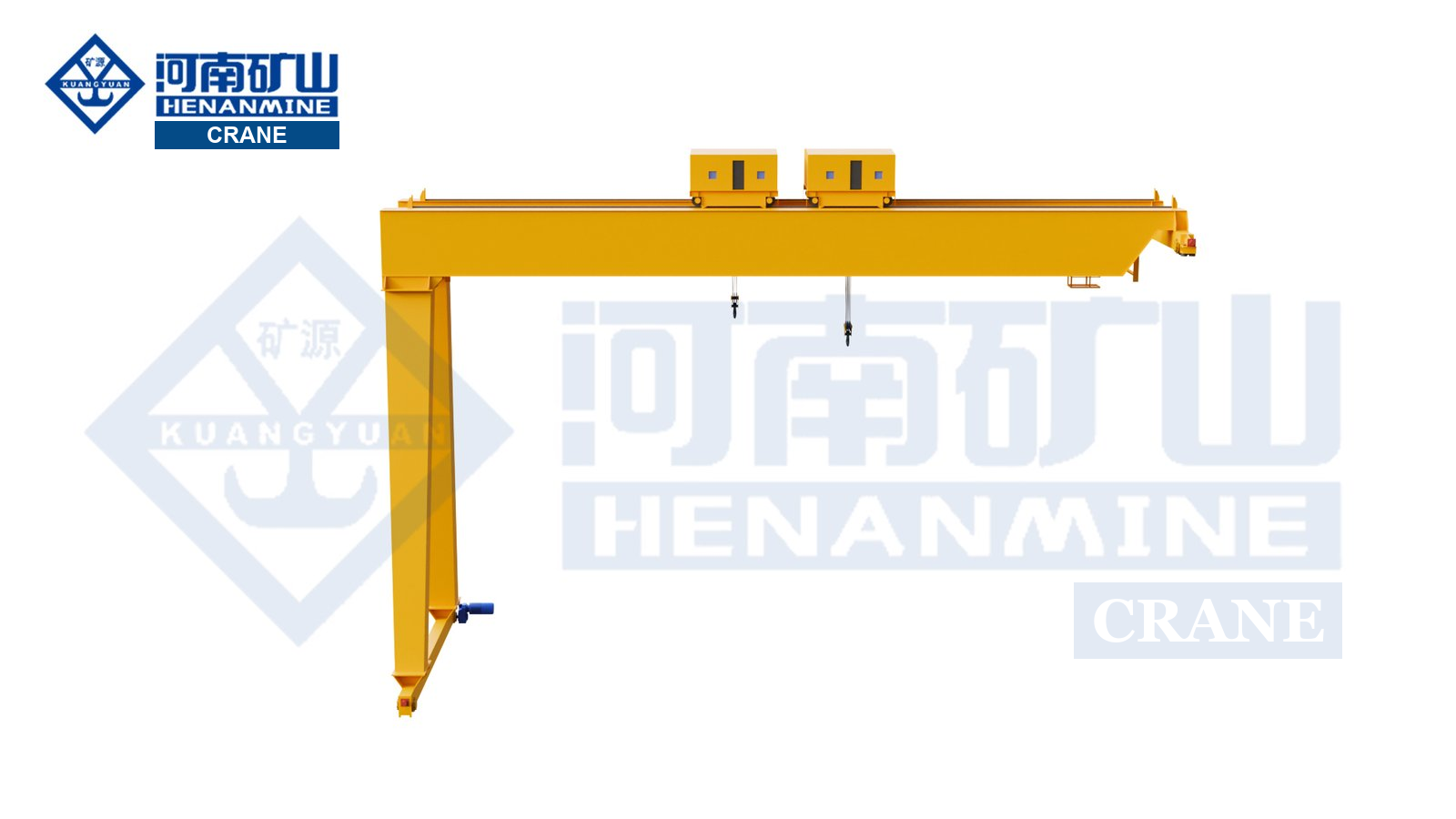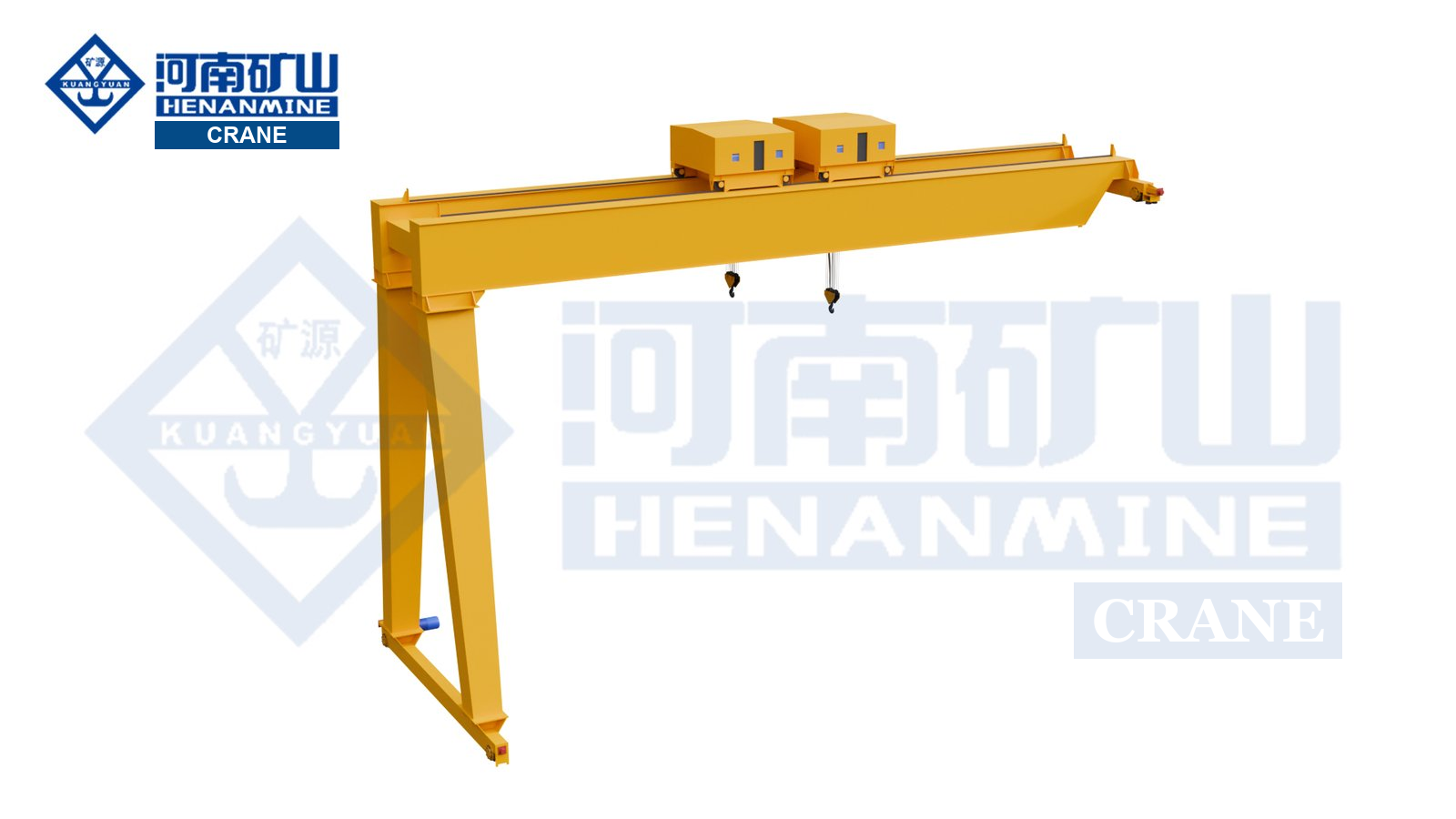
Where it is used
Long-load assembly
Support components at defined lifting points beside an assembly area.
Workshop-side transfer
Serve an area connected to an elevated building runway.
Storage and dispatch
Move large fabricated goods along a defined loading corridor.
Product features
Two trolley positions
Match lifting-point spacing to the approved load geometry.
Semi-gantry support
One elevated runway reduces ground-level supporting structure.
Coordinated control options
Communication and frequency-controlled drives support a specified synchronized handling sequence.
Technical specifications
Model: MGBE
MGBE — published hnkscrane.net trolley-selection reference
Published selection reference from hnkscrane.net for the named model. These are separate catalogue options, not one guaranteed combination. Your rated load, dimensions, duty and speeds are confirmed together in the quotation and approval drawing. Trolley ratings are shown individually. Coordinated lifting capacity depends on load sharing, trolley positions, the structure and the approved lifting case; it is not obtained by simply adding the trolley ratings.
| Reference capacity per trolley | 5 / 10 / 16 / 20 / 32 / 50 t |
|---|---|
| Reference span | Approx. 10.5–30 m |
Equipment arrangement
| Model | MGBE |
|---|---|
| Working class | A3–A8 |
| Travel control | Variable-frequency drive |
| Coordination options | Industrial Ethernet / communication-linked crane control |
| Runway arrangement | One elevated runway + one ground rail |
| Trolley quantity | Two |
Published ranges depend on the selected configuration. Rated load, span, lifting height and duty are confirmed together in your quotation and approval drawing.
Price guide
The quotation depends on both trolley loads, the coordinated lifting cases, elevated runway interface and ground-side structure.
What affects the price?
- Complete suspended load and lifting attachment
- Span, hook height and required operating cycle
- Special process controls and environmental protection
- Runway, installation and destination supply scope
Typical configurations
Lifting arrangement
Two trolley lifting positions
Establish independent loads and any permitted combined lifting case.
Motion control
Variable-frequency control
Specify transfer and placement movements for the handling sequence.
Runway arrangement
One elevated building runway and one ground rail
Check building reactions, ground-rail clearance and the complete hook coverage.
Final capacity, dimensions and operating functions are agreed for your load and site.
Compare related models
Compare the lifting arrangement and site layout before choosing a model.
Configuration
Full rail-mounted gantry structure with two trolley systems capable of independent or combined operation.
Consider it when
Used where both crane sides should be ground-supported and a building-side elevated runway is unnecessary.
Configuration
Full gantry structure with two trolley positions and L-shaped legs providing increased load-passage clearance.
Consider it when
Used where long or rotating loads must pass through the gantry-leg area.
Configuration
Two trolley positions combined with a truss bridge and segmented transportable structure.
Consider it when
Used for wide yards, long loads or sites where transportation access favors segmented crane delivery.
Information for your quotation
Provide load dimensions, total and per-trolley loads, center of gravity and lifting-point spacing. Include hook-height tolerance and the sequence for combined lifting.
Send building runway drawings, ground foundation information, span, hook heights and travel length. Add operating frequency, power supply, controls and any requirements to work with another crane.
Frequently asked questions
Can both support systems be existing structures?
Possibly, after checking reactions, geometry and condition. Elevated supports and ground foundations must each be verified.
Can two trolleys handle different tasks?
Independent operation can be configured within defined zones and total bridge loading limits.
Is linked operation automatic?
Linked movement requires specified controls, communication, interlocks and load cases. State the complete operating sequence for engineering review.
Product views and components