


Where it is used
Bulk terminals
Handle bulk cargo with a compatible grab and cargo-handling plan.
Multipurpose berths
Move steel, machinery and general cargo with the selected lifting attachment.
Shipyards
Lift marine equipment and fabricated assemblies between quay and vessel.
Product features
Open quay access
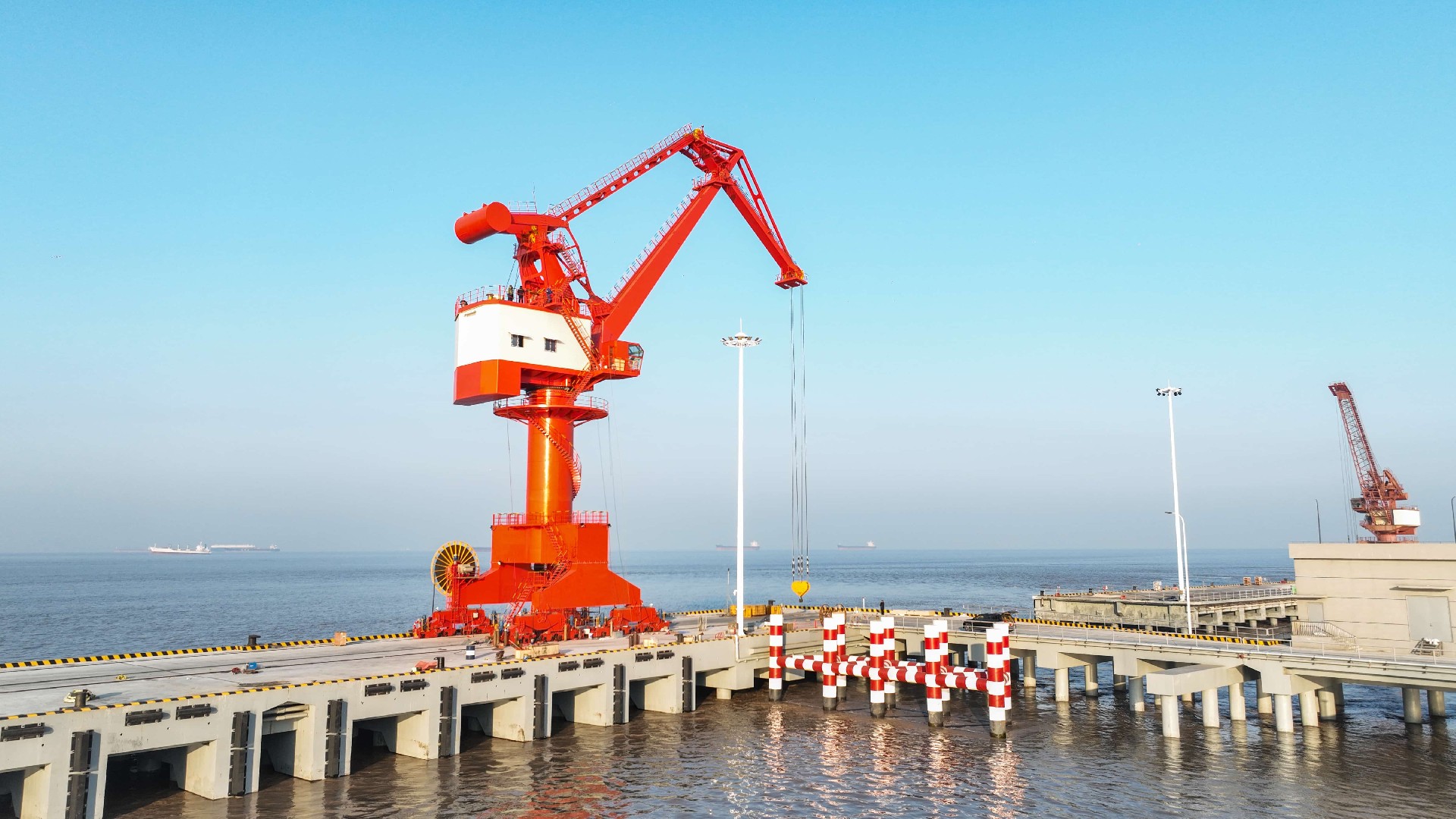
The portal creates clearance for vehicles or railway traffic beneath the crane.
Reach across the berth
Luffing and slewing transfer cargo between ship and landside positions.
Cargo attachments
Hook, grab or spreader arrangements match the cargo and operating mode.
Technical specifications
Reference range — published portal harbor crane catalogue
Published comparator configuration; the figures describe the named reference equipment. The proposed Henan Mine Crane configuration is selected separately for your load and site.
| Capacity range | 5–400 t across different configurations |
|---|---|
| Working radius | 10–50 m |
| Lifting height | 8–40 m |
| Working class | A7–A8 |
| Hoisting speed | 0.5–6 m/min |
| Slewing speed | 0.5–1.5 r/min |
| Rail travel | 5–25 m/min |
Equipment arrangement
| Crane form | Portal-mounted slewing crane |
|---|---|
| Travel system | Quay rails |
| Main motions | Hoisting, luffing, slewing and rail travel |
| Cargo interfaces | Hook, grab or selected spreader |
| Working reach | Defined by the load-radius chart |
| Portal clearance | Sized for vehicle or rail passage |
| Operator position | Cab or specified remote arrangement |
| Site interfaces | Rail gauge, wheel loads, power and anchoring |
Price guide
A published 40 t portal-crane offer gives an equipment budget of USD 566,200–825,000 per unit. This is a market comparison for a 40 t-class machine; working radius and delivery scope must match before bids can be compared.
| Configuration | Equipment budget | Supply scope |
|---|---|---|
| 40 t portal harbor crane — published supplier offerCapacity: 40 t · Arrangement: Working radius not stated with priceKaiyuan commercial offer; reference budget, not a quotation for this product. | USD 566,200–825,000per unit | Advertised crane equipment per unit; freight, quay rails, foundations, installation and taxes need a separate scope. |
Indicative market budgets for planning, not a quotation from Henan Mine Crane. Freight, taxes, runway steel and site installation are additional unless included in the scope shown. Request a quotation for your selected configuration.
What affects the price?
- Capacity at maximum working radius
- Hook, grab or spreader duty
- Rail gauge and portal clearance
- Motion performance and marine protection
- Delivery and installation scope
Typical configurations
Cargo pickup
Hook or grab operating mode
Match the lifting attachment to general cargo or bulk handling.
Working envelope
Portal-mounted slewing and luffing crane
Use working radius and cargo path when comparing load charts.
Quay interface
Rail travel with clearance beneath the portal
Plan vehicle access, rail positions and berth handover areas together.
Final capacity, dimensions and operating functions are agreed for your load and site.
Related project experience

Related harbor portal-crane project
40t portal crane for mixed port cargo
- 40t rail-mounted portal crane.
- Handles mixed cargo including wind-energy components and containers.
- Coordinated slewing, luffing and travel with VFD control.
Portal-crane capacity must be checked against working radius and attachment weight. Confirm vessel interface, quay geometry and the complete cargo mix.
View project detailsCompare related models
Compare the lifting arrangement and site layout before choosing a model.
Configuration
Rail-mounted portal with slewing and luffing boom.
Consider it when
Multipurpose berth handles bulk cargo, steel, machinery or mixed cargo.
Configuration
Dedicated quay crane with trolley travel along a large waterside boom.
Consider it when
High-throughput container terminal requires repetitive vessel-to-shore container handling.
Configuration
Fixed-rail gantry spanning container rows and transfer lanes.
Consider it when
Container yard or railway terminal requires high-density fixed-block stacking.
Frequently asked questions
Why must capacity be linked to working radius?
The structural and stability demands change with radius. The required load-radius operating cases must be included in the approved crane configuration.
Can one portal crane handle both hook and grab work?
It can be considered as a defined configuration. Specify both cargo duties, attachments, changeover requirements and their operating cycles before selecting the mechanisms and controls.