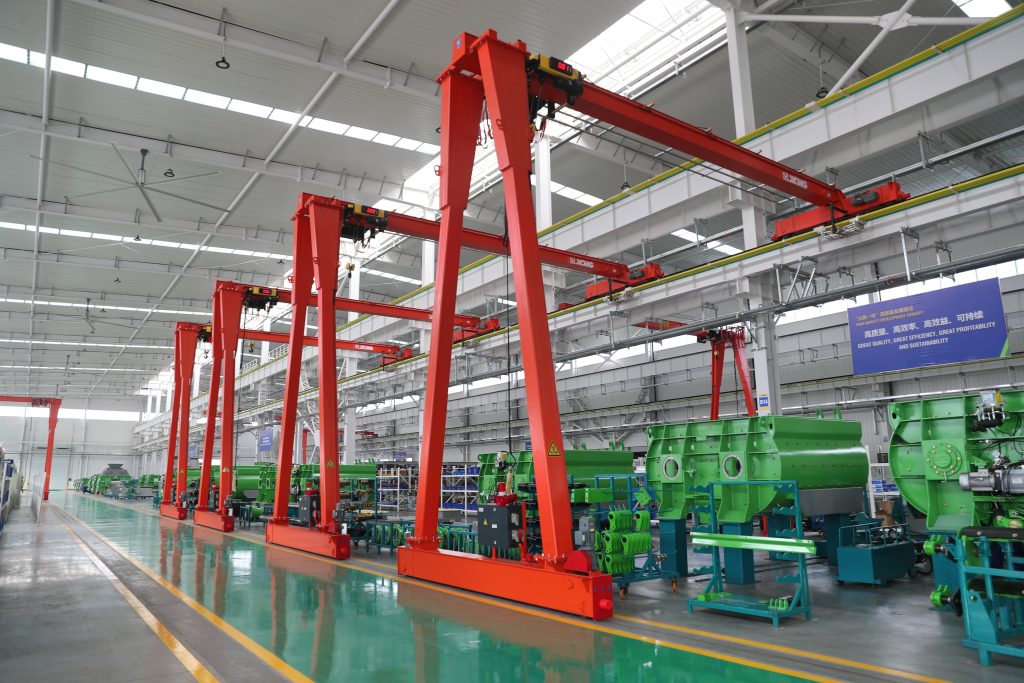
Where it is used
Workshop edges
Serve a production area beside an existing elevated crane runway.
Assembly and maintenance
Move components and equipment through designated assembly positions.
Building-to-yard transfer
Connect adjacent handling positions where the elevated and ground runway arrangement is suitable.
Product features
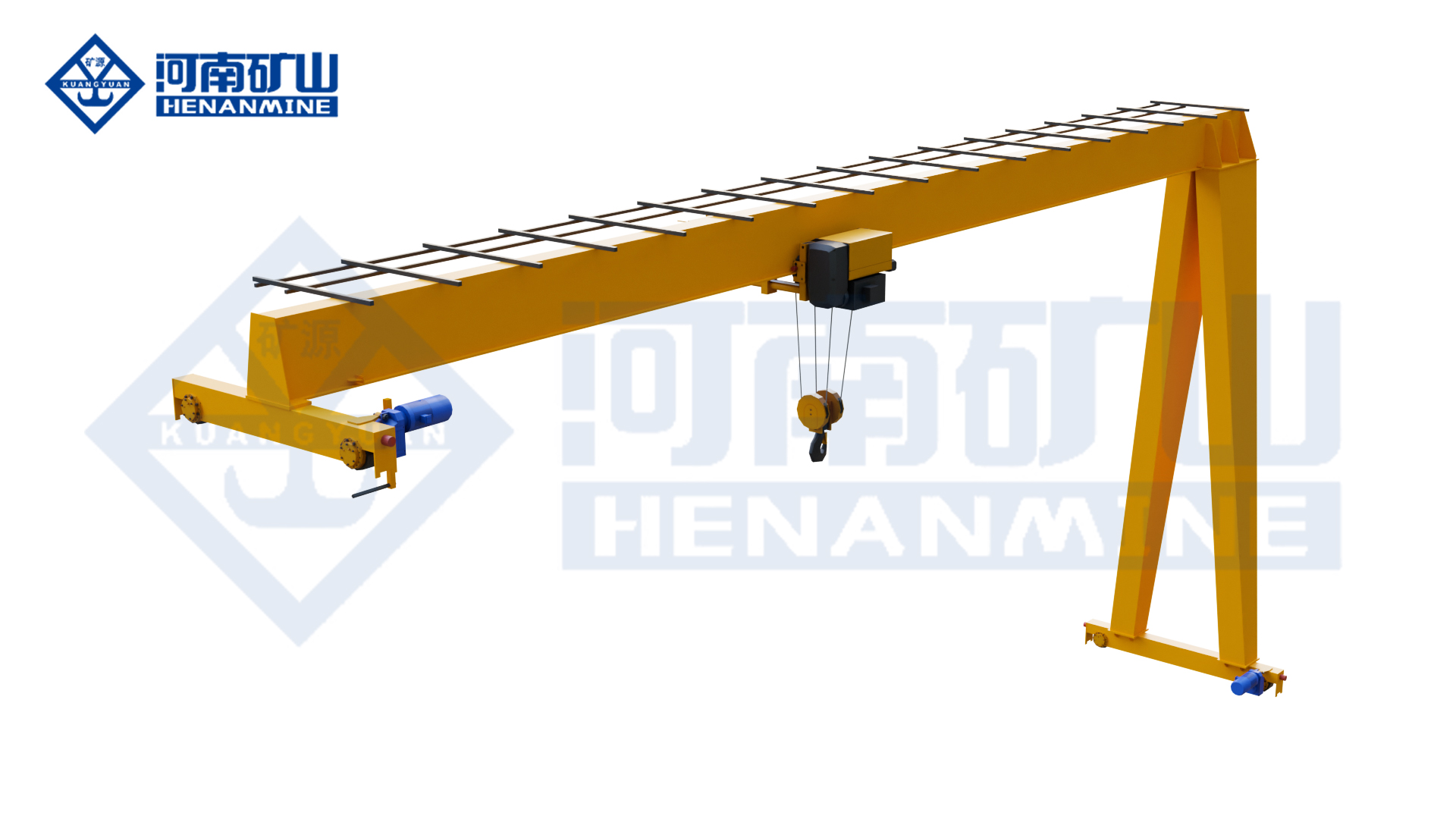
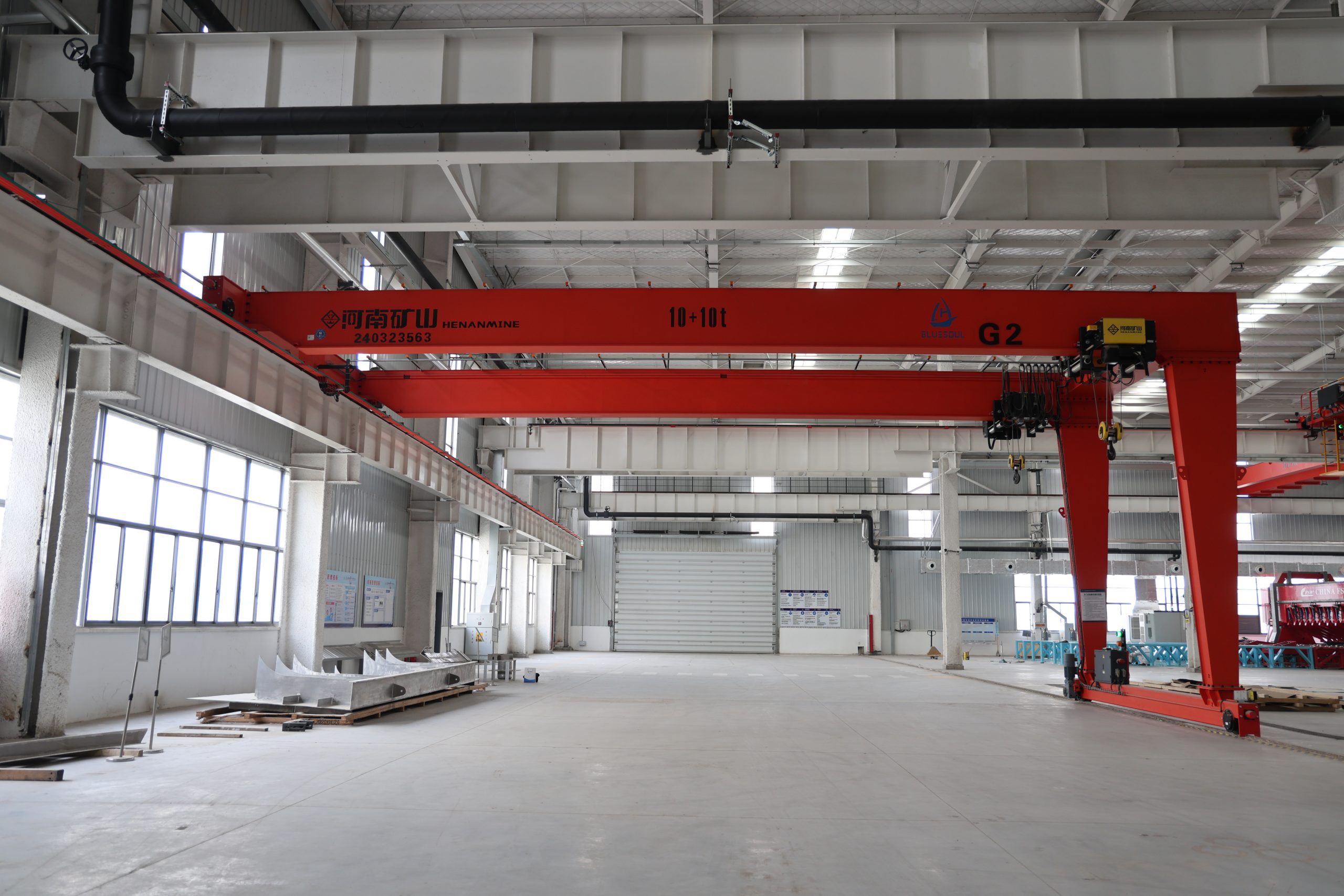
One ground-running side
A semi-gantry layout reduces the number of ground-level supporting legs.
Variable-speed positioning
Frequency-controlled lifting and travel support smooth starting and placement.
Integrated drives
Three-in-one travel drives combine motor, reducer and brake in a compact arrangement.
Technical specifications
Model: KSMB
| Rated capacity | 1–32 t |
|---|---|
| Span | 6–35 m |
| Lifting height | 4–20 m |
| Speed control | VFD; 1:10 speed ratio |
| Model | KSMB |
| Lifting mechanism | Electric hoist |
| Working class | A3–A5 |
| Speed-control ratio | 1:10 variable-frequency range |
| Runway arrangement | One elevated runway + one ground rail |
Published ranges depend on the selected configuration. Rated load, span, lifting height and duty are confirmed together in your quotation and approval drawing.
Price guide
Public supplier equipment-price references for the stated configuration, checked October 2026. These figures support early budgeting; your quotation will be based on the selected crane and supply scope. Freight, import duties, runway rails, foundations, installation and commissioning are additional unless included in the quotation.
| Configuration | Equipment budget | Supply scope |
|---|---|---|
| Single- and double-girder semi-gantry familyCapacity: 2–40 t · Span: 15–30 m · Lift: 6 / 9 / 12 m and project optionsA broad comparable family range spanning different capacities and girder designs; it is not a price for every model or every 40 t configuration. | USD 6,000–100,000per unit | Crane equipment reference; confirm inclusions and destination costs. |
Indicative market budgets for planning, not a quotation from Henan Mine Crane. Freight, taxes, runway steel and site installation are additional unless included in the scope shown. Request a quotation for your selected configuration.
What affects the price?
- Rated load, span and lifting height
- Working class, lifting speed and operating cycle
- Hoist, controls, cantilever and outdoor protection
- Delivery destination and installation scope
Typical configurations
Lifting Mechanism
Electric hoist
Select the lifting unit around the load, placement task and operating cycle.
Control Options
Cab / pendant / wireless remote / PLC-linked control
Select the operator position, visibility and control functions required for pickup, travel and placement.
Runway Arrangement
One elevated building-supported runway + one ground-supported rail
Check useful hook coverage, clearances and support reactions on your site layout.
Final capacity, dimensions and operating functions are agreed for your load and site.
Compare related models
Compare the lifting arrangement and site layout before choosing a model.
Configuration
Double-main-girder electric-hoist semi-gantry arrangement with A3–A5 duty and compact geometry.
Consider it when
Low workshops or narrow production areas favor a compact double-main-girder electric-hoist semi-gantry configuration.
Configuration
New-type double-girder semi-gantry platform with compact external dimensions and integrated travel-drive arrangement.
Consider it when
Headroom, side clearance and double-girder geometry are major constraints within the building.
Configuration
Full gantry arrangement with ground-supported crane structure rather than an elevated building-supported runway on one side.
Consider it when
Independent ground support is preferred and the building should not carry one side of the crane reactions.
Plan your crane specification
Provide maximum and typical suspended loads, load dimensions, attachment weight and the proportion of heavy and light lifts. Describe pickup and placement positions, transfer distances and any required low-speed positioning.
Send a workshop plan and cross-section showing runway elevations, span, travel length, roof obstructions and the required hook approaches to walls and equipment. Include elevated runway and column drawings, allowable reactions and ground-rail foundation information.
State operating hours, cycle frequency, power supply, control preference and maintenance-access requirements. Identify installation constraints and process interfaces so the lifting system, building support and ground works can be assessed together before the crane arrangement is confirmed.
Frequently asked questions
Does KSMB require a suitable building runway?
Yes. One side transfers crane reactions into an elevated runway and building supports. Their strength, connections and geometry must be verified alongside the ground rail and foundation.
Can lighter loads move faster?
The variable-speed arrangement can be configured around the load condition within its operating limits. Specify the load spectrum and desired speeds so the proposed motion behaviour matches the process.
How does KSMB differ from KSMH?
KSMB uses one elevated building-supported runway and one ground-supported side. KSMH is a full gantry with ground support on both sides. Compare the available support structure, floor space and required hook coverage.
Product views and components