Where it is used
Aircraft assembly
Handle production equipment and components across a wide manufacturing hall.
Aircraft maintenance
Provide overhead lifting above service positions while leaving aircraft and access routes unobstructed.
Wide industrial halls
Cover broad work areas where a conventional two-runway suspension layout is unsuitable.
Product features
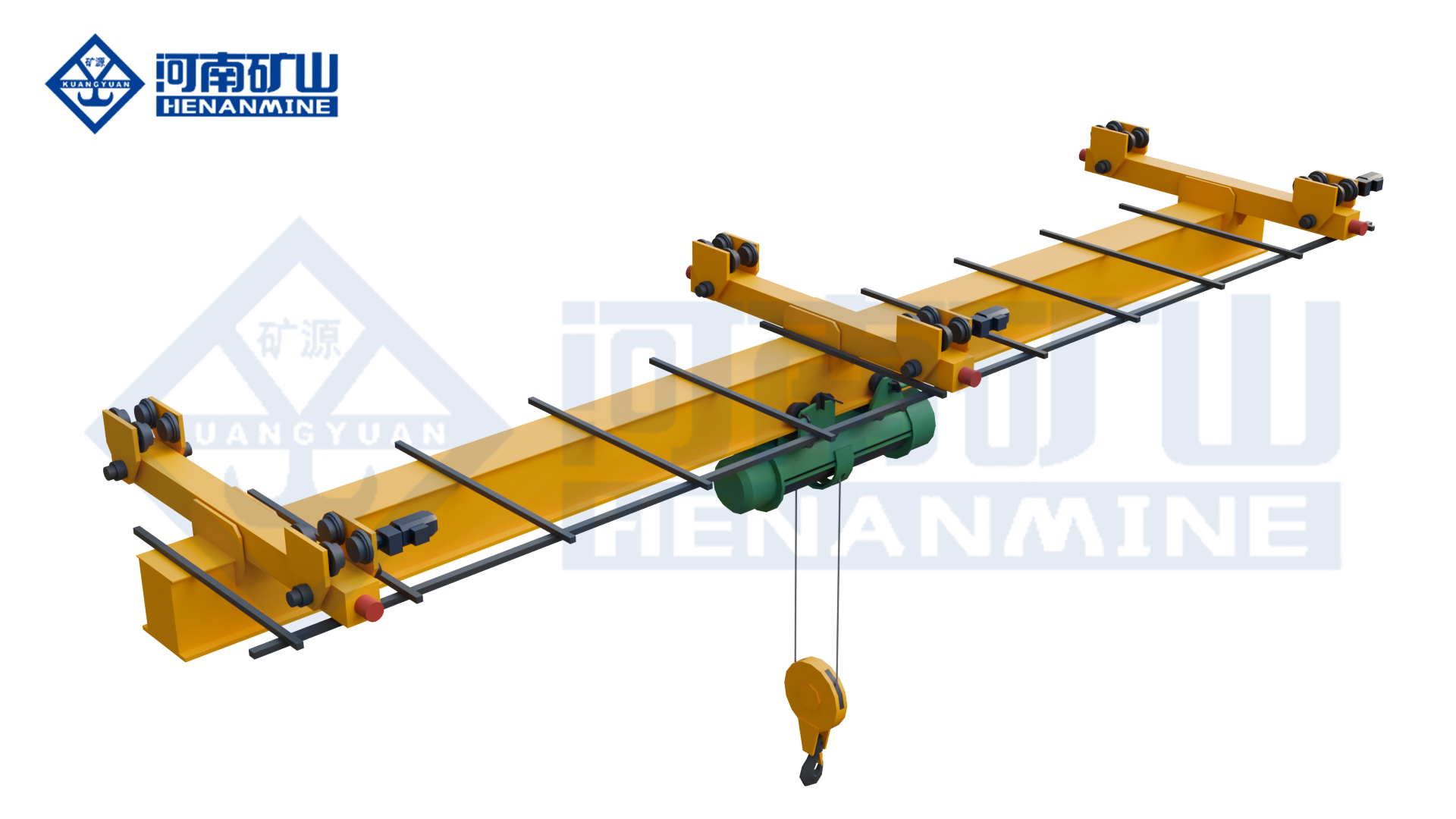
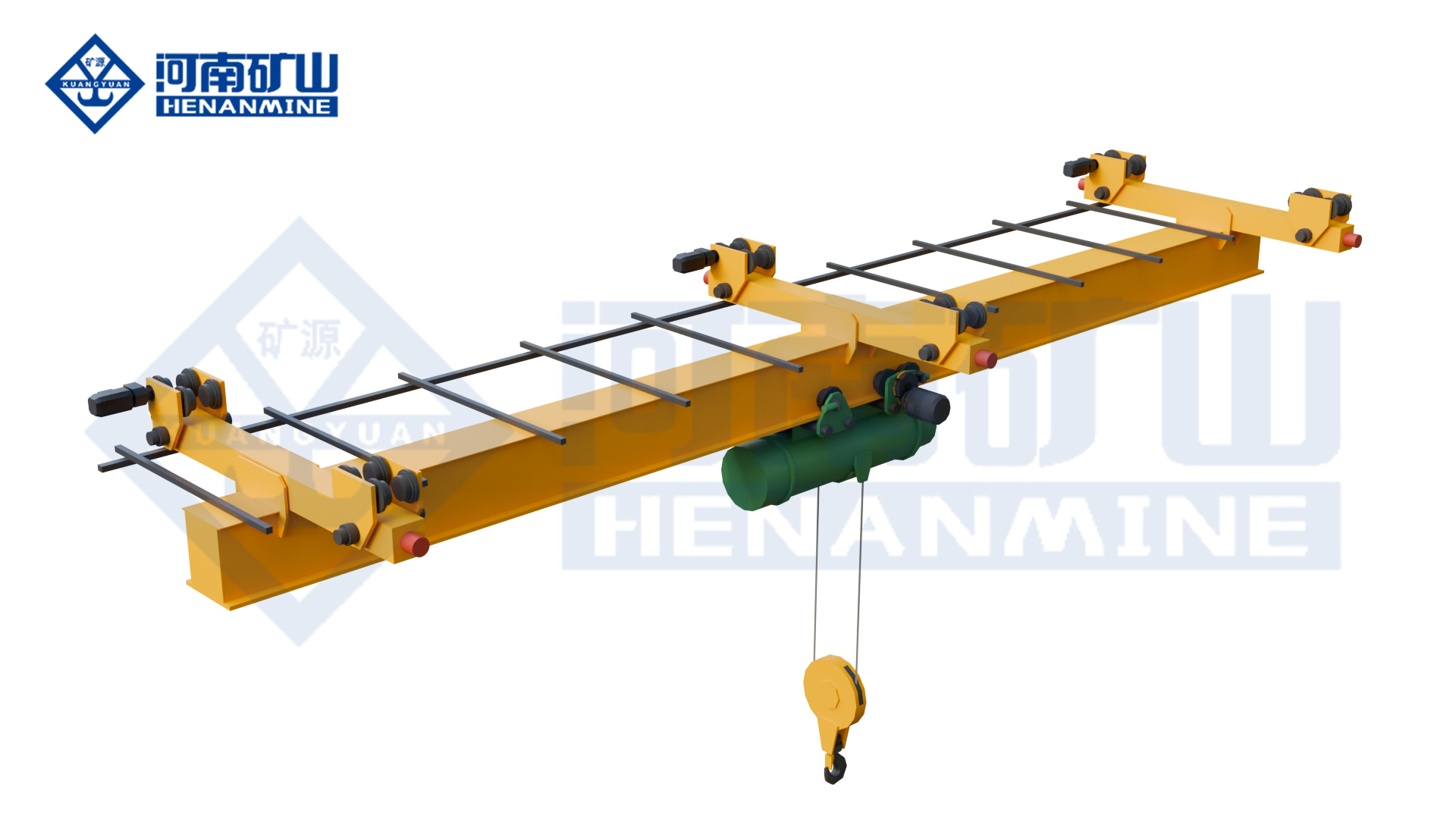
Multiple support points
Several overhead tracks distribute the bridge support reactions across the verified building structure.
Wide-area coverage
The bridge and runway arrangement is designed around the full working area and service positions.
Hazard-matched configuration
Explosion protection, drive coordination and track connections are selected together for the classified area.
Technical specifications
Model: BLXD
| Model | BLXD |
|---|---|
| Runway arrangement | Multiple overhead suspension tracks |
| Bridge arrangement | Multi-point suspended single-girder crane |
| Application | Wide production or maintenance halls with a defined hazardous-area requirement |
| Support concept | Distributed suspension reactions across verified building support points |
| Published BLXD capacity options | 0.5, 1, 2, 3, 5 or 10 t |
| Published BLXD single-span range | 3–16 m per span |
| Published BLXD lifting-height options | 6 m standard; 9, 12, 18, 24 or 30 m options |
| Published BLXD working-duty options | A3 or A4 |
| Published BLXD suspension-point options | 3, 4, 5, 6 or 8 suspension points |
Published selection ranges are configuration dependent. Rated load, span, height, speed and duty are confirmed together in the project drawing.
Price guide
Request a configuration-specific price for this crane. The quotation is based on the lifting task, site dimensions and the equipment scope below.
What affects the price?
- Number and spacing of suspension tracks
- Support reactions, bridge coverage and drive coordination
- Motion controls, electrical supply and destination requirements
- Freight, runway structure, installation and commissioning scope
Typical configurations
Lifting Mechanism
Explosion-proof lifting system configured according to project requirements
Select the lifting unit around the load, placement task and operating cycle.
Travel System
Multi-point synchronized travel configuration
Check the complete travel route, handover positions and supporting surface.
Bridge Configuration
Multi-point single-girder suspended bridge
Match this arrangement to the load and the complete handling route.
Final capacity, dimensions and operating functions are agreed for your load and site.
Compare related models
Compare the lifting arrangement and site layout before choosing a model.
Configuration
Explosion-proof single-girder suspended crane using a conventional suspended-runway arrangement rather than a wide multi-point bridge.
Consider it when
Hazardous-area suspended lifting is required but building width does not require a multi-point support system.
Configuration
Modern single-girder suspended crane emphasizing VFD travel, dual-speed lifting and controlled positioning rather than explosion protection or ultra-wide multi-point coverage.
Consider it when
Precision assembly and controlled load positioning are the primary requirements in a non-classified suspended-crane application.
Configuration
Multi-point double-girder suspended crane for ultra-wide buildings without the BLXD explosion-protected equipment requirement.
Consider it when
Ultra-wide multi-point coverage is required in an ordinary industrial environment or the project favors a double-girder suspended bridge.
Plan your crane specification
Send the building structural grid, roof-truss and support-beam drawings, proposed runway positions and allowable support reactions. Include any deflection limits, overhead services and restrictions on adding or changing building supports.
Show the required hook coverage, lifting height, travel length and locations where equipment or process structures obstruct movement. State the complete suspended load, attachment details, lifting frequency and positioning needs.
Provide the hazardous-area classification, substances present, temperature requirements and required compliance documentation. These inputs allow the support layout, hoist arrangement, travel coordination and protection scope to be reviewed as one installation.
Frequently asked questions
Does the BLXD require floor-mounted runway columns?
Its tracks are suspended from approved roof or building supports. Whether additional strengthening or support work is needed depends on the existing structure and calculated crane reactions.
Can any wide workshop roof carry this crane?
No. Support locations, structural capacity and deflection must be verified for the actual crane and load. A building grid alone is insufficient to establish suitability.
Is there a standard travel synchronisation tolerance?
The allowable difference must be established for the track layout and crane design. Include relevant geometry, structural movement and operating requirements when defining acceptance criteria.
Product views and components