

Smart Steel Warehouse Crane Project
An integrated overhead crane system for automatic vehicle recognition, plate identification, unloading, rotation, sorting, stacking, re-stacking and material traceability.
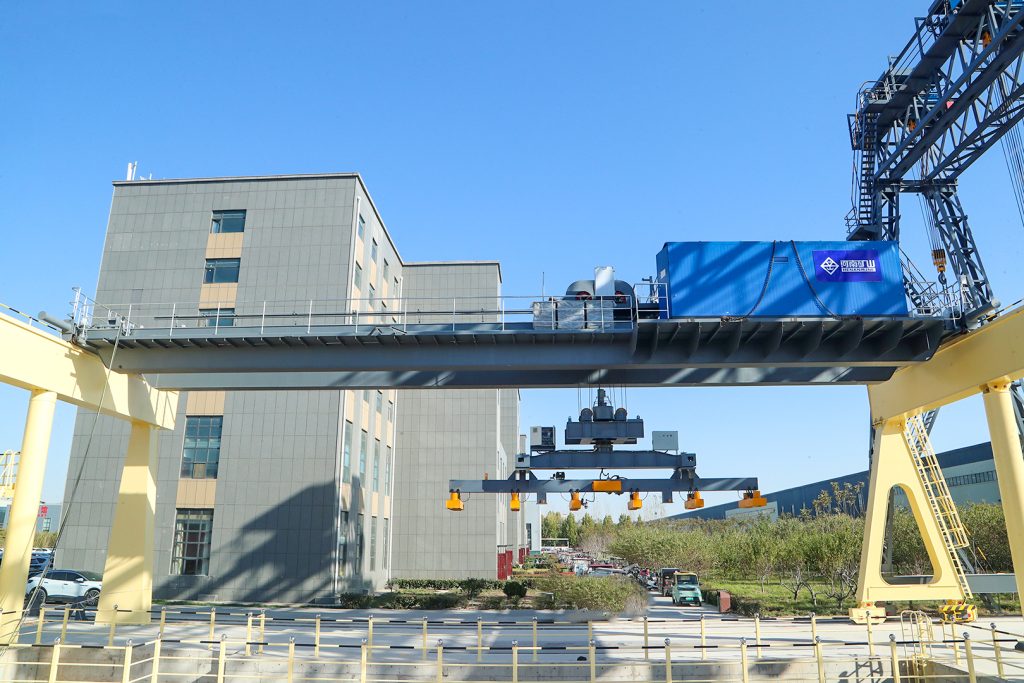
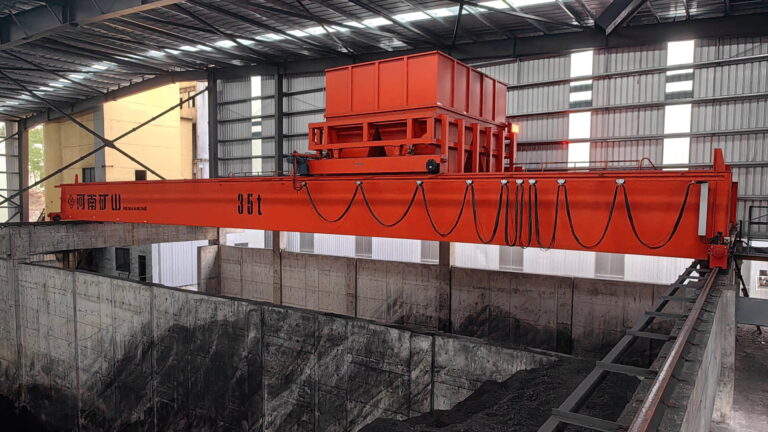
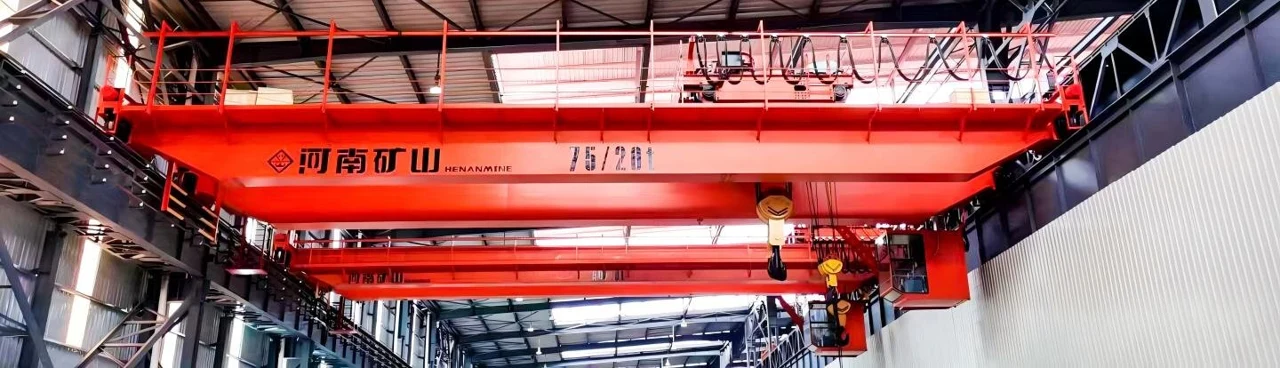
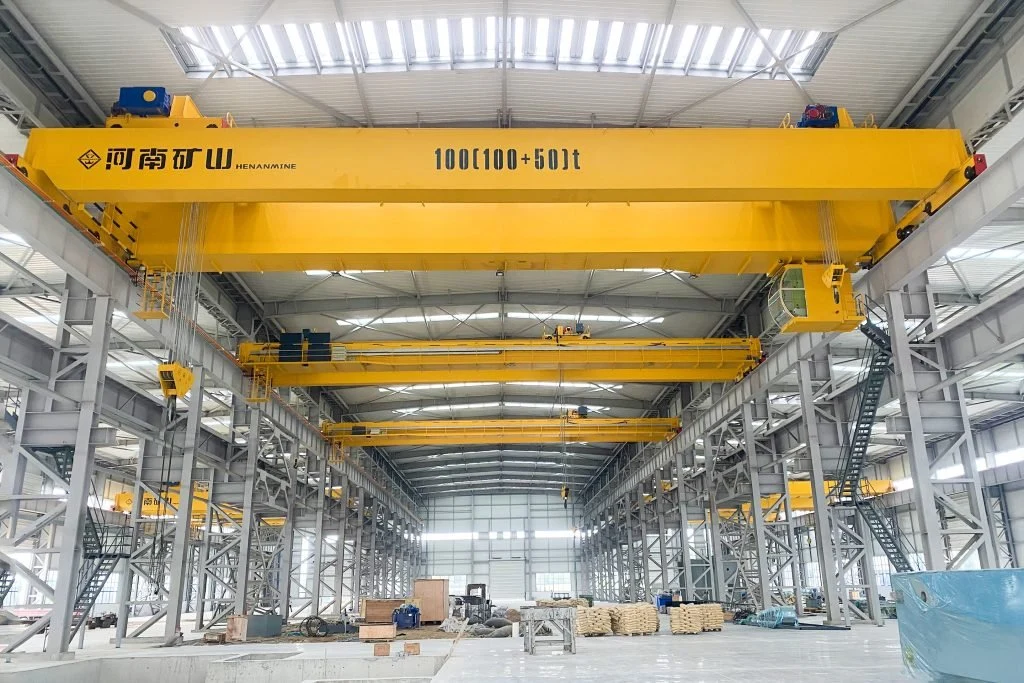
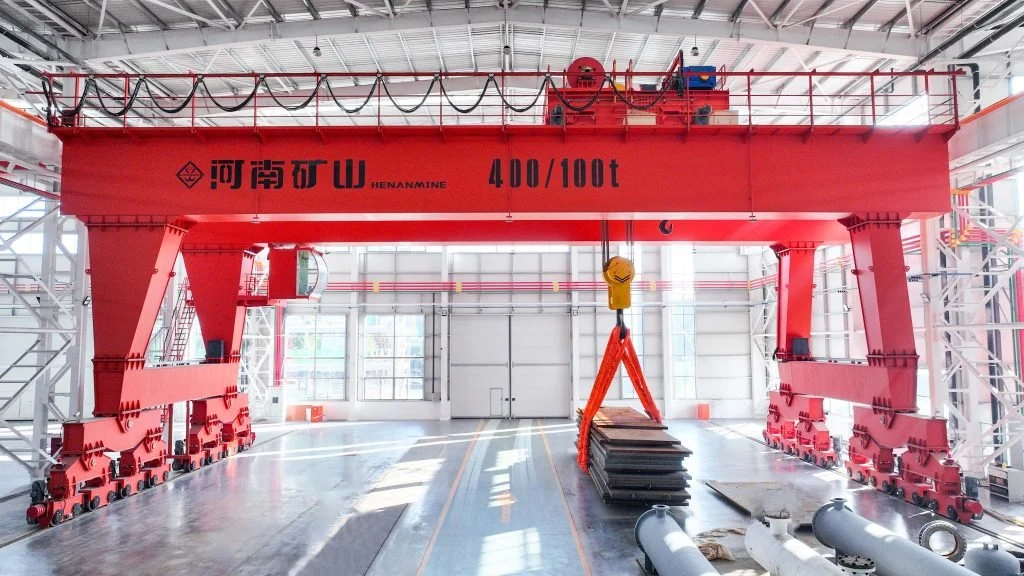
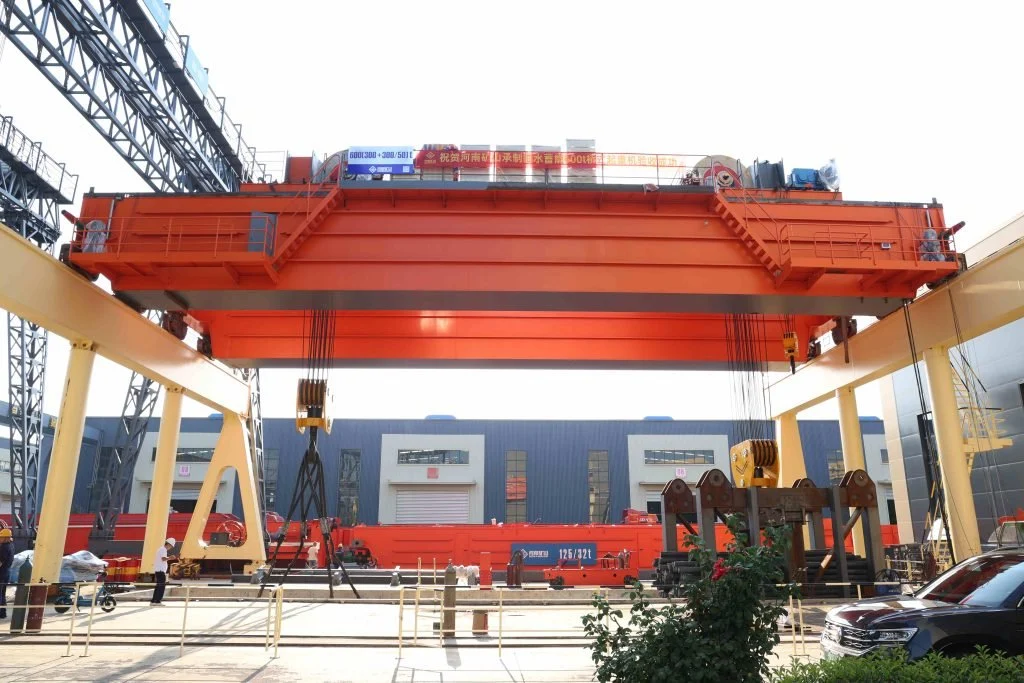
Automated overhead crane and customized lifting attachment developed for intelligent steel plate warehouse handling.
| ApplicationSteel plate warehouse | Material FlowUnload, sort and stack | Communication5G millimeter-wave | ControlAutomatic + monitored |
Project Background
Henan Mine Crane developed an automated steel plate warehouse crane for a steel-structure fabrication company. The customer needed more than conventional lifting equipment: the crane had to coordinate incoming vehicle identification, plate recognition, material handling, storage allocation and production retrieval within one intelligent warehouse workflow.
Steel plate warehouses typically manage many grades, thicknesses, lengths, widths, batch numbers and production priorities. When operators rely on manual records and visual judgment, the wrong plate may be moved, plates may be repeatedly re-stacked, and usable warehouse space may not be allocated efficiently.
The project therefore combined crane mechanics, a customized lifting attachment, automatic control, material identification, positioning, communication and warehouse data. The resulting system supports automatic unloading, rotation, sorting, stacking and re-stacking while preserving plate identification and movement records.
Procurement priority: Send the maximum single-plate weight, plate dimensions, material grades, stack plan, warehouse span, runway length, lifting height, daily throughput, required positioning accuracy, lifting-attachment preference and WMS/MES interface scope before requesting a quotation.
The Steel Plate Warehouse Challenge
A steel warehouse is not a simple pickup-and-place application. Each incoming vehicle may carry plates with different dimensions, grades and destinations. The handling system must identify the material, select a valid storage position, approach the plate accurately and place it without disturbing adjacent stacks.
Production orders create another challenge. The required plate may be under other material, so the warehouse must plan re-stacking before retrieval. Poor stack logic increases empty travel, repeated handling and waiting time at cutting or fabrication stations.
An automated system must also manage vehicles, people, crane routes, structural clearances and restricted zones. Accurate movement and anti-collision protection are essential when the crane operates repeatedly without continuous manual positioning.
Automated Steel Plate Crane Solution
The project crane acts as the central material-handling unit in the intelligent warehouse. Vehicle recognition confirms the incoming transport position, and intelligent plate recognition connects the physical load with its digital material record.
Once the warehouse system issues a task, the crane can travel to the assigned location, pick up the steel plate, rotate it when required, move it to the selected stack and complete controlled placement. The same workflow supports later sorting, production retrieval and re-stacking.
Automatic marking adds a visible identification step to the material flow. The warehouse crane installation uses 5G millimeter-wave communication for high-speed control and data exchange. Anti-collision functions and travel-accuracy control support repeatable operation throughout the warehouse.
Buyers planning a similar system can review Henan Mine Crane’s double-girder overhead crane configurations and steel-industry crane applications before preparing the technical schedule.
Automatic Vehicle and Steel Plate Recognition
Vehicle recognition helps the control system identify the active unloading position and coordinate crane access to the truck area. Plate recognition then links the incoming material to information such as plate number, grade, dimensions, batch and intended production route.
For a new project, the buyer should define how material data enters the system. Options may include ERP or MES instructions, barcode or character recognition, vehicle records and operator confirmation. The identification method must match the quality of the source data and the condition of plate surfaces.
Exception handling is equally important. If the plate data is missing or inconsistent, the system should stop the automatic task, identify the problem and allow authorized confirmation without losing inventory traceability.
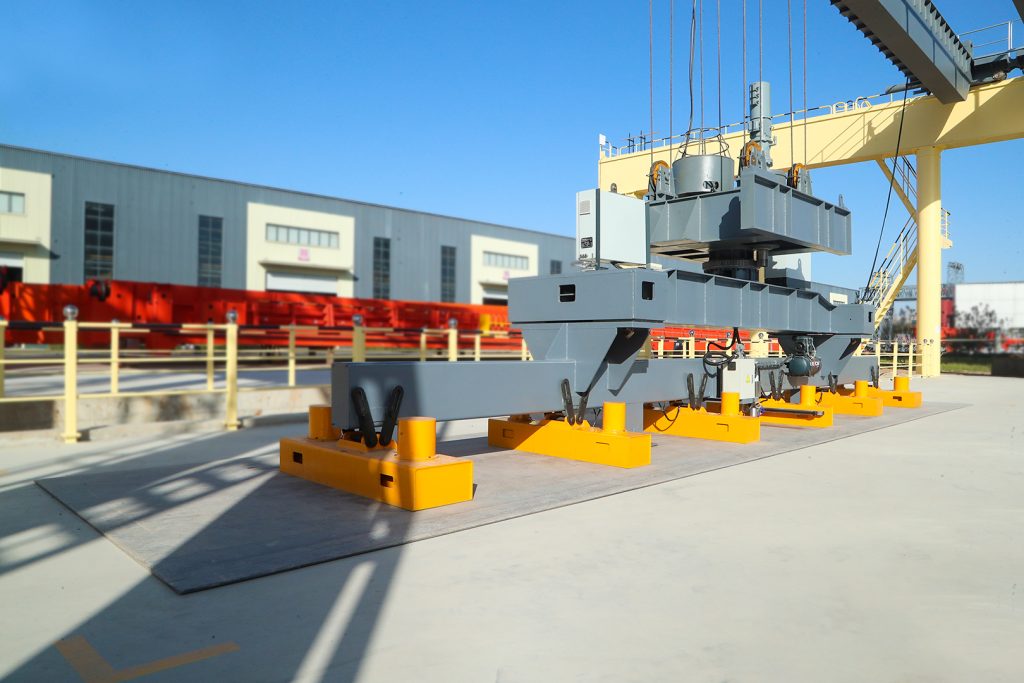
Customized lifting attachment for automatic steel plate pickup, transfer and placement. |
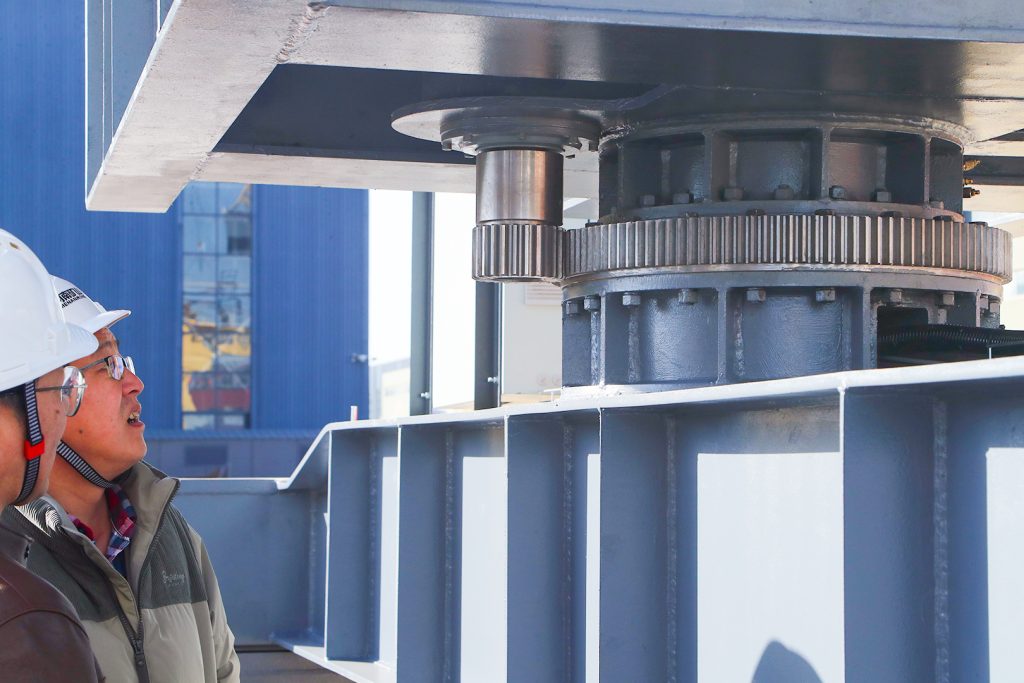
Rotating mechanism used to orient plates for storage and downstream production flow. |
Automatic Unloading, Rotation and Stacking
The handling sequence can cover vehicle unloading, plate orientation, sorting by material rules, transfer to the assigned storage location and final stack placement. Rotation allows the system to align plates with the warehouse stack direction or the next processing station.
Stack allocation should consider plate dimensions, allowable stack height, floor capacity, material grade, production sequence and retrieval frequency. The warehouse software determines the target position, while the crane control system executes the movement and confirms task completion.
When a required plate is not accessible, the system can create re-stacking tasks. This reduces operator decisions and allows material to be reorganized according to the production queue, but the final performance depends on the storage strategy and available temporary positions.
Lifting Attachment Engineering
The lifting attachment is selected from the plate range and handling process. The engineering review covers maximum plate weight, minimum and maximum dimensions, plate flatness, surface condition, temperature, residual scale, center-of-gravity variation and the need to handle single or multiple plates.
A buyer may require electromagnetic, vacuum or mechanical handling depending on the material and process. The attachment control must confirm safe pickup before travel and monitor the load during rotation and placement. Backup power, retention behavior and release logic are defined according to the selected technology.
Attachment dimensions also affect hook height, lifting height, side clearances and stack spacing. Supplying representative plate drawings and material samples early helps prevent an otherwise suitable crane from being paired with the wrong pickup method.
Automatic Marking and Material Traceability
The project includes automatic marking as part of the warehouse process. The marking step makes the material identity visible and helps connect each physical plate to inventory and production records.
A new system should define marking content, character size, location, durability, surface preparation and verification. The control sequence also needs confirmation that the correct plate and correct data are present before marking begins.
Movement records can include the source position, destination position, task time, crane status and material identifier. This provides a traceable path from vehicle unloading through warehouse storage to production issue.
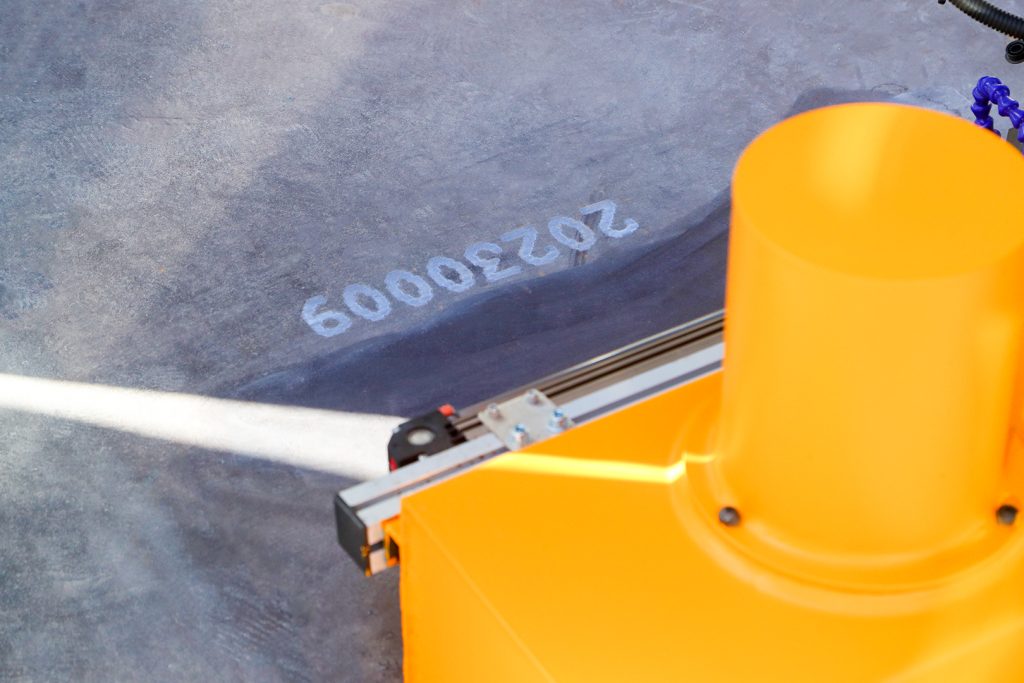
Automatic plate marking supports identification and warehouse-to-production traceability. |

Travel and positioning accuracy checked during automated crane acceptance. |
5G Millimeter-Wave Communication
The project uses 5G millimeter-wave communication for control and data exchange. This communication layer supports the movement of task information, equipment status, recognition data and monitoring signals between the crane and warehouse control environment.
Communication design must consider warehouse coverage, metal structures, moving equipment, latency, redundancy and recovery after a connection interruption. Automatic control should place the crane in a predictable safe state if required data becomes unavailable.
Interface documents should define protocols, exchanged data, command ownership, status confirmation, alarm handling and cybersecurity responsibility. These requirements belong in the procurement specification rather than being left until commissioning.
Travel Accuracy and Anti-Collision Control
Accurate crane and trolley travel supports repeatable pickup and placement across the plate yard. The required positioning tolerance should be agreed for representative stack locations, loads and approach directions, not only measured with an unloaded crane at one reference point.
Anti-collision protection monitors crane movement around structures, vehicles, restricted areas and other equipment. The system can combine route logic, position information, limit protection and controlled speed zones according to the final warehouse layout.
Automatic, remote-manual, local maintenance and emergency-recovery modes require clear permissions and speed limits. Access control and warning systems should prevent people from entering active automatic handling zones.
Warehouse System Integration
The crane receives movement tasks from the warehouse or production system and returns execution status. Typical data includes material identity, source position, destination position, task priority, load condition and completion result.
The buyer should define whether the WMS, MES or crane control system owns storage allocation, task sequencing and exception decisions. Clear ownership prevents conflicting commands and makes commissioning easier.
Alarm history, operating records, cycle counts and component status can support maintenance planning. Remote diagnostics may shorten fault analysis, but user access, data retention and network security must be included in the agreed scope.
Testing and Project Acceptance
Factory and site testing should verify the crane mechanisms, lifting attachment, safety protection, automatic sequences, communication, recognition, marking, positioning and warehouse interfaces. Representative plate sizes and task routes should be used whenever practical.
Acceptance criteria can include pickup confirmation, rotation, stack placement, travel repeatability, anti-collision response, task completion, communication interruption, data mismatch and recovery from a stopped automatic cycle.
Throughput testing should state plate size and weight, travel distance, lift height, number of cycles and system boundaries. This separates crane performance from delays caused by unavailable vehicles, incorrect inventory data or external production systems.

Customer and engineering teams reviewing the automated steel plate handling system during functional acceptance.
Key Project Configuration
| Project Element | Project Configuration and Buyer Value |
|---|---|
| Application | Automated steel plate warehouse for a steel-structure fabrication company. |
| Crane Type | Intelligent overhead crane with a customized steel plate lifting attachment. |
| Material Identification | Vehicle recognition and intelligent steel plate recognition. |
| Automatic Functions | Unloading, rotation, sorting, stacking and re-stacking. |
| Traceability | Automatic marking linked to warehouse material flow. |
| Communication | 5G millimeter-wave communication in the referenced project. |
| Safety | Crane anti-collision functions for automated warehouse travel. |
| Accuracy | Travel-accuracy control and acceptance verification. |
Project Result
The completed system connects material recognition, crane movement, plate rotation, sorting, stacking, re-stacking and marking within one automated warehouse workflow. Physical plate movements can follow inventory and production instructions instead of relying only on repeated manual crane decisions.
5G millimeter-wave communication supports control and data exchange, while travel-accuracy control and anti-collision functions support repeatable operation inside the warehouse. The integrated approach gives the customer a platform for more traceable material flow and better coordination between storage and steel-structure production.
Similar projects are engineered from the buyer’s actual plate mix, warehouse layout, throughput target and digital interfaces. Review more overhead crane projects before defining your scope.
Information Required for a Project Quote
Send the following information so Henan Mine Crane can prepare a project-specific technical proposal and commercial quotation:
| Steel Plate Data Maximum single-plate weight, length, width, thickness, material grades, flatness, temperature and surface condition |
Warehouse Layout Building span, runway length, lifting height, column spacing, stack map, vehicle lanes, floor capacity and clearances |
Handling Performance Daily tonnage, plates per hour, operating shifts, duty class, travel distances, required speeds and availability |
| Attachment Scope Pickup method, single or multiple plates, rotation angle, fail-safe requirements and allowable plate marking |
Automation Positioning tolerance, recognition method, WMS/MES/ERP interfaces, task logic, marking, monitoring and safety zones |
Commercial Scope Standards, power supply, testing, transport, installation, commissioning, training, spare parts, warranty and service |
Frequently Asked Questions
Can the crane automatically unload and stack steel plates?
Yes. This crane system supports automatic unloading, rotation, sorting, stacking and re-stacking when valid material data and storage positions are available.
Can the system identify different plate grades and sizes?
The project includes intelligent steel plate recognition. A new project’s recognition method is selected from the plate identification process, material data quality and required warehouse interfaces.
What lifting attachment is suitable for steel plates?
Selection depends on plate weight, dimensions, flatness, surface, temperature and handling rules. Electromagnetic, vacuum or mechanical devices can be evaluated during project engineering.
Can the crane connect to an existing WMS or MES?
Yes. The interface can exchange material, task, position, status and alarm data. Protocols, command ownership and exception handling should be confirmed before detailed design.
Can an existing steel plate warehouse be automated?
Often yes. The existing runway, building clearance, floor and stack layout, electrical supply, communication network, material records and safety zones must be surveyed first.
What information is required for pricing?
Provide plate data, warehouse drawings, maximum load, duty and throughput, lifting height, lifting-attachment requirements, automation interfaces, power supply, standards and project service scope.
Request an Automated Steel Plate Crane Quote
Send your plate range, warehouse layout, throughput target, lifting-attachment requirements and WMS/MES interface scope. Henan Mine Crane will prepare a customized automated warehouse crane proposal and commercial quotation.