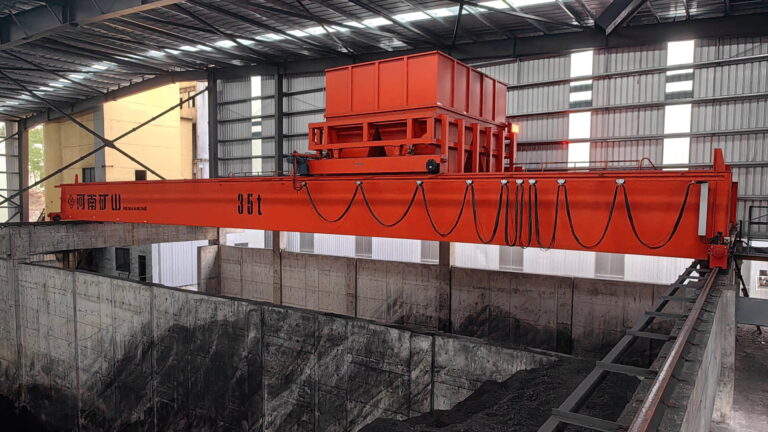
Pumped Storage Powerhouse Crane Project
A high-capacity underground powerhouse crane with twin 300t hooks, synchronized lifting, variable-frequency control, intelligent anti-sway and digital monitoring.
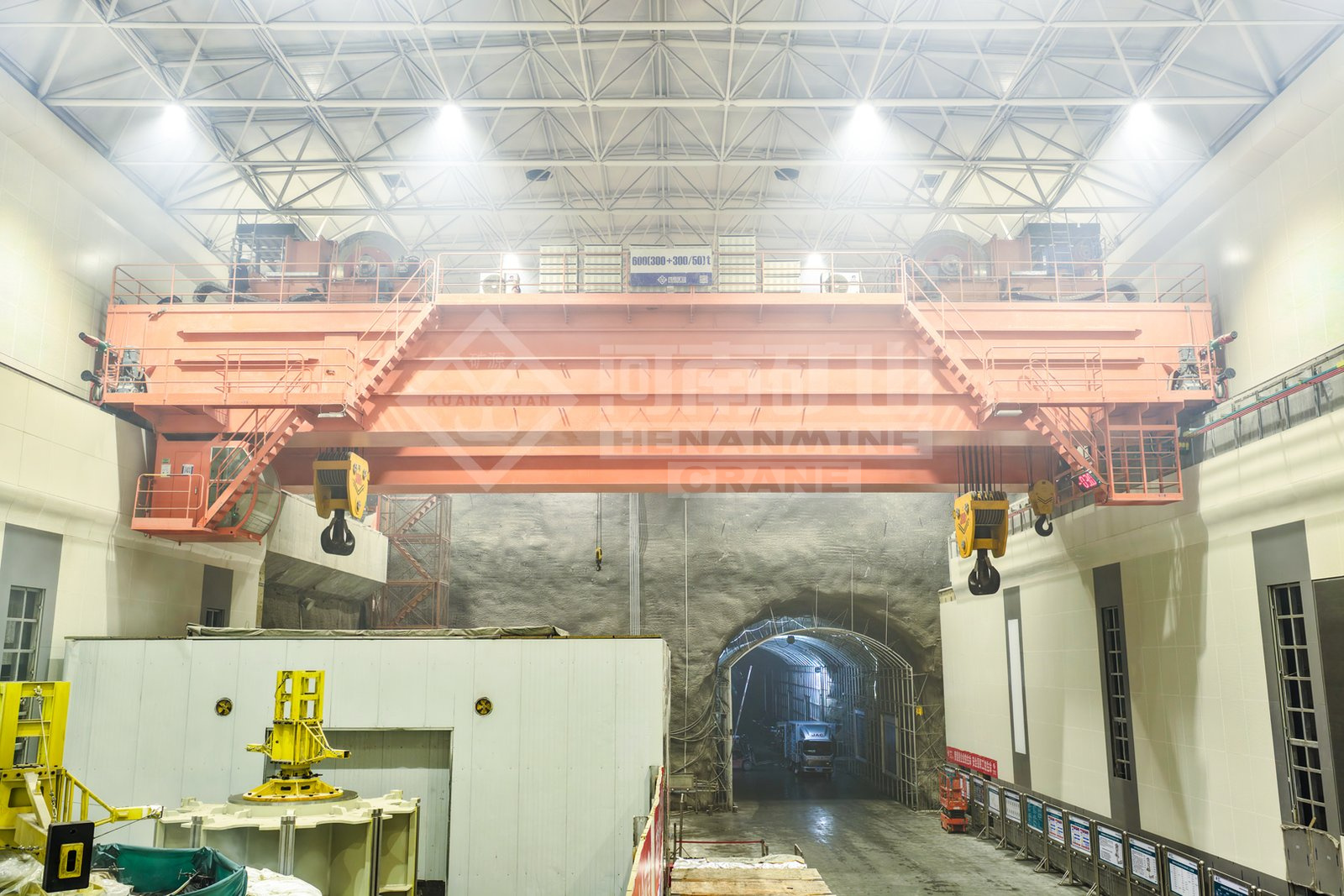
Front view of the overhead bridge crane, suspended hook blocks and powerhouse installation area.
| Rated Capacity600t class | Lifting SystemTwin 300t synchronized hooks | Structural FocusLow-headroom powerhouse design | Control PackageVFD, anti-sway and digital monitoring |
Project Background
A national pumped-storage power project required a coordinated crane package for major generating-equipment installation, auxiliary handling and long-term powerhouse maintenance. The underground cavern created strict limits on crane height, installation access and maintenance clearance.
Henan Mine Crane supplied multiple crane types for the project, including a 600t low-headroom double-girder overhead crane for the heaviest generator-motor and turbine components. Smaller 32/5t and 10t cranes support auxiliary equipment, tooling and maintenance operations in other power-station areas.
The 600t crane uses variable-frequency control, high-precision dual-hook synchronization, intelligent anti-sway and digital monitoring. Factory pre-assembly reduced site interface risk, while lifecycle quality management supports the crane after installation and commissioning.
Planning a pumped-storage powerhouse crane? Send the heaviest generator and turbine component data, lifting-beam and rigging weight, lifting points, allowable tilt, powerhouse cross-sections, runway elevation, lift path, headroom and overhaul sequence.
Underground Powerhouse Lifting Challenges
Pumped-storage generator-motor units and turbine components can require hundreds of tonnes of lifting capacity. The complete suspended load includes the component, lifting beam, hook blocks, slings and installation tooling, and every item must remain within the approved crane load condition.
An underground cavern has limited vertical space. Girder depth, trolley height, hook-block dimensions, rope arrangement, service platforms and maintenance clearances all affect the usable lifting height above the installation opening.
Large components are often lifted from two points. Any difference between hook positions can tilt the load, redistribute force between lifting points and reduce clearance around the installation pit.
The crane must complete the initial installation and remain usable after surrounding equipment, platforms and enclosures are installed. Overhaul access therefore has to be checked during the original procurement stage.
600t Low-Headroom Crane Solution
The project crane adopts a low-headroom double-girder configuration engineered around the underground powerhouse envelope. The bridge, trolley and hoisting arrangement preserve maximum usable hook height without compromising the required lifting capacity, operating duty or maintenance access.
The installed lifting system uses two 300t hook blocks for the 600t-class main handling duty. The twin hooks can lift approved two-point loads in synchronization, providing balanced support for large generator-motor and turbine components.
Variable-frequency drives provide smooth speed control, while intelligent anti-sway improves load stability during bridge and trolley travel. Digital monitoring gives operators and maintenance personnel better visibility of crane status and operating events.
Buyers can compare available double-girder overhead crane configurations and review water resources and power crane applications before preparing a project-specific RFQ.
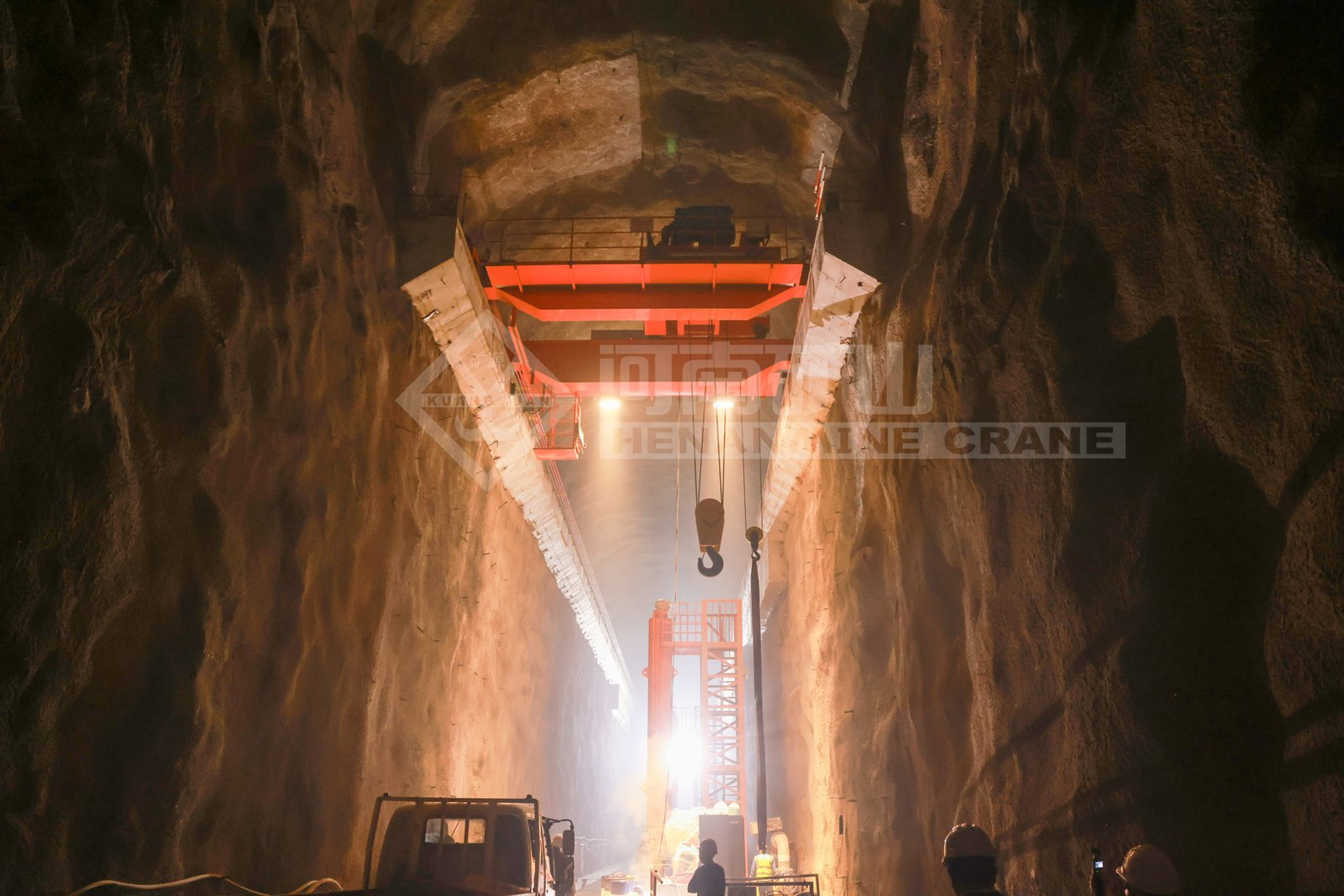
An overhead crane spans a narrow rock cavern above construction equipment and personnel.
Low-Headroom Structural Engineering
Low headroom is achieved by coordinating the trolley, rope reeving, hook blocks and bridge structure with the powerhouse cross-section. The goal is to maximize vertical hook travel while keeping all crane components within the permitted building envelope.
The buyer should provide the runway elevation, roof and cavern profile, installation-pit coordinates, highest load position, lowest pickup level and lifting-beam geometry. These dimensions determine the required lift and critical clearances.
Maximum wheel loads, horizontal forces, buffer loads and runway tolerances are coordinated with the civil designer. Early review helps prevent conflicts between the 600t crane, powerhouse structure, ventilation, cables and surrounding equipment.
Twin 300t Hooks and High-Precision Synchronization
The two 300t hook blocks provide distributed lifting points for large generating-equipment components. High-precision synchronization coordinates hoisting movement so the hooks remain within the specified differential-height range.
The technical agreement should define maximum hook-position difference, permitted load-share difference, reference measurement points, lifting speed, alarm thresholds and automatic response to excessive deviation.
Synchronization works together with the approved lifting beam and rigging. Component center of gravity, unequal sling length, structural deflection and permitted tilt are included in the heavy-lift procedure and commissioning tests.
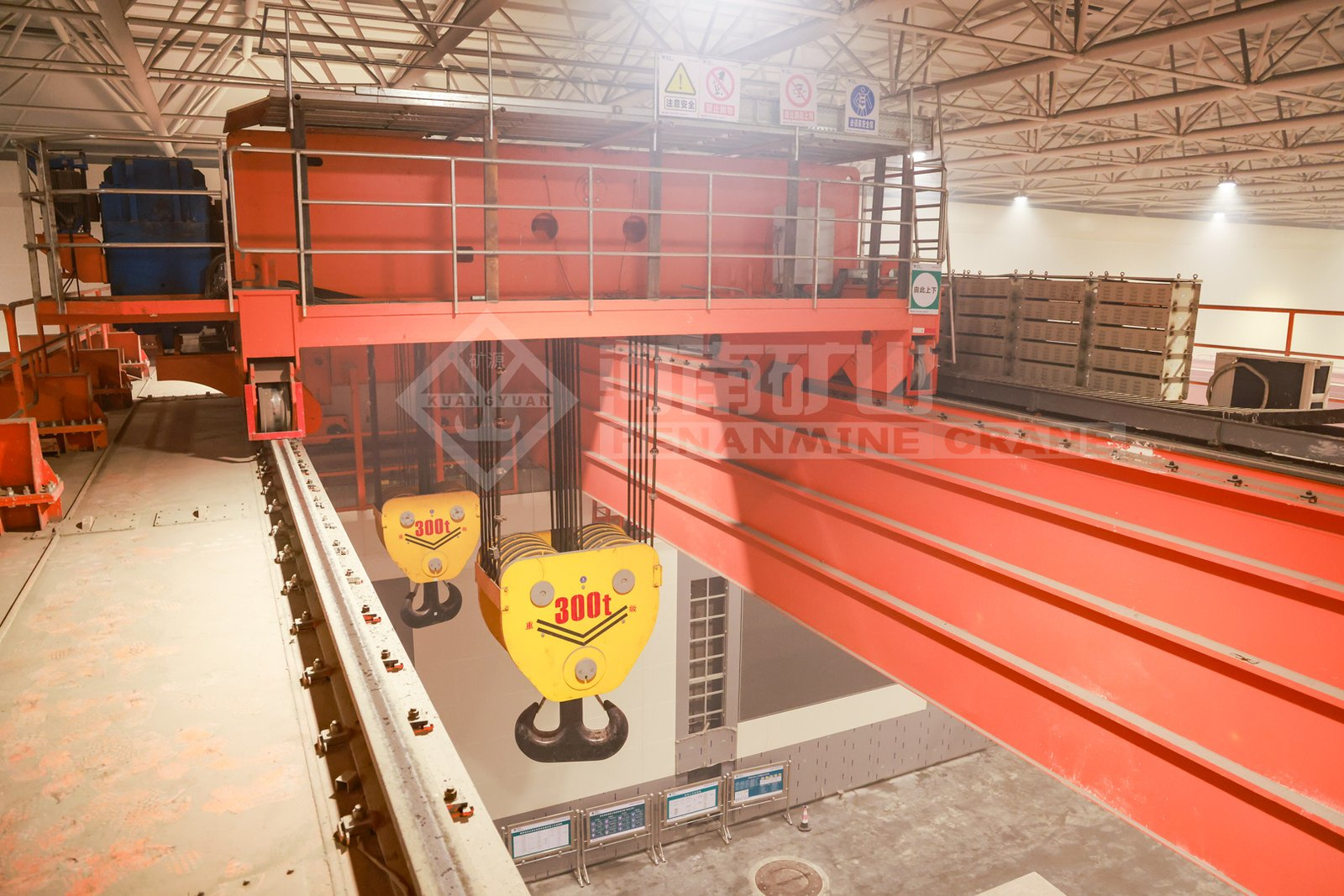
Two 300t hook blocks hang beneath the overhead crane above the powerhouse installation area. |
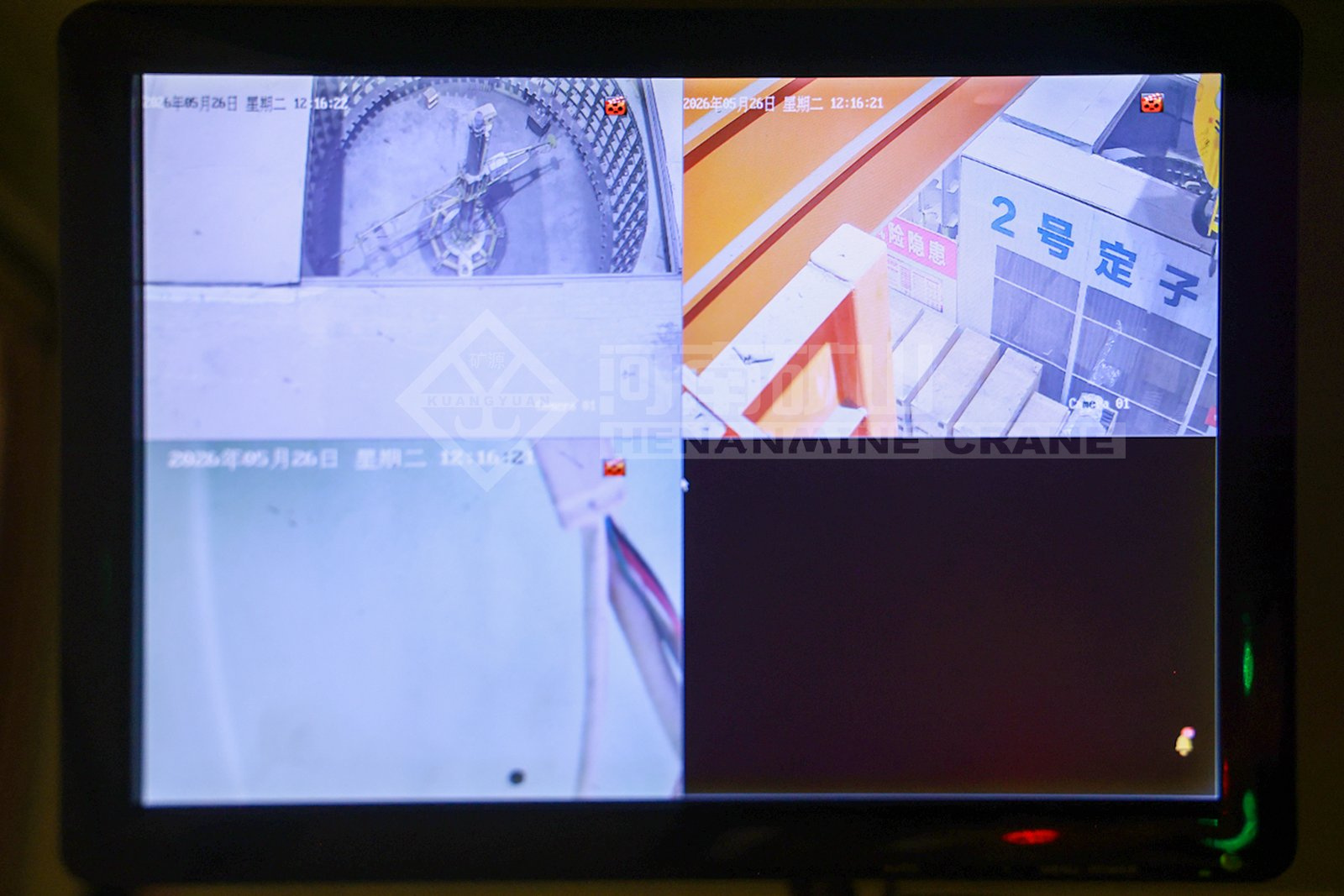
A multi-camera monitor displays different powerhouse work areas and a stator. |
Variable-Frequency Speed Control
Variable-frequency control provides smooth starting, controlled acceleration and stable low-speed operation. This reduces dynamic loading and helps operators move very large components through restricted powerhouse clearances.
Faster travel can reduce non-productive movement, while low-speed control supports final positioning above the generator pit, assembly stand or maintenance location. Speed profiles are selected for empty hook, loaded transfer, synchronized lifting and precision approach.
The procurement specification should state maximum speeds, minimum controllable speed, acceleration time and positioning tolerance rather than relying on a general request for variable-frequency operation.
Intelligent Anti-Sway and Digital Monitoring
Intelligent anti-sway reduces oscillation during bridge and trolley travel. A more stable suspended component can approach the installation position with fewer corrective movements and reduced risk of contact with nearby structures.
Digital monitoring can record load, operating status, running hours, starts, alarms and mechanism conditions according to the project scope. Clear alarm priorities and event records support fault response and maintenance planning.
The buyer can define data retention, access permissions, remote display and interfaces with the power station management system. Monitoring requirements are agreed together with network and cybersecurity responsibilities.
Auxiliary Crane Package
The power project uses different crane capacities for different duties. The 600t crane handles major generator-motor and turbine lifts, while a 32/5t double-girder crane and a 10t crane support auxiliary equipment, tooling, installation and routine maintenance.
Matching capacity to each work area reduces unnecessary structural loads and equipment cost. Standardized control and maintenance concepts can still be applied across the package where technical requirements allow.
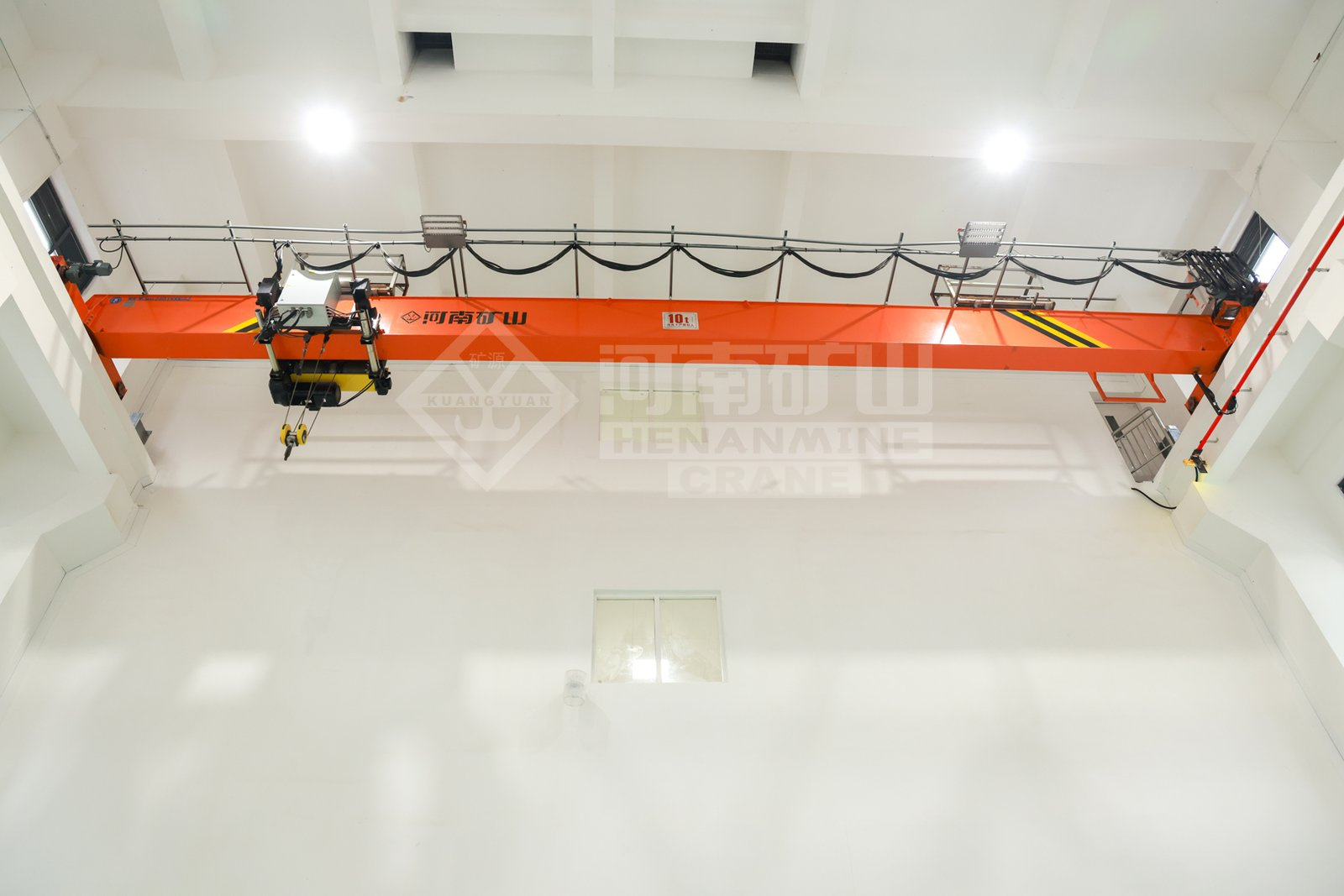
The 10t single-girder crane has an electric hoist, suspended hook and yellow-and-black end markings. |
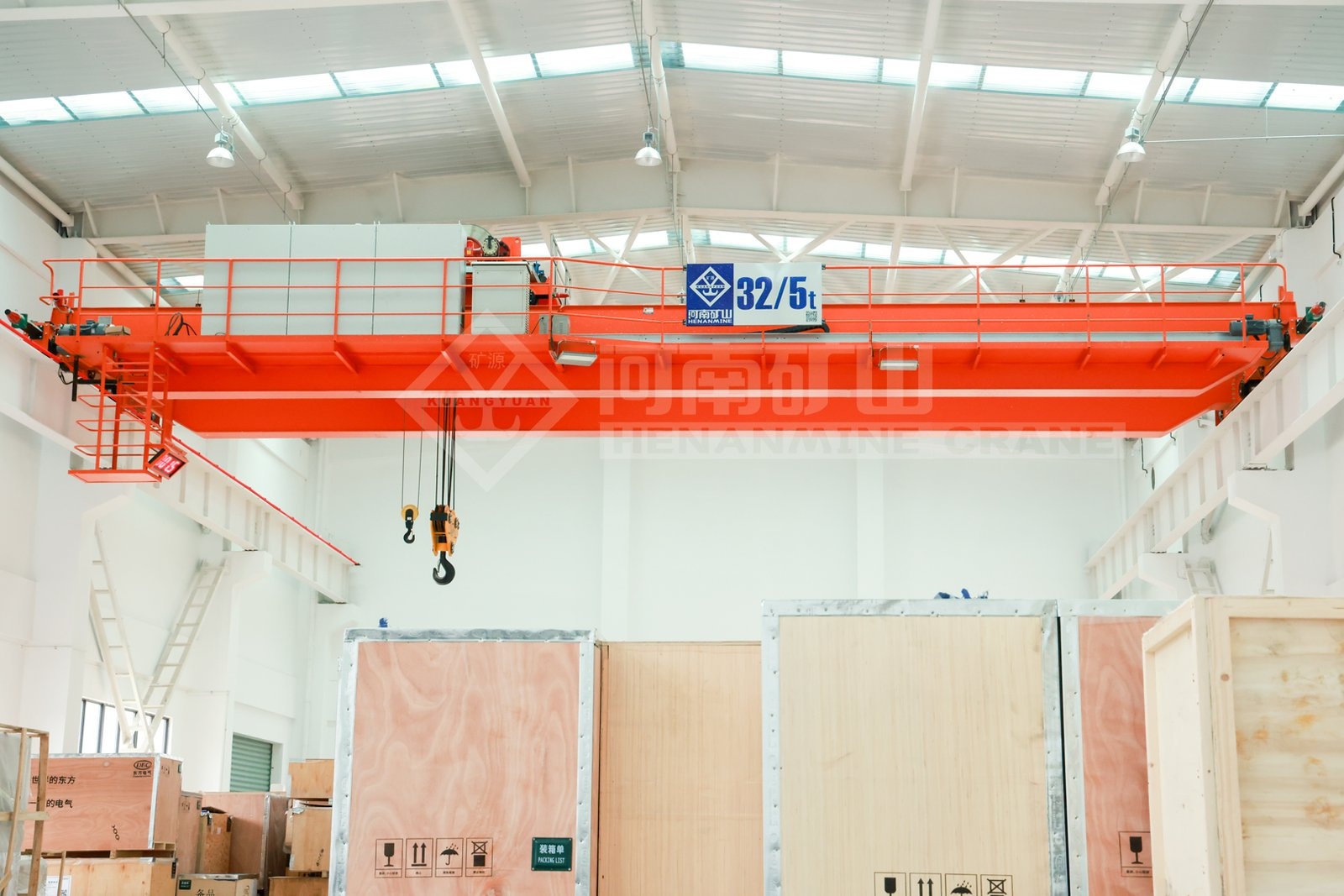
A 32/5t overhead crane and two suspended hooks are shown above wooden equipment crates. |
Factory Pre-Assembly and Site Installation
Large crane modules were pre-assembled at the factory to verify interfaces before delivery. This approach helps identify fit, alignment and installation issues before the equipment enters the restricted underground site.
The erection plan coordinates transport dimensions, access tunnels, assembly space, lifting equipment, runway survey, temporary power and powerhouse readiness. Responsibilities for site preparation, installation supervision and commissioning are defined in the commercial scope.
Installation milestones are aligned with generating-equipment delivery. The crane must be ready before the major generator-motor and turbine lifts begin.
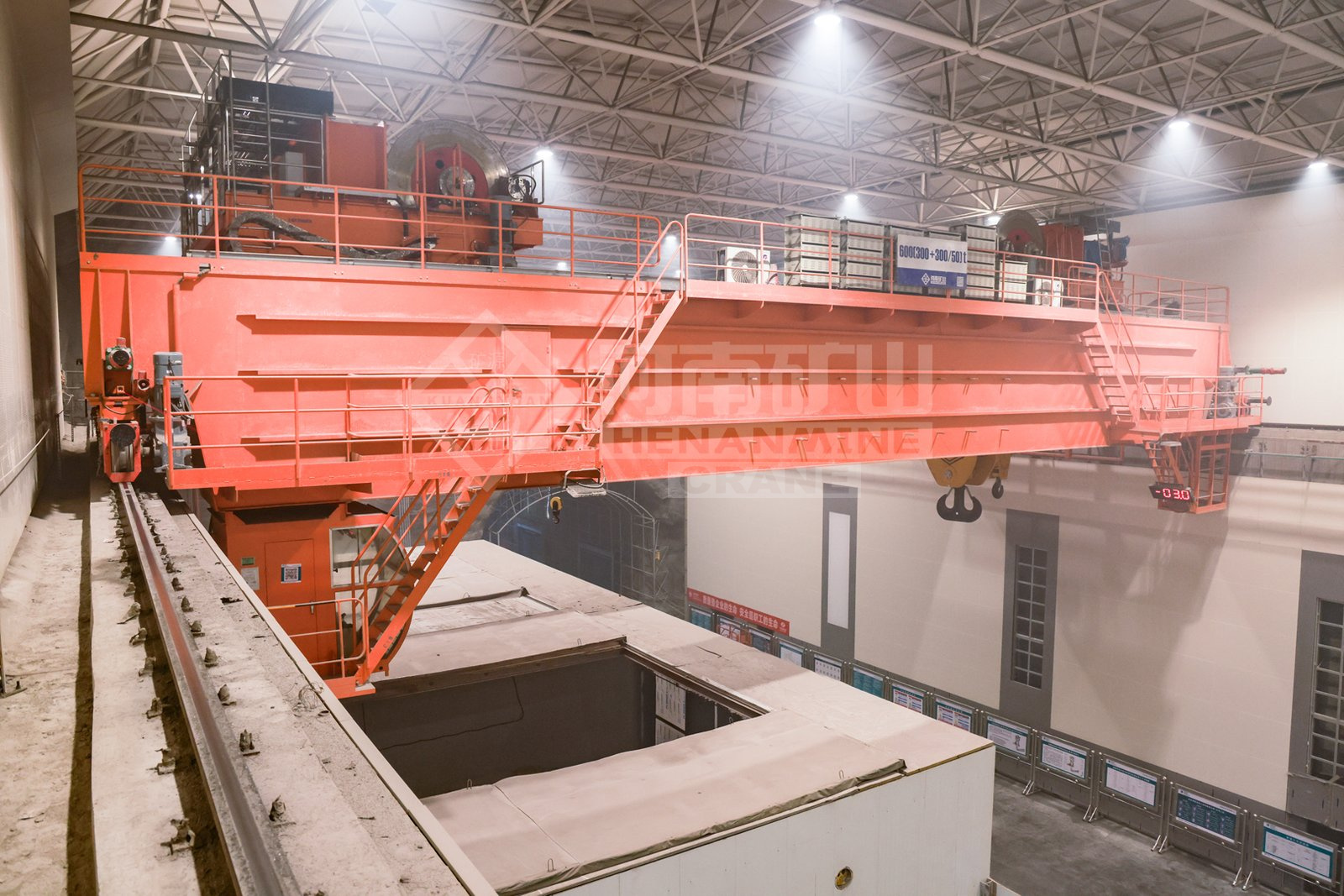
The orange overhead bridge crane spans an equipment installation pit, with access stairs and hook assemblies visible.
Lifecycle Maintenance and Overhaul Planning
After plant commissioning, the 600t crane remains essential for generator-motor inspection, turbine overhaul and major component replacement. The original crane layout therefore includes the future removal and reinstallation route.
Walkways, platforms, lighting, isolation points and component-removal space support inspection of hooks, ropes, brakes, drums, sheaves, wheels, drives, motors, controls and sensors.
Lifecycle quality management can include operating records, periodic inspection, preventive maintenance, spare parts, technical support and major overhaul assistance according to the plant service strategy.
Safety, Testing and Commissioning
The crane package includes overload protection, upper and lower limits, travel limits, brakes, buffers, emergency stopping and coordinated fault handling for the dual-hook system.
Factory and site tests verify structural and mechanism operation, brakes, limit devices, overload protection, VFD speed control, dual-hook synchronization, anti-sway and digital monitoring.
Acceptance criteria define the test load, hook-position tolerance, load-sharing limits, measurement method, low-speed behavior and response to abnormal deviation. Operator and maintenance training covers normal operation, alarms, recovery and routine inspection.
Key Project Configuration
| Project Element | Installed Project Configuration |
|---|---|
| Application | Underground pumped-storage powerhouse installation and maintenance. |
| Main Crane | 600t low-headroom double-girder overhead crane. |
| Main Hooks | Twin 300t hook blocks for approved two-point lifting. |
| Motion Control | Variable-frequency speed control for smooth travel and positioning. |
| Synchronization | High-precision dual-hook synchronized hoisting. |
| Load Stability | Intelligent anti-sway during bridge and trolley movement. |
| Monitoring | Digital operating monitoring for supervision and lifecycle maintenance. |
| Auxiliary Cranes | 32/5t and 10t cranes for auxiliary handling and maintenance duties. |
| Project Delivery | Factory pre-assembly, cavern installation and lifecycle quality follow-up. |
Project Result
The 600t low-headroom overhead crane provides the heavy lifting capacity required for major generator-motor and turbine installation inside the restricted underground powerhouse.
Twin 300t hooks and high-precision synchronization support balanced two-point lifting. VFD motion control and intelligent anti-sway improve stability during transfer and final positioning.
Digital monitoring and lifecycle access support long-term overhaul duties, while the 32/5t and 10t cranes provide efficient auxiliary handling across the project.
Explore more water resources and power crane solutions or compare additional industrial overhead cranes for a new powerhouse project.
Information Required for a 600t Pumped Storage Crane Quote
Send the following information so Henan Mine Crane can prepare a project-specific technical proposal and commercial quotation:
| Heavy-Lift Data Component weights, dimensions, lifting points, center of gravity, lifting beam, rigging weight, allowable tilt and future overhaul loads |
Powerhouse Layout Plans, cross-sections, span, runway elevation, lifting height, cavern profile, installation pit, equipment coordinates and clearances |
Crane Performance Capacity, hook arrangement, duty, speeds, positioning tolerance, synchronization accuracy, anti-sway and monitoring requirements |
| Lifting Process Delivery, assembly, pickup, travel, lowering, installation, commissioning and future component removal sequence |
Site Conditions Access tunnels, transport limits, assembly space, erection equipment, runway readiness, power supply and project schedule |
Commercial Scope Engineering, inspection, pre-assembly, transport, installation, commissioning, training, spare parts, warranty and lifecycle service |
Frequently Asked Questions
What is a 600t pumped storage overhead crane used for?
It installs and maintains major generator-motor, turbine and other high-capacity equipment inside a pumped-storage powerhouse.
Why does this project use a low-headroom crane?
The underground cavern has restricted vertical space. A low-headroom bridge and trolley arrangement preserves usable lifting height while fitting the powerhouse envelope.
Why are two 300t hooks used?
Twin hooks provide distributed support for approved two-point loads. Synchronized hoisting controls differential movement and helps maintain the permitted component tilt.
Does the 600t capacity include rigging and the lifting beam?
The purchase specification must define this clearly. The complete suspended load includes the component, lifting beam, hook blocks, slings and attachments and must remain within the approved ratings.
Can the crane be used after power station commissioning?
Yes. The powerhouse crane supports long-term inspection, generator-motor and turbine overhaul, major maintenance and component replacement.
What information is required before pricing?
Provide load and rigging data, powerhouse drawings, runway information, capacity, span, lifting height, hook synchronization, speeds, monitoring, installation access, standards and service scope.
Request a 600t Pumped Storage Crane Quote
Send your generator and turbine load data, lifting points, powerhouse cross-sections, headroom, lift path, synchronization accuracy, installation conditions and overhaul requirements. Henan Mine Crane will prepare a customized technical proposal and commercial quotation.