

Heavy Ladle Crane Project
A very-high-capacity casting and ladle crane engineered around structural rigidity, precise trolley assembly, molten-metal safety, PLC control, industrial Ethernet and lifecycle monitoring.

450t casting and ladle crane configured for full ladles and heavy molten-metal handling loads.
| Rated Capacity450t project crane | StructureFour-girder, four-rail configuration | Main LoadFull ladles and molten-metal loads | Digital SystemPLC, industrial Ethernet and safety monitoring |
Very-High-Capacity Ladle Handling
Moving a full ladle is one of the most demanding crane duties in a steel plant. The lifted mass is extremely high, the load contains molten metal and the crane works within a production-critical route between steelmaking, refining and casting stations. Structural behavior, mechanism reliability, braking, heat protection and fault response must therefore be considered together.
Henan Mine Crane customized a 450t casting crane using a four-girder, four-rail configuration for molten-metal handling in steelmaking and ironmaking operations. The project combines finite-element structural analysis, integral trolley-frame heat treatment and machining, PLC control, an open industrial Ethernet bus and a safety monitoring and management system.
For steel producers purchasing a similar crane, the 450t rating is only one part of the specification. Capacity must include the ladle, molten metal, lifting beam, hook blocks and any auxiliary handling equipment. The final configuration also depends on span, lift, runway, operating cycle, ladle route, temperature exposure and the governing safety requirements.
Buyer’s priority: Specify the complete molten-metal lifting system—crane, trolley, hoists, lifting beam, ladle interface, runway and safety functions—as one production asset.
Why a Four-Girder Four-Rail Structure
A four-girder, four-rail arrangement distributes the trolley and lifted load through a large structural system designed for very high capacity. The configuration gives the designer space to arrange the main and auxiliary lifting mechanisms, service platforms, electrical equipment and safety systems required for casting duty.
Structural selection should follow the project load combinations rather than capacity alone. Dead weight, lifted load, dynamic effects, skewing forces, braking forces, thermal conditions and runway behavior influence girder, end-carriage and connection design. The crane and supporting building should be checked using consistent wheel loads and interface data.
A four-girder crane is not automatically required for every ladle application. It is normally considered where very high capacity, trolley arrangement, stiffness, production duty and redundancy justify the heavier system. Buyers comparing alternatives can review the broader range of metallurgical overhead cranes before selecting the final structure.
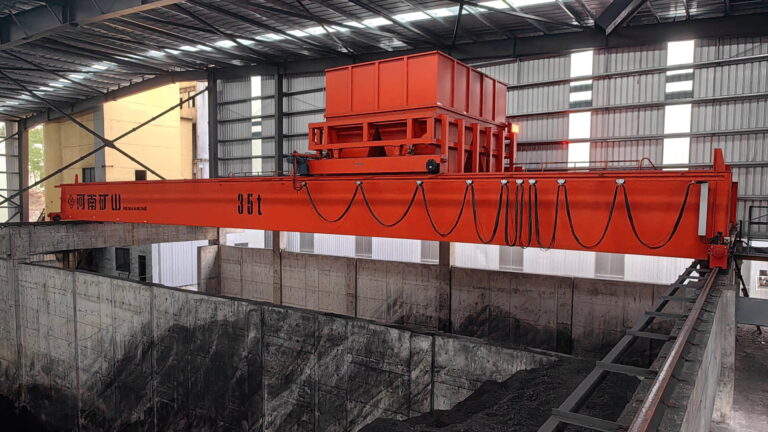
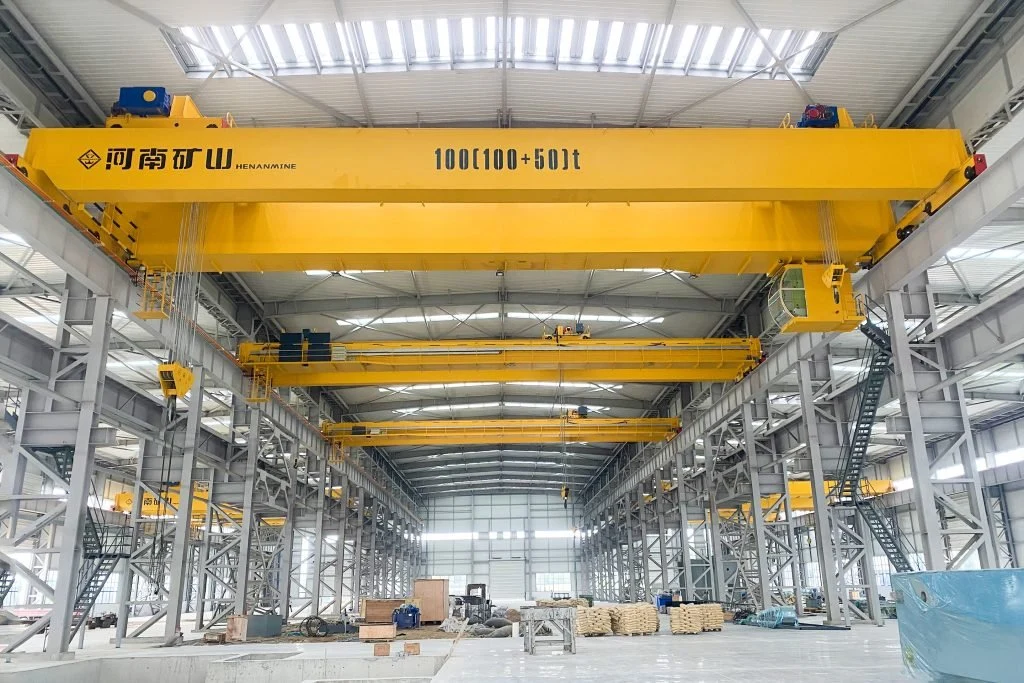
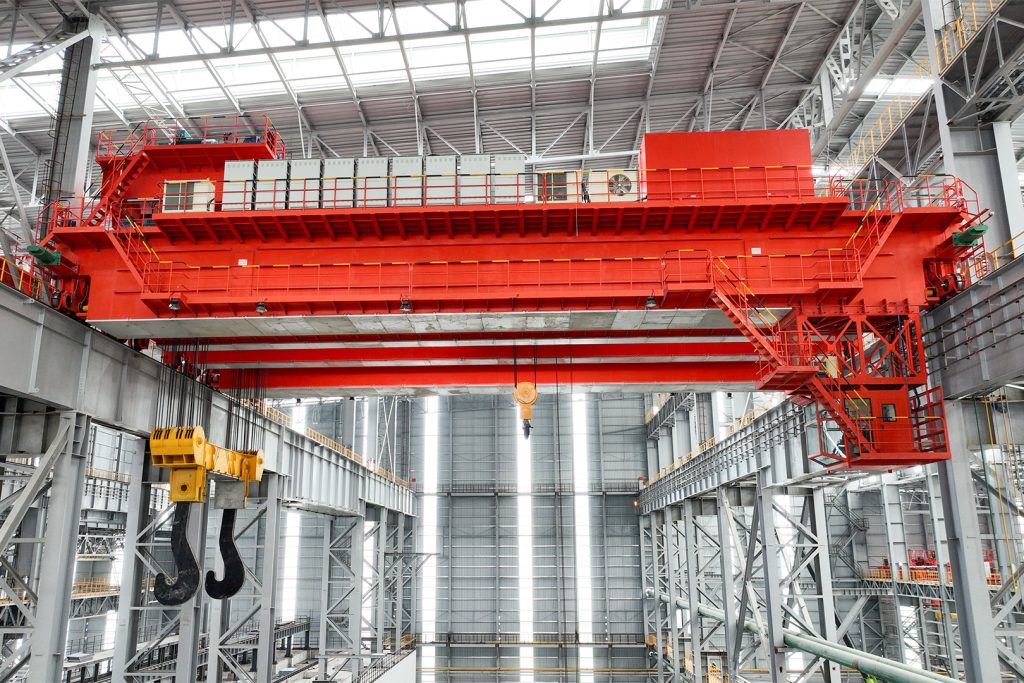 Project equipment showing the large structural and trolley arrangement of the 450t casting crane.
Finite-Element Structural Engineering
Finite-element modeling is used to evaluate stress and stiffness across the main crane structure. The model allows engineers to study critical load cases, load paths and local structural behavior before manufacturing. For a crane of this size, deflection and alignment are important because they affect wheel loading, trolley travel and long-term mechanism performance.
The analysis inputs should match the operating specification. Rated load, auxiliary loads, dynamic coefficients, crane class, emergency cases and thermal effects need to be defined before design verification. Buyers should request the design basis, calculated wheel loads and agreed structural interface data during technical review.
The workshop runway also forms part of the system. Rail gauge, level, straightness, support stiffness and allowable movement influence crane travel. Early exchange of crane and building information reduces the risk of alignment problems during installation.
Integral Trolley-Frame Annealing and Machining
The trolley frame carries the main hoisting equipment and transfers the ladle load to the four trolley rails. Dimensional accuracy is essential for wheel contact, mechanism alignment, drum and gearbox installation and smooth travel under heavy load.
For this project, the complete trolley frame is annealed and then machined as an integrated structure. Heat treatment helps control residual stress after fabrication, while coordinated machining improves the accuracy of installation surfaces and wheel or mechanism interfaces. This manufacturing method supports assembly precision and long-term running quality.
Quality planning should include material traceability, welding procedures, dimensional inspection, machining records and non-destructive examination according to the project standard. The acceptance documentation needs to connect each inspection record with the crane and component identification.
Molten-Metal Safety and Redundancy
A casting crane must control the ladle under normal operation and defined fault conditions. The required redundancy, braking arrangement, rope system, limit protection and emergency response should be selected according to the applicable crane standard, plant risk assessment and production process.
Main-hoist protection may include multiple braking functions, overspeed protection, position limits, load monitoring and status supervision. The exact architecture must be developed for the project rather than assumed from capacity. Safety-related devices should be monitored so faults can be identified before or during operation.
The ladle route should minimize travel over personnel and unrelated equipment. Restricted zones, operating procedures, warning systems and emergency planning remain necessary even when the crane includes advanced protection. Crane design and plant operating discipline work together to manage molten-metal risk.
Ladle Beam, Main Hook and Auxiliary Handling
The main lifting beam connects the crane hooks to the ladle trunnions. Its capacity, hook spacing and geometry must match the ladle family used in production. The supplier needs ladle drawings, trunnion dimensions, maximum gross weight, center-of-gravity range and required approach positions.
Auxiliary hooks may support ladle tipping, maintenance or process-specific handling depending on the plant layout. Main and auxiliary functions, permitted combined operation and interlocks should be defined during technical clarification. The buyer should also confirm whether the crane serves one ladle type or several ladle sizes.
Hook coverage must be checked at every furnace, refining and casting position. Span, trolley approach, bridge end approach and lifting height should be verified on the workshop drawing so the full ladle can move through the intended route without interference.
|
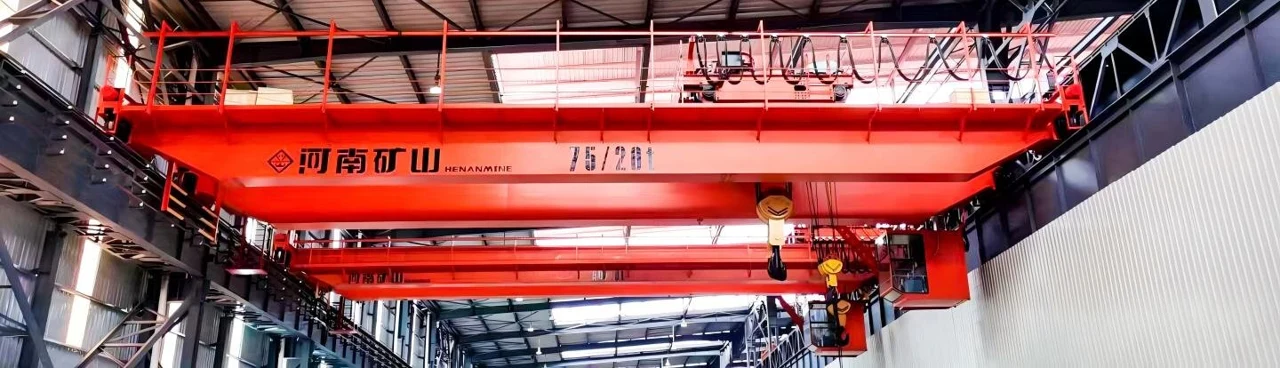
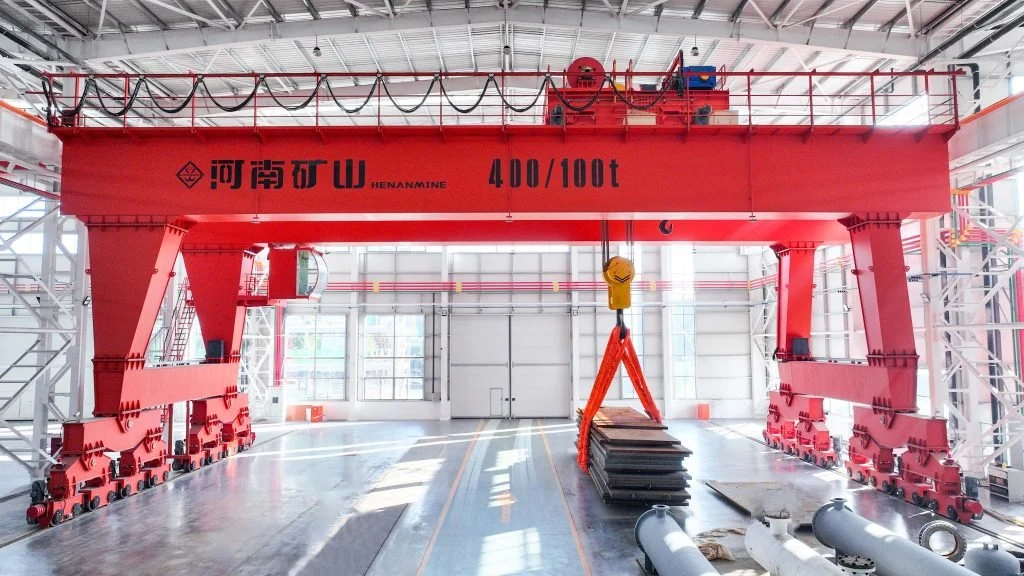
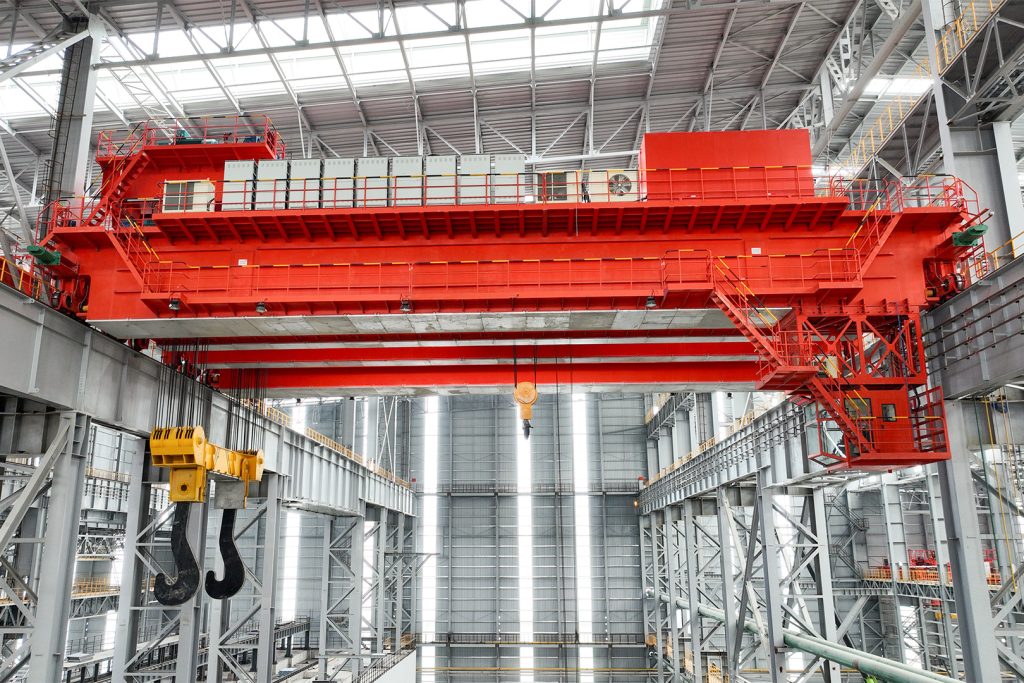
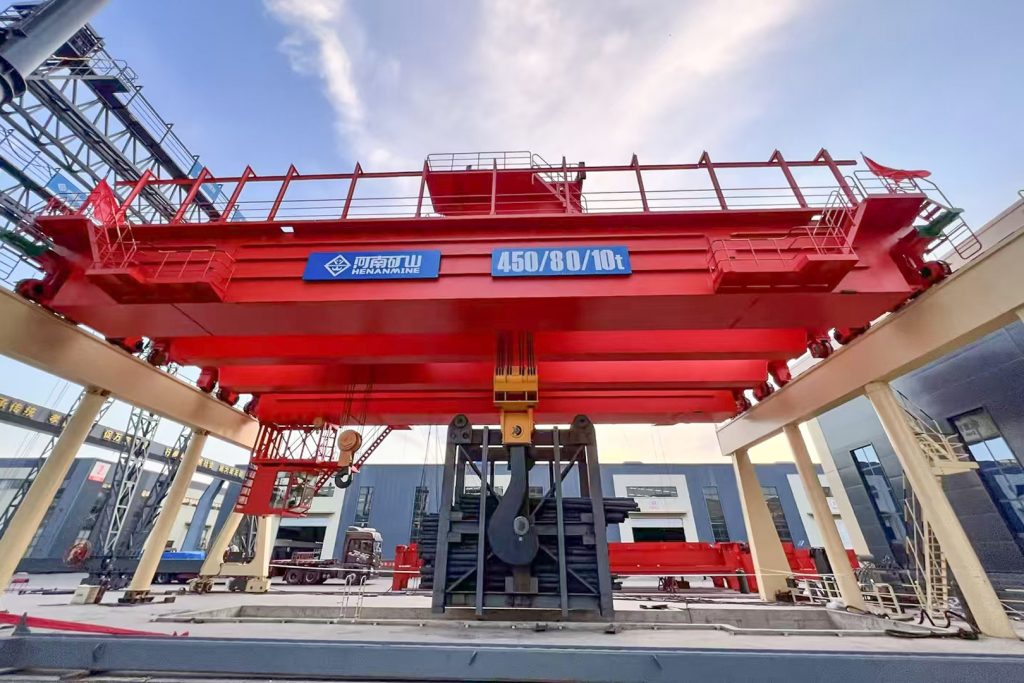
Heavy trolley and crane equipment manufactured for the 450t ladle-handling project. |
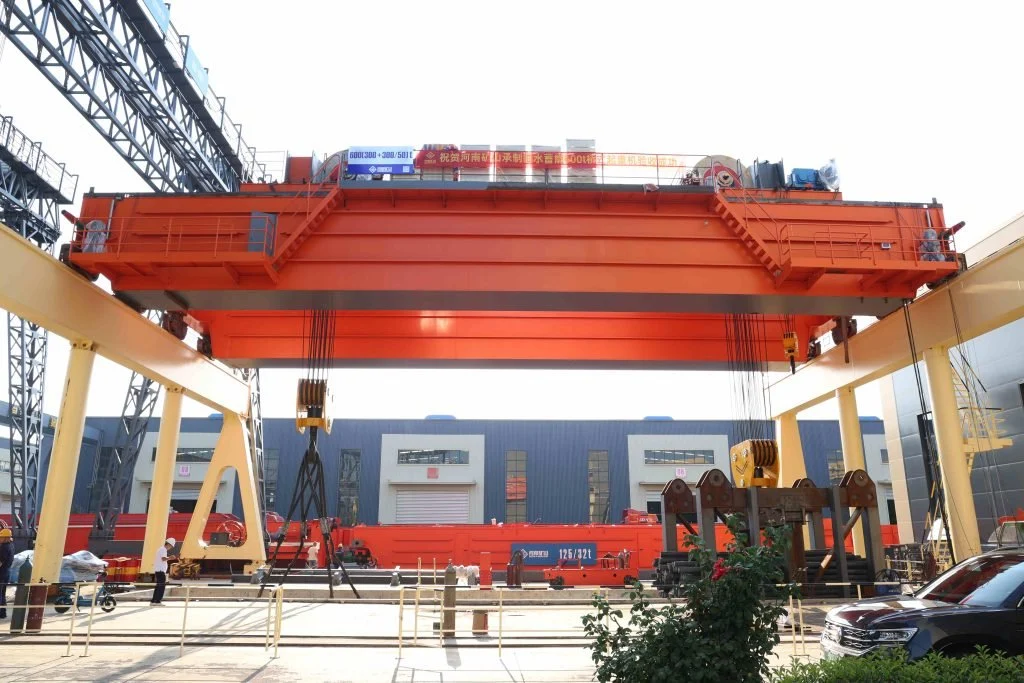
Four-girder casting-crane equipment prepared for heavy molten-metal service. |
Controlled Motion for Full-Ladle Transfer
Smooth acceleration and braking help limit sudden ladle movement during hoisting and travel. The required speeds should be selected around production cycle time, ladle stability and final positioning. Low-speed control is especially important when approaching furnace, refining or casting positions.
Drive and brake selection must reflect the repeated high-load duty. Motors, gearboxes, drums, ropes, sheaves, wheels and brakes should be evaluated as complete mechanisms. The crane class and mechanism duty should be stated clearly in the quotation, not replaced by the capacity rating.
Buyers can use the crane duty class guide to compare utilization and load-spectrum assumptions between suppliers.
PLC Control and Open Industrial Ethernet
The 450t project crane uses PLC control with an open industrial Ethernet bus. This architecture allows crane drives, safety devices, sensors, operator controls and monitoring functions to exchange status information through a coordinated control system.
Reserved interfaces support future intelligent upgrades. The buyer should define which signals need to connect with the plant control or maintenance system, who owns the operating commands and how communications faults are handled. Local safety functions must remain effective if an upper-level network is unavailable.
Control documentation should include network architecture, equipment addresses, interface lists, alarm definitions, backup requirements and access permissions. A clear data structure simplifies commissioning and future maintenance.
Safety Monitoring and Lifecycle Records
The crane’s safety monitoring and management system provides real-time alarms and lifecycle records. Monitoring can give operators and maintenance teams visibility into crane status, load events, operating time, starts, limit activations, drive faults and safety-device conditions according to the final system scope.
Alarm history supports fault tracing, while utilization and load records support maintenance planning. Monitoring does not replace physical inspection; it helps the plant prioritize work and understand how the crane is being used. The overhead crane preventive maintenance checklist can be combined with recorded operating data.
Heat Protection and Maintainability
Radiant heat from molten metal affects the crane underside, trolley, electrical cables and instruments. The buyer should provide molten-metal temperature, exposure duration, distance from the ladle and ambient temperature at crane level. These values guide shielding, insulation, component selection, cable routing and cooling.
Walkways, service platforms, inspection access and component-removal routes should be designed around safe maintenance. Production-critical parts need an agreed spare-parts strategy covering commissioning spares, routine consumables and major components with long lead times.
Installation and Commissioning Planning
A 450t crane requires early planning for transport, unloading, assembly and heavy erection. Workshop access, floor capacity, temporary supports, lifting equipment and runway readiness should be confirmed before shipment. Large bridge and trolley assemblies may require a staged erection plan coordinated with plant construction.
Commissioning should verify rail and wheel alignment, crane motions, brakes, limits, safety functions, controls, monitoring, main and auxiliary hoists and rated-load performance. Functional tests should include defined fault and emergency cases as required by the project acceptance plan.
Information Required for a 450t Casting Crane Quotation
A commercial proposal requires complete ladle, workshop and production information. Providing the following data allows the supplier to define the structure, hoisting arrangement, safety architecture and project scope.
| RFQ Information | Engineering Purpose |
|---|---|
| Ladle and molten-metal weight | Defines main capacity together with lifting beam, hook blocks and attachments. |
| Main and auxiliary duties | Determines hoist arrangement, capacities, hook spacing and permitted combined operation. |
| Span, lifting height and runway | Defines crane geometry, hook coverage, wheel loads and structural interfaces. |
| Production cycle and load spectrum | Supports crane class, mechanism duty, speed and brake selection. |
| Temperature and plant environment | Defines heat, dust, enclosure, cable and component-protection requirements. |
| Safety and redundancy standard | Aligns hoisting protection, fault response, monitoring and acceptance criteria. |
| Control and data interfaces | Clarifies PLC, drives, network, plant integration and lifecycle records. |
Project Result
The customized 450t casting crane combines a four-girder, four-rail structure with an integrally annealed and machined trolley frame for heavy ladle handling. Finite-element modeling supports structural design, while PLC control, open industrial Ethernet and the safety monitoring system provide real-time operating information and lifecycle records.
The project demonstrates how very-high-capacity structure, precise manufacturing, molten-metal safety and digital controls can be integrated into one production-critical crane. Buyers planning a broader steelmaking package can review additional industrial manufacturing crane solutions and the related fully automatic coke pot crane project.
Frequently Asked Questions
When is a four-girder four-rail casting crane selected?
It is considered for very high capacities and demanding molten-metal service where the trolley arrangement, structural rigidity, production duty and required redundancy justify the configuration.
Does every steel mill need a 450t ladle crane?
No. Capacity must be calculated from the plant’s maximum ladle, molten metal, lifting beam, hook blocks, auxiliary duties and governing design requirements.
Can the casting crane connect with a plant monitoring system?
Yes. This project uses PLC control and an open industrial Ethernet bus with reserved intelligent-upgrade interfaces. The final integration scope should be defined through a signal and network interface list.
Request a 450t Casting Crane Proposal
Send your ladle data, workshop drawings, span, lifting height, operating cycle, temperature conditions and safety requirements. Henan Mine Crane can prepare a project-specific ladle crane specification and commercial quotation.