
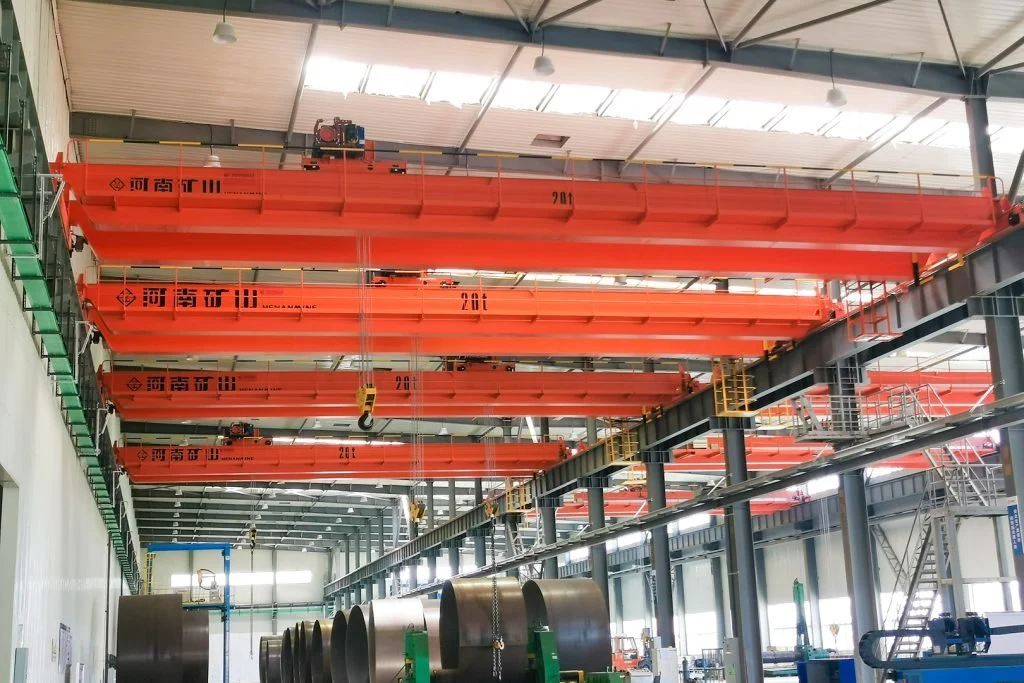
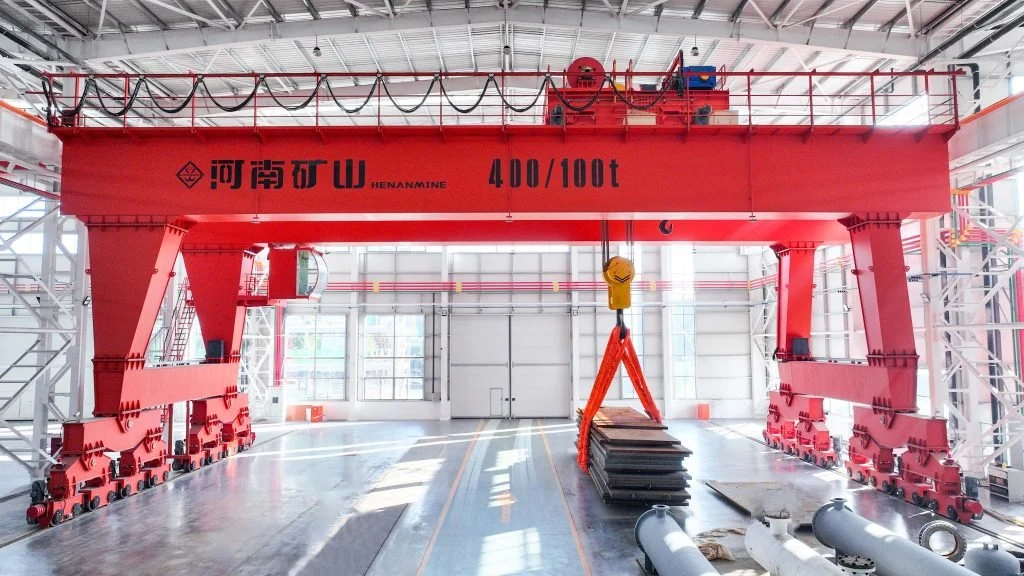

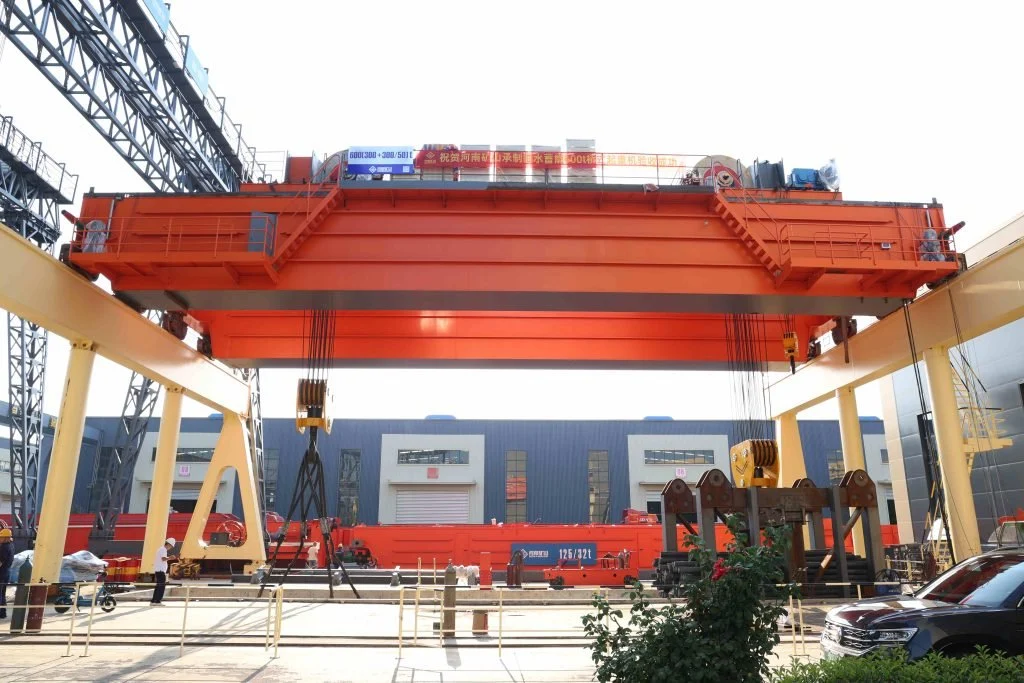
Steel Processing Crane Project
A heavy-duty overhead crane system engineered to lift, rotate and position steel plates and long steel products through 360 degrees with controlled magnetic handling.
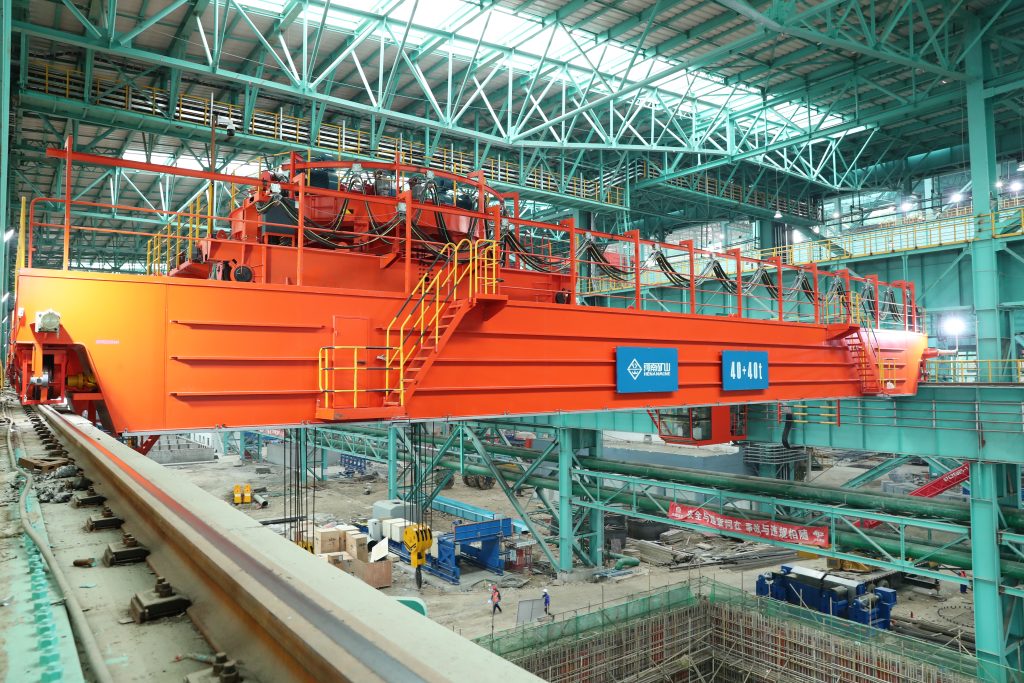
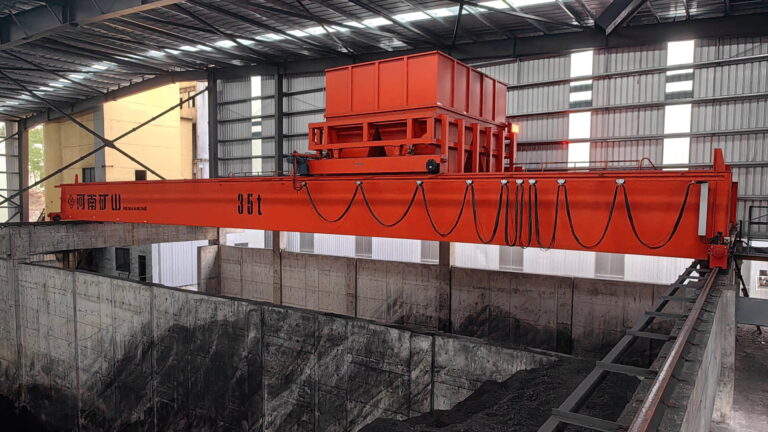
40t+40t upper-rotating electromagnetic beam crane installed for heavy steel material handling.
| Main Configuration40t+40t double-girder overhead crane | Lifting DeviceRotating electromagnetic beam | Rotation360° load orientation | Handled MaterialsPlates, billets and long steel products |
Project Requirement
The steel processing facility needed a crane that could do more than move material from one end of a bay to another. Long plates, billets and structural sections had to be picked up at multiple points, turned to the required angle and placed accurately at production equipment, storage stacks or dispatch positions.
Conventional hook handling would require additional slinging work and repeated ground-level adjustment. A fixed electromagnetic beam could shorten the lifting cycle, but it would still limit the direction in which long products could be placed. The project therefore selected an upper-rotating electromagnetic beam crane that combines multi-point magnetic lifting with 360-degree load orientation.
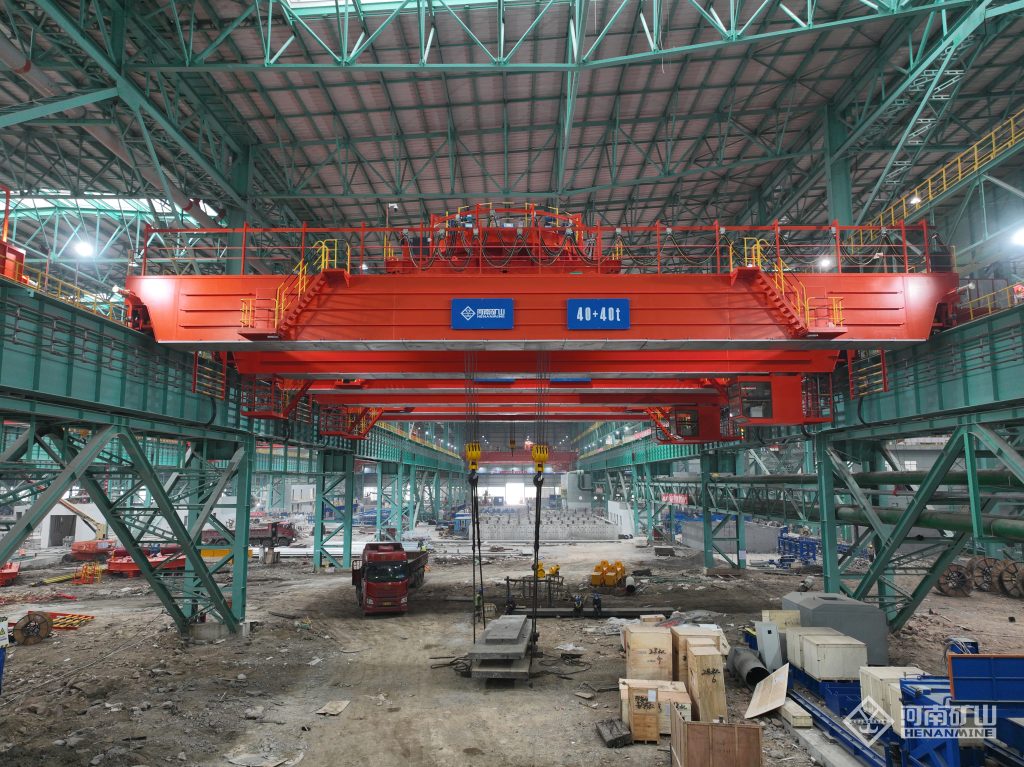
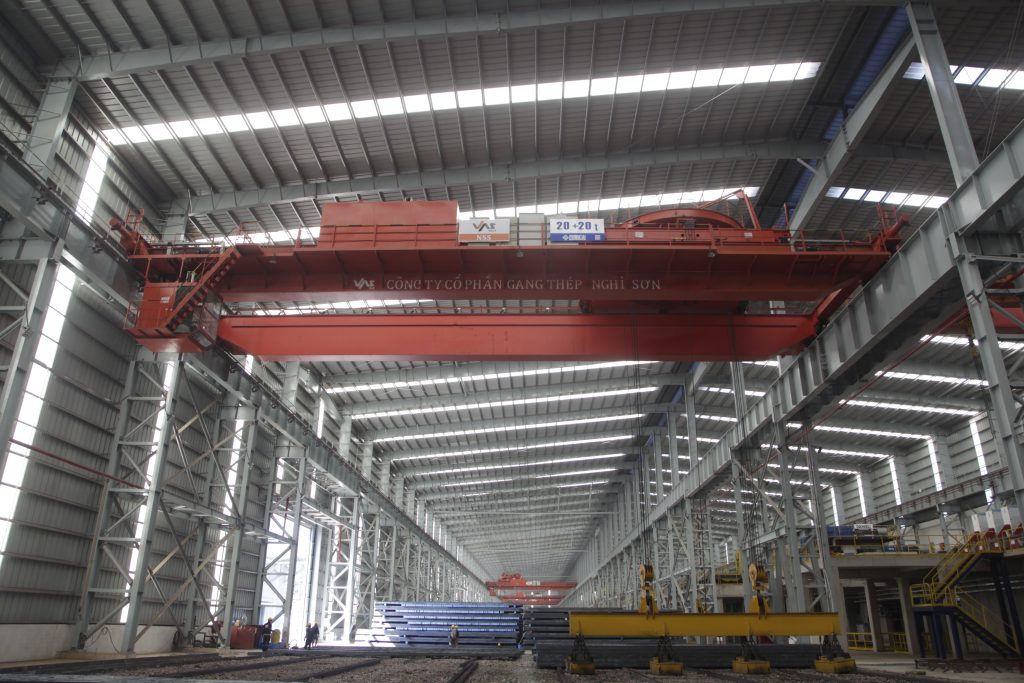
The main 40t+40t configuration provides the lifting capability required for heavy steel loads. A 20t+20t configuration shown in the project equipment range serves lighter material routes while retaining the same rotating electromagnetic handling principle. This allows crane capacity and beam length to follow the actual load list in each production bay.
Procurement focus: Capacity alone does not define an electromagnetic crane. The quotation must also match the steel type, product dimensions, maximum layer weight, contact condition, beam length, magnet spacing, rotation envelope and required duty cycle.
Engineered Crane Solution
Henan Mine Crane configured a top-running double-girder bridge with a rotation mechanism positioned above the lifting beam. The bridge and trolley provide longitudinal and cross travel, while the upper rotating assembly turns the electromagnetic beam to align long material with the destination. The complete motion package gives the operator four coordinated movements: lifting, trolley travel, bridge travel and beam rotation.
Multiple magnets are distributed along the beam to support the load over its length. Magnet groups can be arranged around the buyer’s product mix, helping the crane handle different plate lengths, billets or long sections without relying on one central lifting point. Smooth speed control reduces load swing during starting, braking and rotation.
The bridge structure, trolley frame, rotating assembly, lifting beam and electrical system are designed as one coordinated machine. Buyers comparing configurations can review Henan Mine Crane’s electromagnetic overhead cranes and top-running electromagnetic girder cranes for related steel-handling arrangements.
|
40t+40t crane bridge and rotating lifting system serving a wide steel-processing bay. |
20t+20t configuration for a lighter material route using the same rotating beam principle. |
360° Upper-Rotating Beam for Flexible Material Flow
The upper rotating mechanism lets the complete electromagnetic beam turn through 360 degrees. This makes it possible to pick up material in one direction and place it in another without setting the load down for manual repositioning. The function is especially valuable when stock rows, process lines and vehicle loading positions do not share the same orientation.
The rotation drive uses controlled acceleration and deceleration to protect long products from sudden angular movement. Position feedback can support repeatable alignment at designated workstations. Travel and rotation interlocks can also restrict movement when the load approaches structures, adjacent cranes or process equipment.
The full swept path of the longest product is checked during engineering. Columns, walkways, lighting, pipes and nearby machinery must remain clear of the permitted rotation envelope. This layout review is one of the most important steps when replacing a fixed beam crane with a rotating system.
Electromagnetic Beam and Magnet Grouping
The electromagnetic beam is sized from the longest and heaviest materials in the buyer’s handling list. Magnet quantity and spacing depend on product length, rigidity, thickness, surface scale, temperature, air gaps and stacking pattern. Thin plates and flexible long sections may require more lifting points than rigid billets of the same total weight.
Selectable magnet groups improve flexibility when the crane handles products of different lengths. The operator activates only the magnets needed for a particular load while the control system monitors magnetic current and operating status. The magnetic rating is checked against the least favorable material condition rather than only clean, flat test pieces.
For layered lifting, the required number of plates or sections must be defined before manufacture. The magnetic system, beam structure and crane rated capacity are verified together so that the combined weight of the steel, magnets, beam and rotating mechanism remains within the approved lifting configuration.
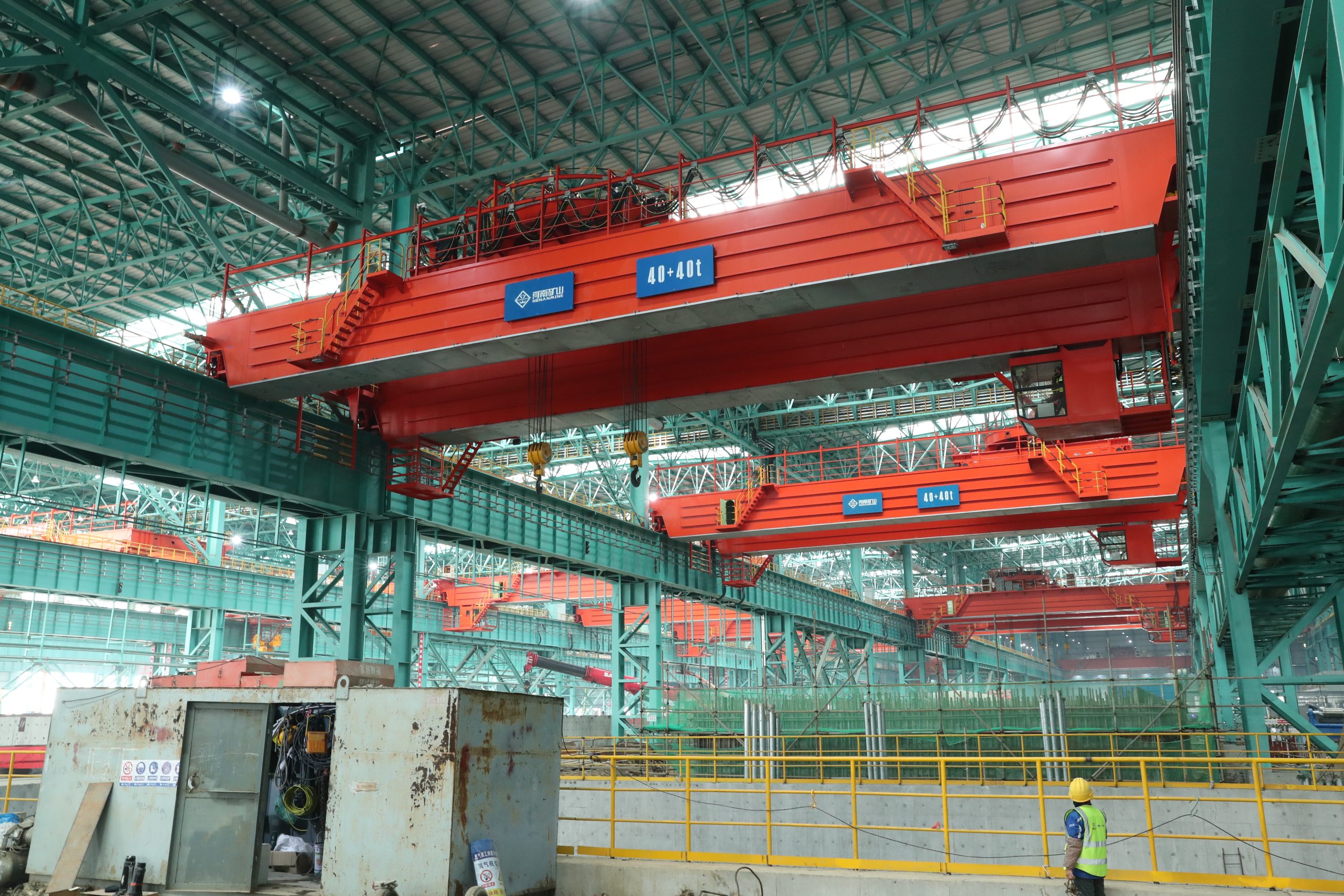
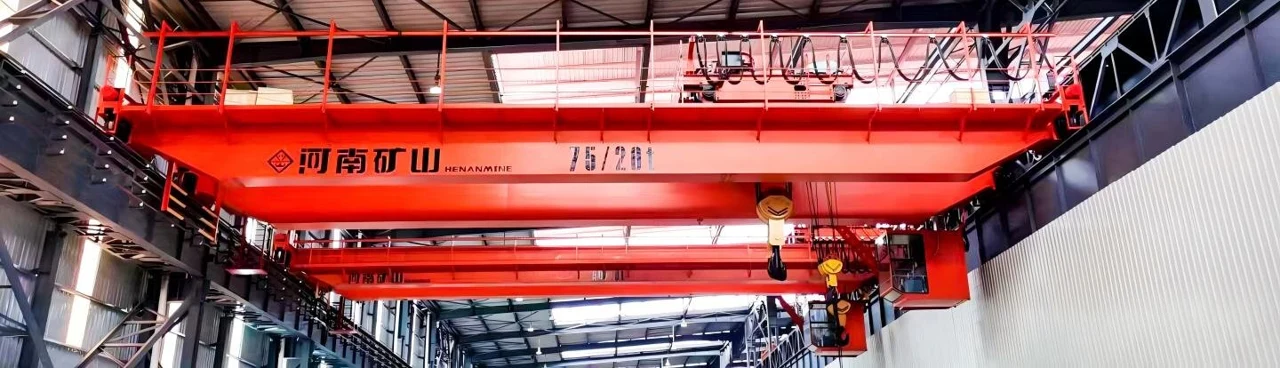
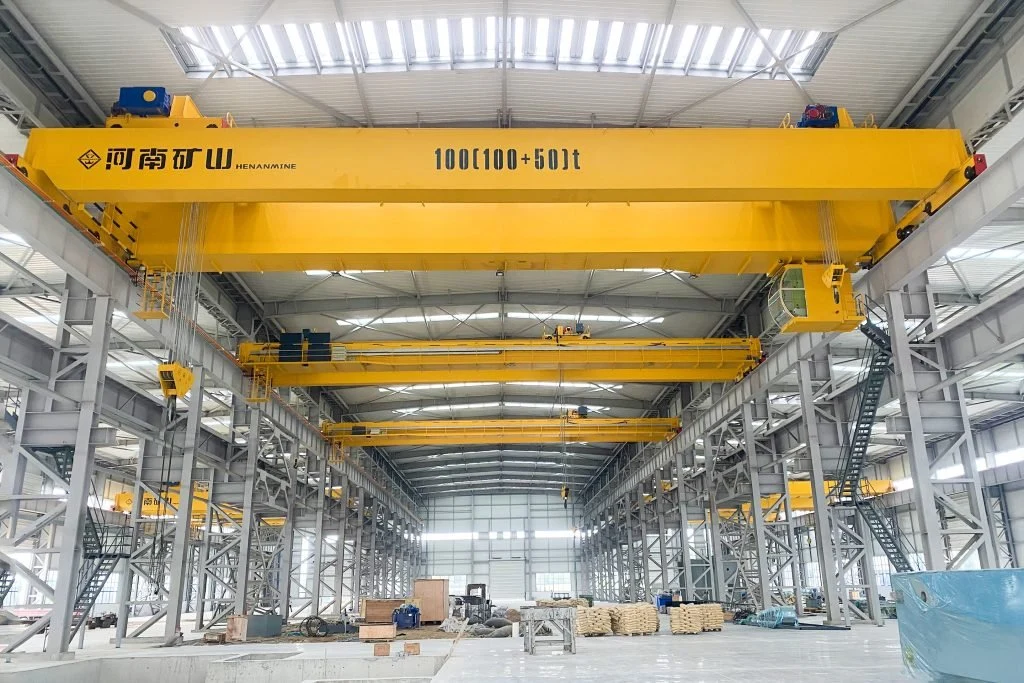
Upper-rotating electromagnetic cranes arranged across steel production areas with project-specific capacities and spans.
Power-Loss Protection and Magnetic Safety
An electromagnetic crane depends on reliable power while material is suspended. The project electrical system therefore includes monitoring for magnet current, voltage and operating state. Lifting is prevented when the magnetic system is not ready, and visible or audible warnings support controlled operation inside the material route.
Backup magnetic retention can be configured to keep the load energized for a defined emergency period after a power failure. The required retention time is selected from the crane route and the time needed to move or lower the load to a designated safe position. The backup supply, charging status and fault alarm are incorporated into the crane control logic.
Magnetic retention does not replace controlled operating zones. The project layout should prohibit personnel beneath suspended loads, define emergency lowering areas and keep unrelated traffic away from the crane path. Operational procedures, warning systems and maintenance checks form part of the complete safety arrangement.
Key Technical Configuration
| System | Project Configuration and Buyer Value |
|---|---|
| Bridge and Trolley | Top-running double-girder structure provides the stiffness and working coverage required for heavy steel-handling duty. |
| Upper Rotation Unit | Turns the complete beam through 360° for alignment with production, storage and vehicle loading routes. |
| Electromagnetic Beam | Multi-point magnetic lifting supports plates, billets and long steel products while reducing manual slinging work. |
| Variable-Speed Drives | Smooth lifting, travel and rotation improve positioning and reduce sudden movement of long suspended material. |
| Safety Monitoring | Monitors magnet status, motion limits, overload condition, drive faults and emergency functions. |
| Control Options | Cab, radio remote or PLC-assisted operation can be selected around visibility, cycle frequency and plant automation requirements. |
Structure and Rotation Arrangement
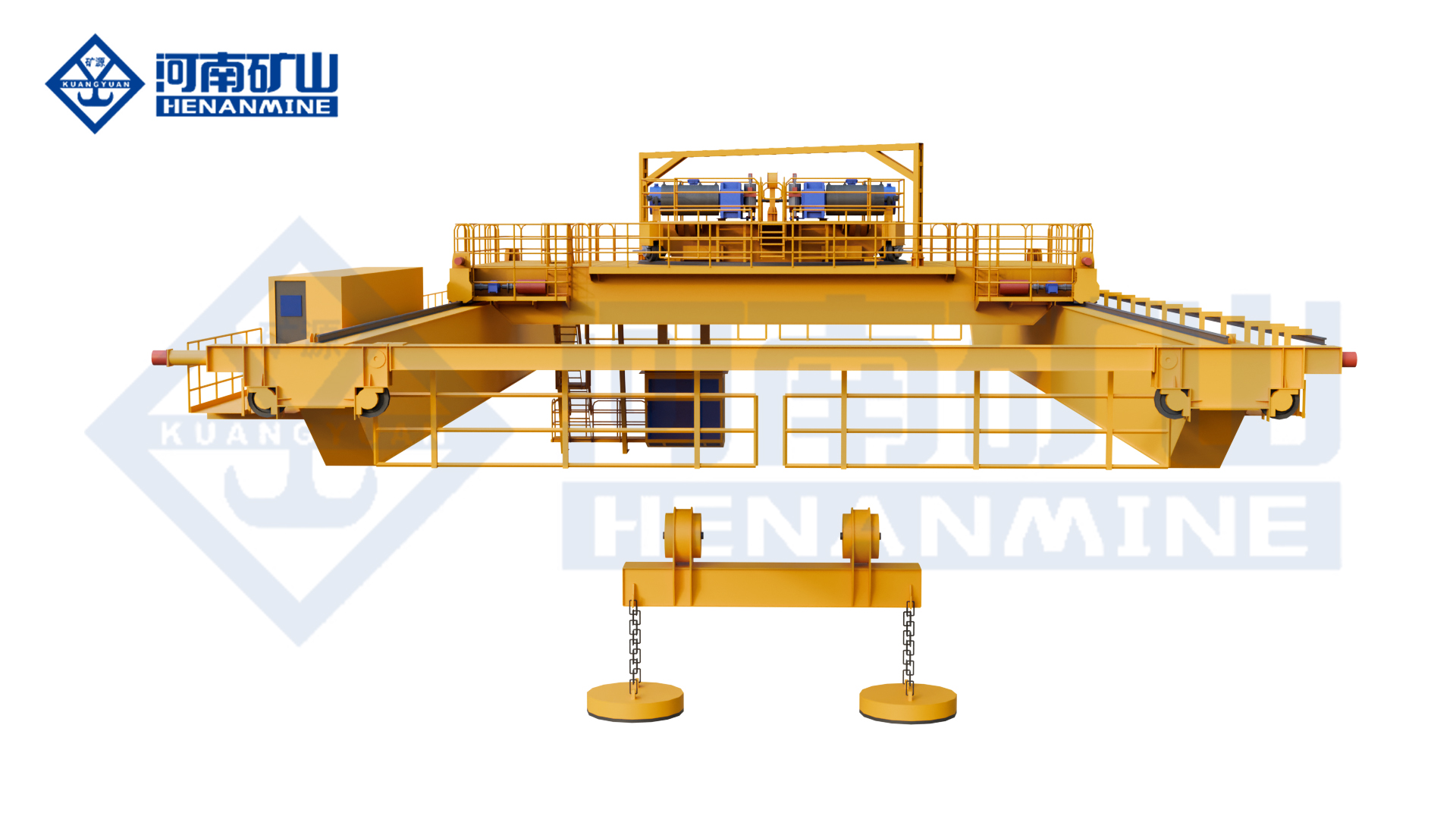
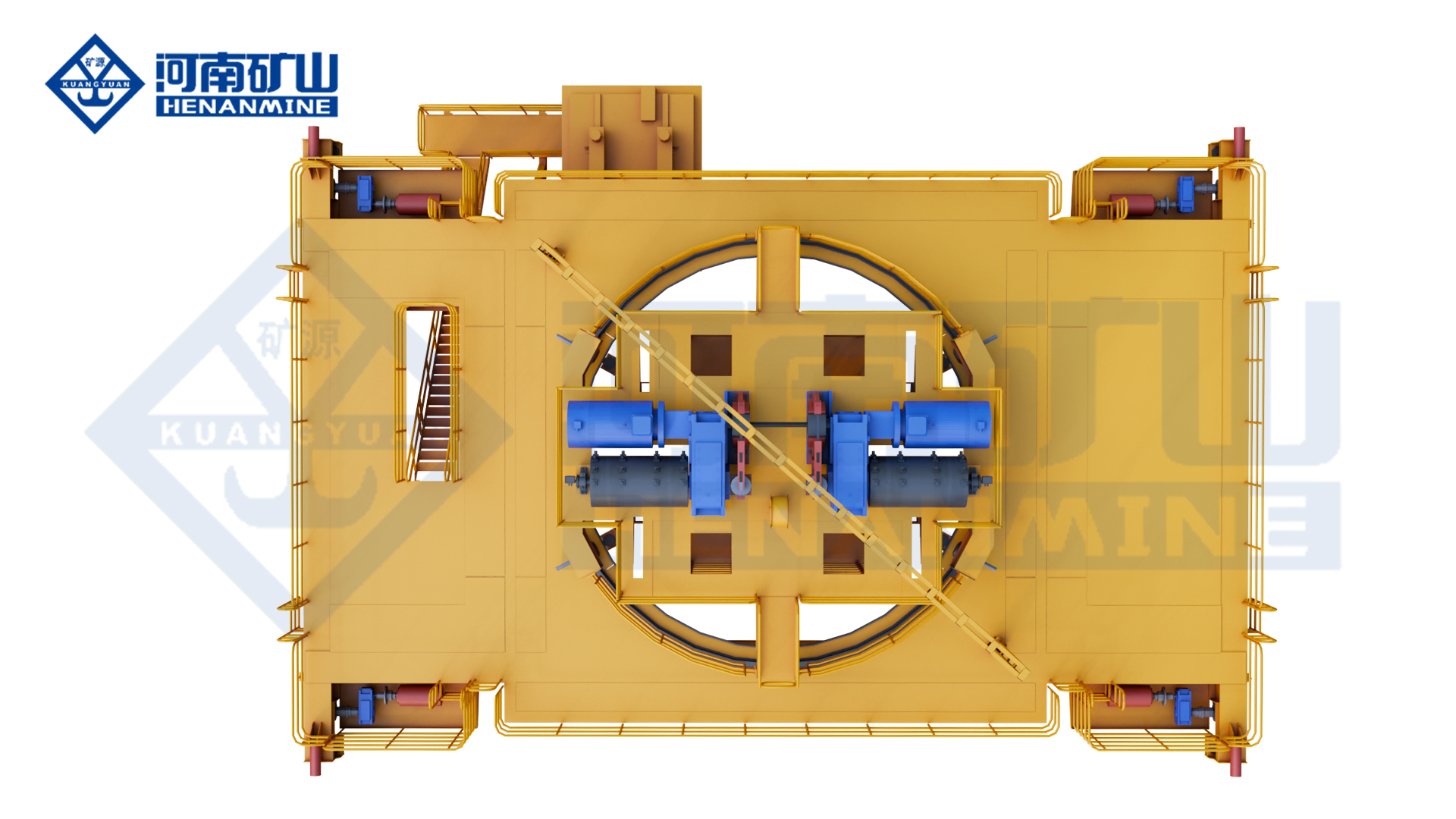
The engineering views below show the relationship between the bridge, trolley, upper rotation mechanism, lifting beam and magnet groups. Locating the rotation unit above the beam keeps the complete lifting attachment under controlled rotation while leaving the magnets distributed along the material length.
The crane is configured from the available building height and required hook approach. Headroom, trolley size and beam depth are checked against the runway elevation, roof structure, process equipment and the highest required stacking position. Wheel loads and end approaches are supplied for the buyer’s runway verification.
|
Front view of the electromagnetic beam and distributed lifting magnets. |
Top view showing the upper rotating mechanism within the trolley assembly. |
Three-dimensional configuration of the bridge, trolley and rotating magnetic beam. |

Project Outcome
The upper-rotating electromagnetic crane gives the steel plant one machine for lifting, transporting and orienting long ferrous products. Operators can collect material from a storage row, rotate it during the transfer cycle and place it in the direction required by the next process without repeated manual rigging or ground-level turning.
The 40t+40t and 20t+20t configurations demonstrate how the same handling concept can be adapted to different bay loads. Standardized operating principles support training and maintenance, while the crane structure, beam length, magnet groups and speeds remain matched to each process position.
For plants that also handle ladles or other molten-metal loads, the electromagnetic crane should be specified separately from the metallurgical overhead crane. The combined steel-mill package can then coordinate controls, delivery schedules, documentation and spare-parts planning while retaining the correct safety design for each load type.
Information Required for a Commercial Quotation
Send the following data so the crane, rotating mechanism, beam and magnetic system can be quoted as one complete project:
| Crane Parameters Required capacity, span, lifting height, runway length, hook approaches and available headroom |
Material Data Steel type, maximum weight, length, width, thickness, temperature and stacking pattern |
Operating Duty Lifts per hour, operating hours, required speeds, control method and automation level |
| Rotation Layout Product orientations, swept area, obstacles, adjacent cranes and target positions |
Electrical Supply Plant voltage, frequency, control standard and required backup retention time |
Project Scope Design standard, testing, shipping, installation, commissioning and spare-parts requirements |
Crane duty has a direct effect on motors, brakes, gearboxes, wheels and structural fatigue. Buyers can use the crane duty class guide to prepare operating data and the overhead crane preventive maintenance checklist when planning long-term service requirements.
Frequently Asked Questions
What does 40t+40t mean on this electromagnetic crane?
It identifies the project’s combined lifting arrangement. Final rated capacity must be confirmed together with the magnetic beam, magnets and the permitted material configuration. The quotation will state the approved load combinations and operating conditions.
Can the magnetic beam rotate continuously through 360 degrees?
The upper rotation system is designed for full 360-degree orientation. Cable routing, control limits and the rotation strategy are engineered around the selected mechanism and the plant’s operating route.
Can one beam handle steel products of different lengths?
Yes. Magnet quantity, spacing and selectable groups can be configured for the required product range. The buyer should provide the shortest, longest, lightest and heaviest normal loads so every approved combination can be checked.
What happens if plant power fails while a load is suspended?
A backup retention system can keep the magnets energized for a defined emergency period. The required time, alarms and safe response route are agreed during technical clarification and included in the electrical design.
Can the crane be integrated with a steel plant automation system?
PLC communication, position feedback, status signals, designated work positions and semi-automatic or automatic sequences can be included when the buyer supplies the required interface and process logic.
Request an Upper-Rotating Electromagnetic Crane Quotation
Send your steel dimensions, maximum load, workshop drawing, required rotation path and operating cycle. Henan Mine Crane will prepare a project-specific crane configuration, technical proposal and commercial quotation.