

Renewable Energy Equipment Manufacturing Project
High-precision 20t, 80/50t and 80/10t overhead cranes using full VFD control, modular construction and aviation-plug wiring for wind-power and clean-energy equipment production.
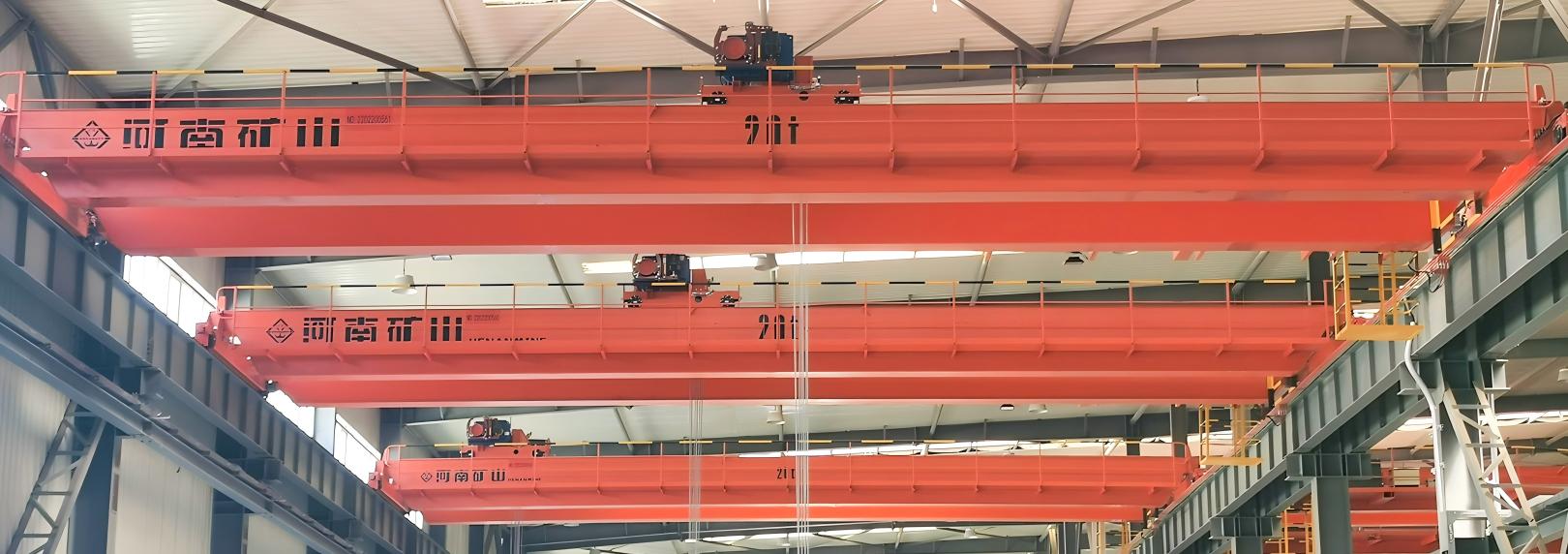
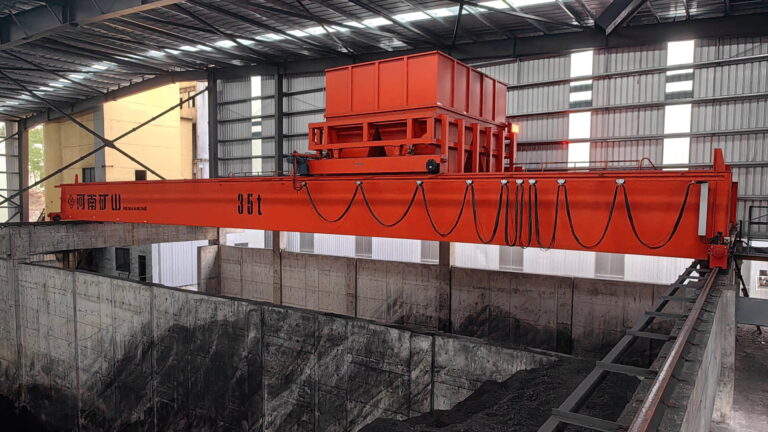
Multiple overhead cranes installed for clean-energy equipment production and internal component transfer.
| CustomerCRRC clean-energy base | Project Scope18 high-precision cranes | Energy Context5 million kW wind + solar installed-capacity plan | Fleet TechnologyFull VFD control and modular installation |
Project Background
Henan Mine Crane manufactured 18 high-precision cranes customized for CRRC’s clean-energy equipment manufacturing base. The associated project is planned around a combined wind and solar installed capacity of 5 million kW.
The factory crane fleet supports wind-power components, structural fabrication, assembly and maintenance across several production bays. Project images include multiple 20t cranes together with 80/50t and 80/10t heavy bridge cranes for larger manufacturing and assembly tasks.
The complete batch uses full variable-frequency control. Modular crane design and aviation-plug electrical connections simplify installation, while lightweight, generalized and lower-maintenance design concepts support fleet-wide lifecycle requirements.
Procurement priority: Build a crane schedule for every production bay. Define handled components, maximum load, lifting points, capacity, hook arrangement, span, lifting height, duty, speeds, positioning requirement and installation sequence before standardizing the 18-unit fleet.
The Clean Energy Manufacturing Challenge
Wind-power equipment manufacturing involves large components and assemblies that change in weight, dimensions and center of gravity as production progresses. Fabrication, machining, subassembly and final assembly do not always require the same crane capacity or hook configuration.
A multi-bay factory also needs coordinated crane availability. Production can slow when one crane covers too many stations, travel routes overlap without clear controls or low-speed positioning is inadequate for final component alignment.
Eighteen cranes create fleet-level installation and maintenance requirements. Standardization can reduce component variety and field wiring, but each crane must still match its workstation load, duty and building geometry.
18-Crane Manufacturing Fleet Solution
Henan Mine Crane configured the 18-crane package for different production areas within CRRC’s clean-energy base. Multiple 20t cranes provide repeatable production coverage, while 80/50t and 80/10t cranes serve heavier wind-energy equipment handling and assembly duties.
Full VFD control is applied across the fleet for smooth acceleration, deceleration and low-speed operation. Modular construction and aviation-plug connections simplify mechanical and electrical installation interfaces.
The crane schedule can standardize appropriate drives, motors, brakes, controls, electrical components and documentation. Capacity, hooks, speeds and lifting height remain matched to each workstation.
Buyers planning a comparable plant can review Henan Mine Crane’s overhead crane configurations before developing the factory-wide lifting schedule.
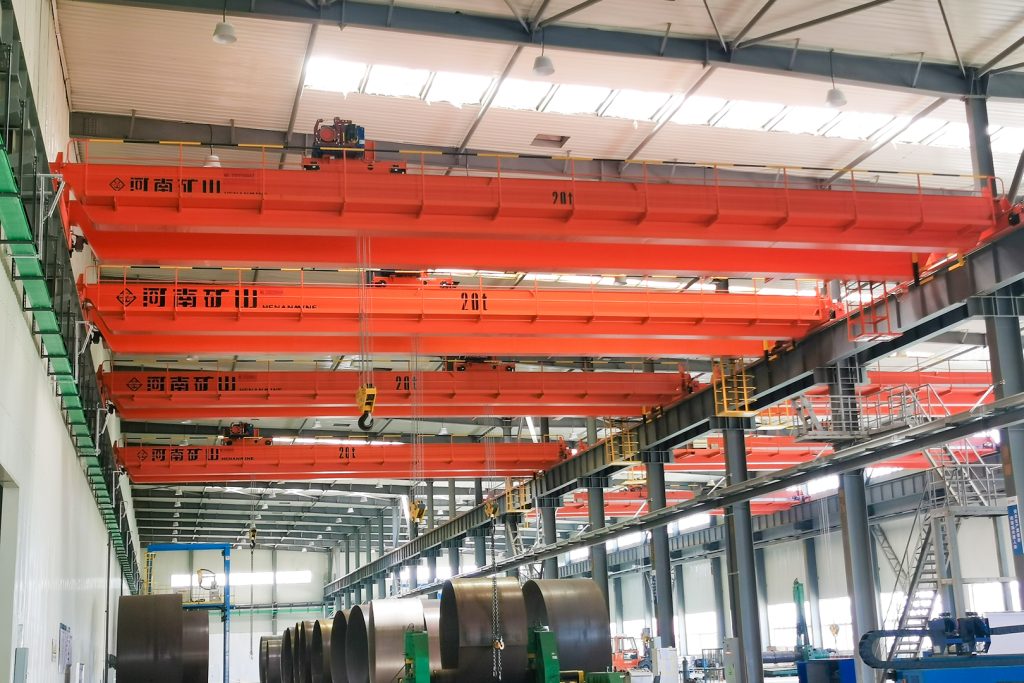
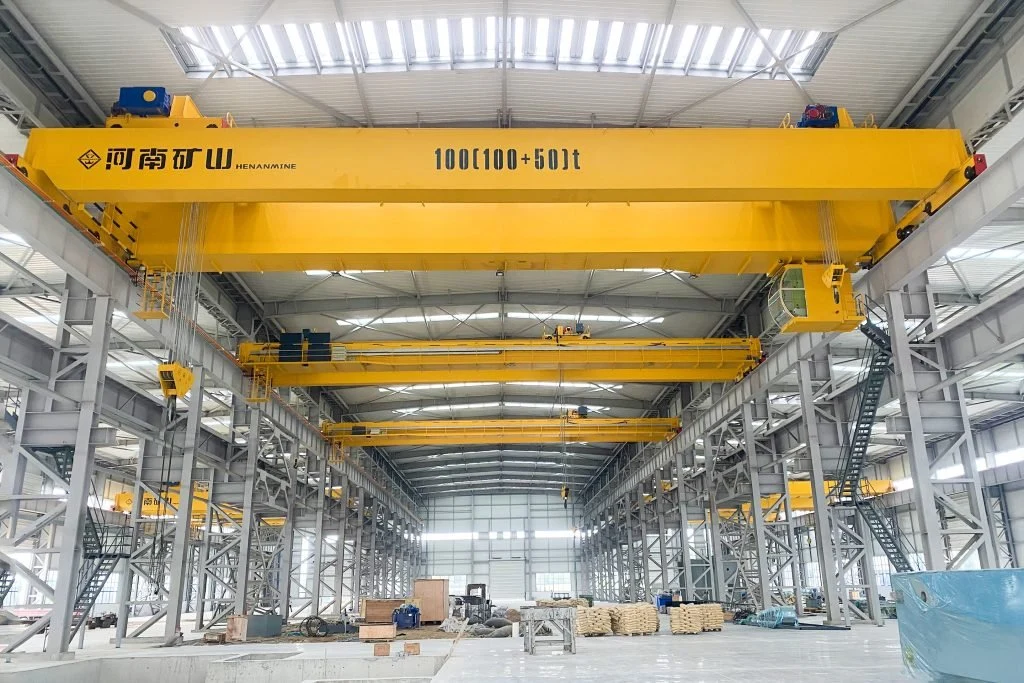
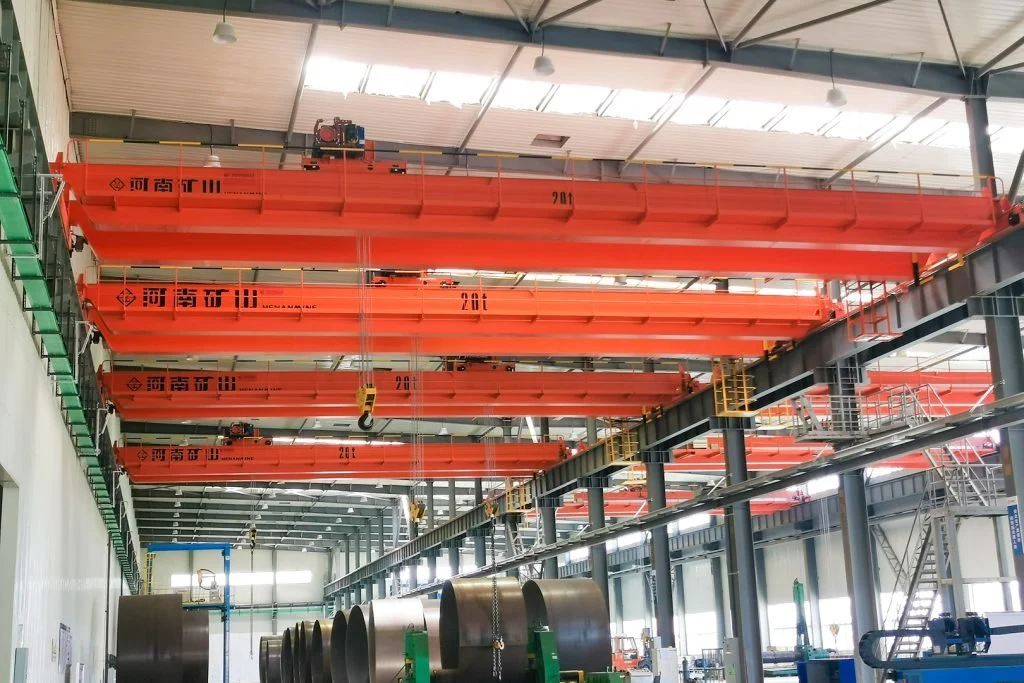
Multiple 20t bridge cranes installed above large manufactured components. |
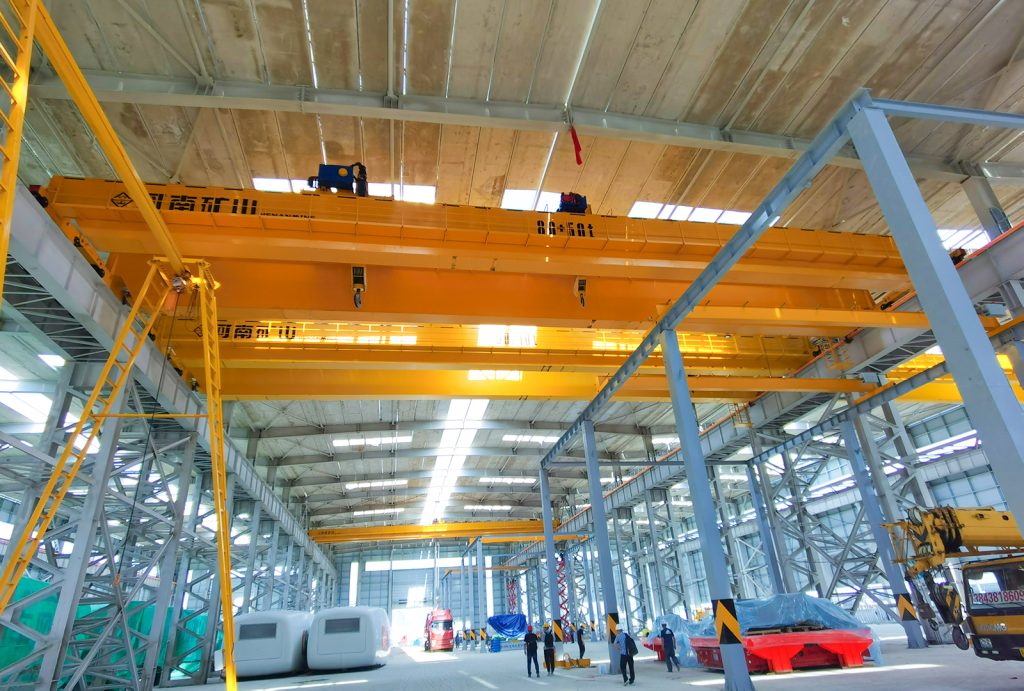
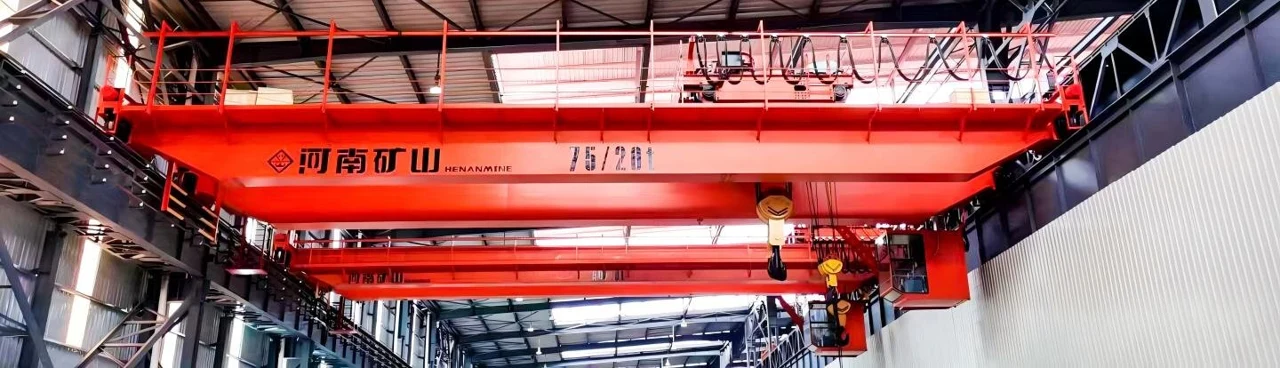
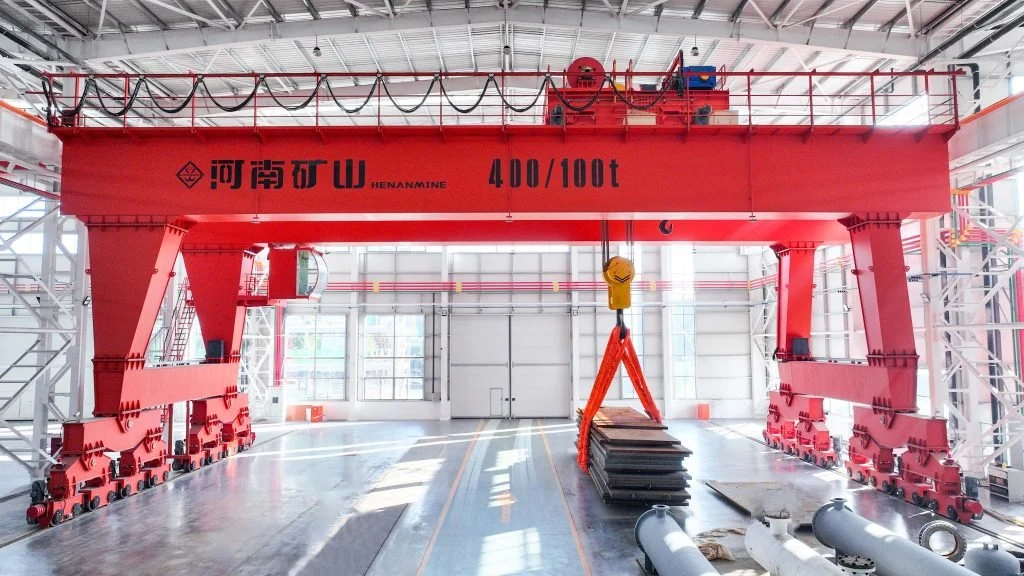
80/50t heavy bridge cranes serving large wind-power equipment assembly positions. |
20t Cranes for Production-Line Coverage
The project images show several 20t bridge cranes installed in organized production bays. Repeating a suitable crane configuration across similar workstations can simplify operator training, spare parts and maintenance.
A 20t capacity should still be verified against each component, lifting attachment and rigging arrangement. The technical schedule identifies maximum suspended load, load dimensions, center of gravity, pickup points and production cycle.
Crane quantity is checked against simultaneous demand. A station with frequent lifts or a critical assembly takt may need dedicated coverage, while occasional tasks can share a crane when travel distance and scheduling allow.
80/50t Heavy Assembly Cranes
The 80/50t cranes provide two lifting capacities for heavy clean-energy equipment manufacturing. Main and auxiliary lifting arrangements can support different production and maintenance tasks within the assigned bay.
The purchase specification must state the permitted load on each hook, allowed combined loading, hook spacing, simultaneous-motion rules and whether the crane will turn, tail or align long components. The displayed capacity does not authorize every possible hook combination.
For multi-point handling, the buyer should define the lifting beam, rigging, load-sharing method and allowable tilt. Any attachment and rigging weight is included in the total suspended load.
80/10t Crane for Wind-Power Equipment
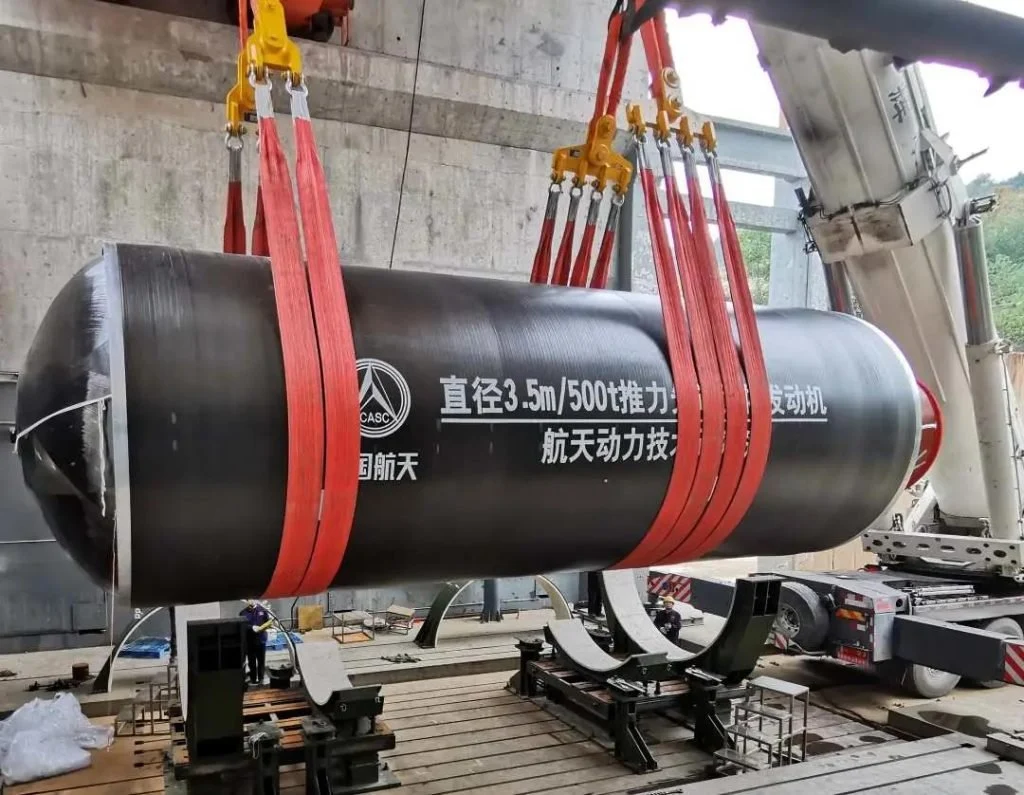
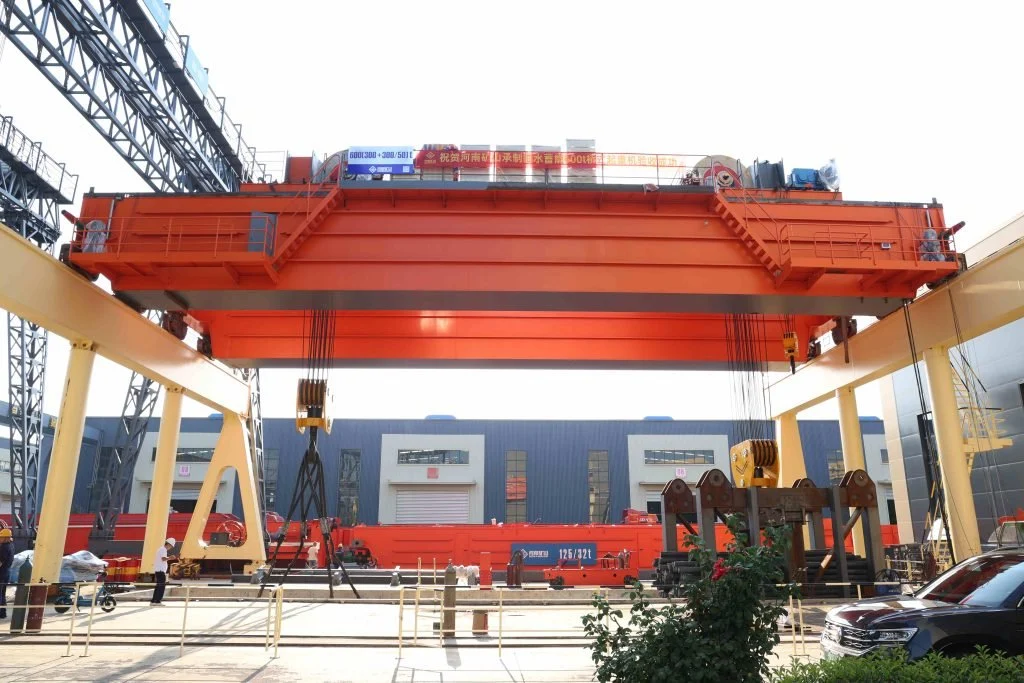
An 80/10t bridge crane is shown operating above CRRC wind-power nacelle equipment. The main hook provides heavy lifting capability while the 10t auxiliary function supports lighter assembly and maintenance work.
Hook approach and lifting height are verified against the nacelle, assembly fixtures, columns, platforms and building roof. Buyers should calculate usable hook height from the complete load, attachment and rigging arrangement rather than building height alone.
Low-speed movement and controlled stopping help final component alignment. The RFQ can define minimum stable speed, required positioning tolerance and the load condition used for acceptance testing.
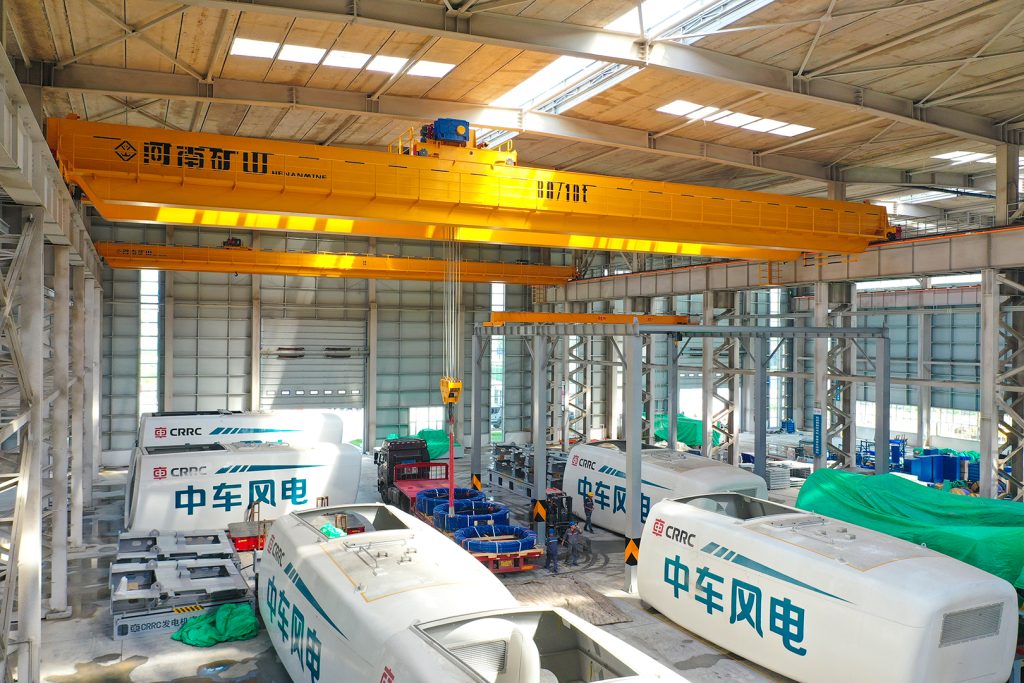
80/10t overhead crane serving wind-power nacelle equipment handling and assembly. |
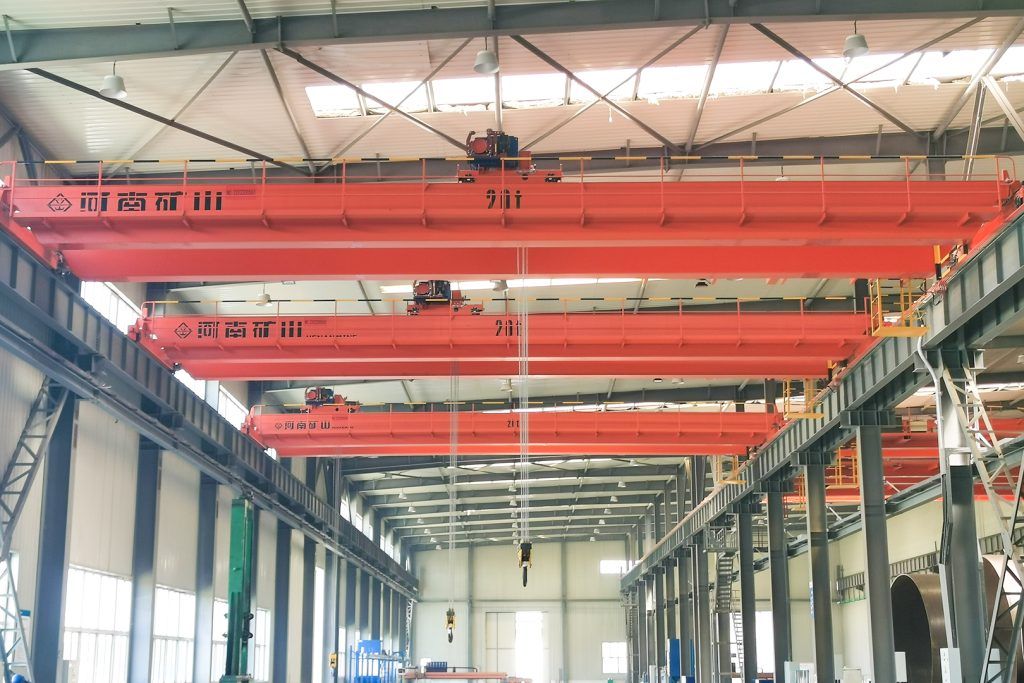
Row of full-span 20t cranes supporting production and internal component transfer. |
Full VFD Control for Smooth Handling
All cranes in the referenced batch use full variable-frequency control. Smooth acceleration and deceleration reduce mechanical shock and suspended-load movement during lifting, trolley travel and bridge travel.
Variable-frequency control also supports stable low-speed handling for component positioning. Buyers should define the required speed ranges and minimum stable speeds for each mechanism rather than requesting VFD control without performance criteria.
Energy performance is evaluated from motor sizing, operating hours, load spectrum, travel distance, acceleration profiles and standby time. A commercial comparison should use the same production assumptions across proposed crane systems.
Modular Design and Aviation-Plug Wiring
The project uses modular construction to simplify installation and future component replacement. Mechanical and electrical interfaces are prepared so site assembly can follow a coordinated sequence.
Aviation-plug wiring reduces field connection work compared with extensive point-to-point wiring. The buyer should confirm connector protection, coding, cable lengths, installation access and testing responsibilities within the approved electrical design.
Pre-engineered interfaces are especially valuable when several cranes must be installed during a short factory construction window. Shipment, erection and commissioning can be scheduled by building and production bay.
Lightweight and Generalized Fleet Design
The documented design emphasizes lightweight construction, common components and lower maintenance requirements. Crane dead weight and wheel loads are coordinated with the supporting runway while maintaining the required capacity, stiffness and duty.
Generalized components can reduce spare-part variety across different crane capacities. Drives, brakes, electrical devices, controls, alarm names and documentation can use common families where technical requirements permit.
Standardization must not remove necessary differences. Heavy assembly cranes may require different hooks, brakes, monitoring or maintenance access from production-line 20t cranes.
Production-Flow and Fleet-Quantity Planning
The number of cranes is determined from material flow rather than workshop floor area alone. The study maps fabrication, machining, subassembly, final assembly, inspection and dispatch, then identifies crane movements between these stages.
Cycle time includes rigging, lifting, travel, positioning, release and empty return. Required quantities can then be checked against production takt, peak simultaneous demand and allowable crane sharing.
If future automation is planned, the original fleet can reserve control capacity and interfaces. Buyers can review whether an automated overhead crane fits selected production stations.
Installation and Expansion Planning
An 18-crane project requires coordinated delivery, site access, lifting equipment, runway readiness and electrical power. Modular sections and quick electrical interfaces help reduce installation complexity when the site is prepared.
The contract should assign runway survey, unloading, erection, power connection, commissioning, test loads and operator training. Readiness dates can be organized by production bay so cranes arrive in the sequence the factory can install them.
For phased factory expansion, common design standards and reserved runway or electrical provisions simplify later crane additions. New cranes can follow the established component, control and documentation platform.
Key Project Configuration
| Project Element | Referenced Configuration and Buyer Value |
|---|---|
| Customer | CRRC clean-energy equipment manufacturing base. |
| Project Context | Combined wind and solar installed-capacity plan of 5 million kW. |
| Crane Quantity | 18 high-precision cranes. |
| Visible Capacities | 20t, 80/50t and 80/10t overhead crane configurations. |
| Applications | Wind-power components, structural fabrication, assembly and maintenance. |
| Motion Control | Full variable-frequency control across the complete crane batch. |
| Installation | Modular construction and aviation-plug electrical connections. |
| Fleet Design | Lightweight, generalized and lower-maintenance design concepts. |
Project Result
The 18-crane fleet provides CRRC’s clean-energy base with lifting coverage for wind-power components, production transfer, heavy assembly and maintenance.
Multiple 20t cranes support repeatable production tasks, while 80/50t and 80/10t cranes provide heavy and auxiliary lifting functions for large clean-energy equipment.
Full VFD control delivers smooth movement across the fleet. Modular structures and aviation-plug wiring simplify installation, while lightweight and generalized designs support future maintenance and expansion.
Information Required for a Clean Energy Manufacturing Crane Quote
Send the following information so Henan Mine Crane can prepare a fleet schedule, technical proposal and commercial quotation:
| Factory Layout Building and bay drawings, spans, runway lengths, rail elevations, columns, clearances and hook approaches |
Component Data Weights, dimensions, centers of gravity, lifting points, rigging, assembly positions and handling routes |
Crane Schedule Quantity, capacity, hook arrangement, span, lifting height, duty, speeds, controls and delivery date |
| Production Flow Workstations, pickup and placement points, cycle times, production takt, simultaneous demand and crane sharing |
Fleet Standards Preferred drives, brakes, controls, plug interfaces, documentation, spare parts and future automation |
Project Scope Testing, delivery phases, erection, commissioning, training, spares, warranty and lifecycle service |
Frequently Asked Questions
How many cranes were supplied for the CRRC clean-energy project?
Henan Mine Crane manufactured 18 high-precision cranes for CRRC’s clean-energy equipment manufacturing base.
What crane capacities are shown in the project?
Project images include multiple 20t cranes together with 80/50t and 80/10t overhead cranes.
Why use full VFD control across a factory crane fleet?
Full VFD control provides smoother acceleration, deceleration and low-speed handling while supporting more controlled energy use across frequent production movements.
What is the benefit of aviation-plug wiring?
Pre-engineered plug connections reduce field wiring work and simplify electrical installation interfaces when several cranes must be commissioned.
Can different crane capacities use standardized components?
Yes. Suitable drives, brakes, controls, electrical devices, interfaces and documentation can be standardized while capacity, hooks and duty remain workstation-specific.
Can delivery follow factory construction phases?
Yes. Manufacturing, shipment, erection and commissioning can be scheduled by building and production bay when runway and power-readiness milestones are confirmed.
Request a Clean Energy Manufacturing Crane Fleet Quote
Send your plant layout, crane schedule, component data, production takt, fleet standards and installation milestones. Henan Mine Crane will prepare a coordinated crane-fleet proposal and commercial quotation.