

Heavy Equipment Manufacturing Crane Project
A large-capacity overhead crane fleet supporting pipe-jacking and trenchless-equipment fabrication, machining and assembly inside 25 m-high heavy steel workshops covering more than 40,000 m².
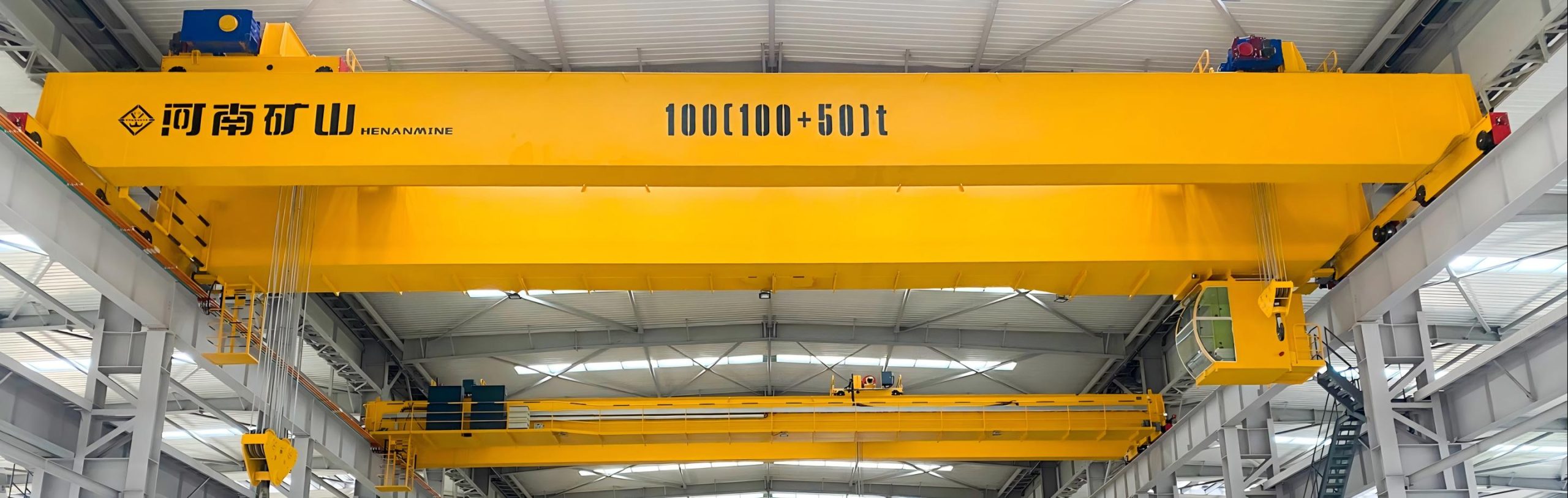
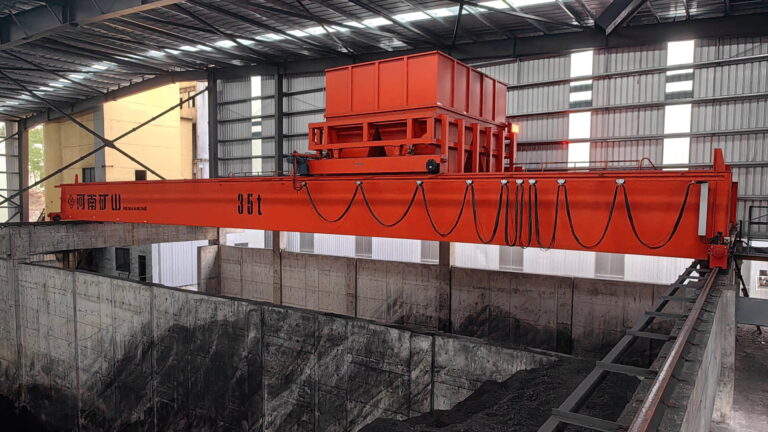
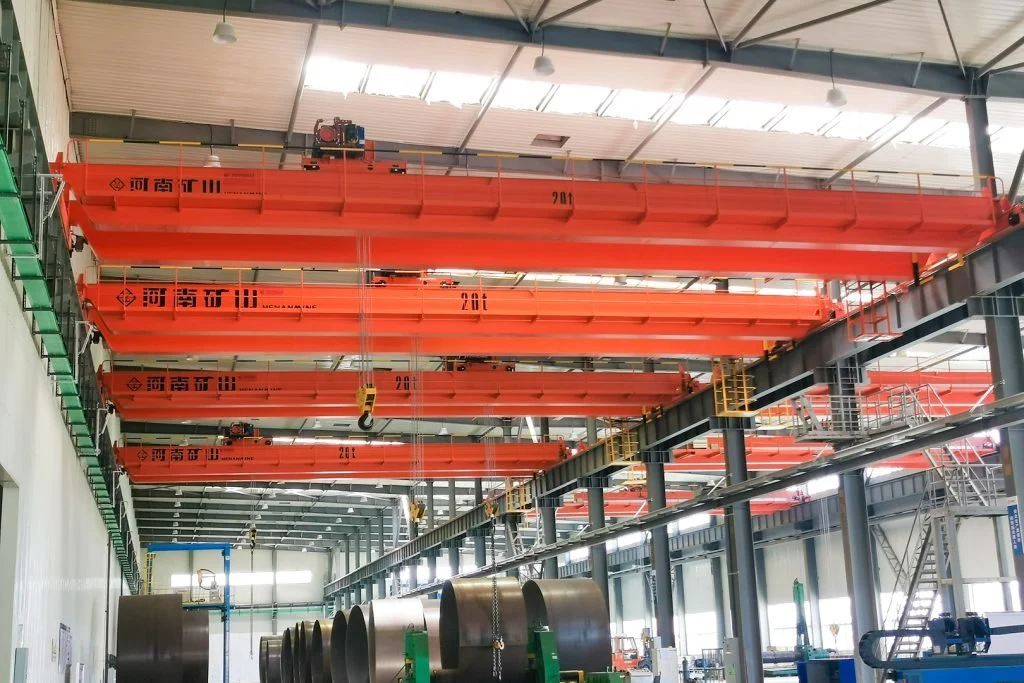
Large-capacity overhead cranes installed throughout Tangxing Equipment’s trenchless-equipment manufacturing plant.
| CustomerTangxing Equipment | Project ScopeMore than 100 large-capacity cranes | Factory Scale40,000+ m² with 25 m-high workshops | Production TargetAnnual output of 500 pipe-jacking machines |
Project Background
Henan Mine Crane supplied more than 100 large-capacity cranes for Tangxing Equipment’s trenchless-equipment industrial park. The project supports the manufacture of pipe-jacking boring machines and other trenchless construction equipment inside heavy steel workshops more than 25 m high.
The industrial park covers more than 40,000 m². Crane coverage is planned across fabrication, machining, subassembly and final assembly areas so large frames, cutterheads, drive assemblies and finished machine sections can move through the production route.
The fleet is reported to support an annual production target of 500 pipe-jacking machines. Achieving that output requires more than installing high-capacity cranes: crane quantities, capacities, hook arrangements and travel routes must be matched to the factory material flow and assembly takt.
Procurement priority: A heavy-equipment factory crane proposal should include a bay-by-bay crane schedule showing every load, lifting attachment, workstation, assembly height, handling route, operating cycle and target installation date.
The Trenchless-Equipment Manufacturing Challenge
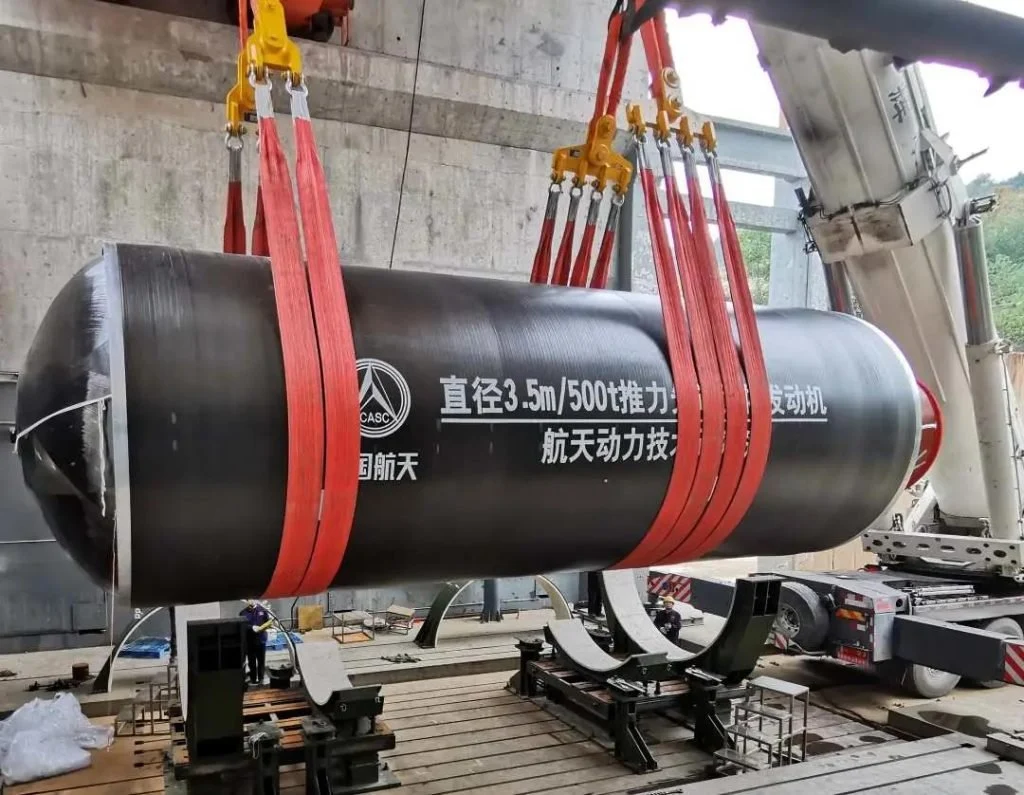
Pipe-jacking and trenchless machines contain large fabricated structures, rotating cutterheads, drive assemblies, cylinders, frames and auxiliary systems. Their sizes, weights and centers of gravity change as the machine moves from individual components to larger subassemblies.
Welding and machining stations need reliable component transfer, while final assembly requires controlled alignment at greater height. Some loads need one hook; others require two lifting points, an auxiliary hook, a lifting beam or coordinated operation between cranes. The permitted method must be defined for each load family.
A fleet of more than 100 cranes creates a maintenance and spare-parts challenge. Standardization can reduce component variety, but using the same capacity and configuration at every station would increase cost and may still fail to meet specialized assembly tasks.
Factory-Wide Crane Fleet Solution
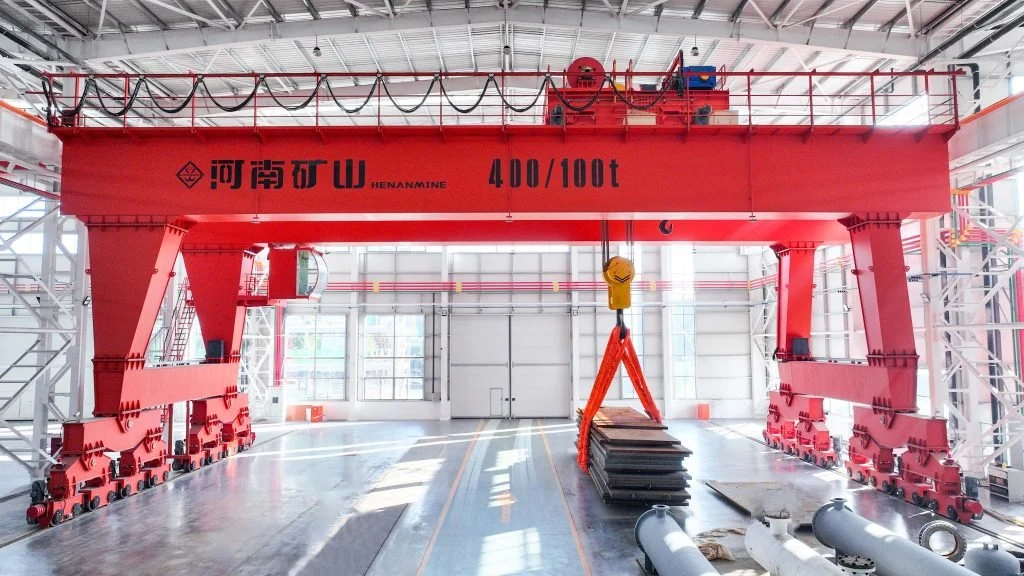
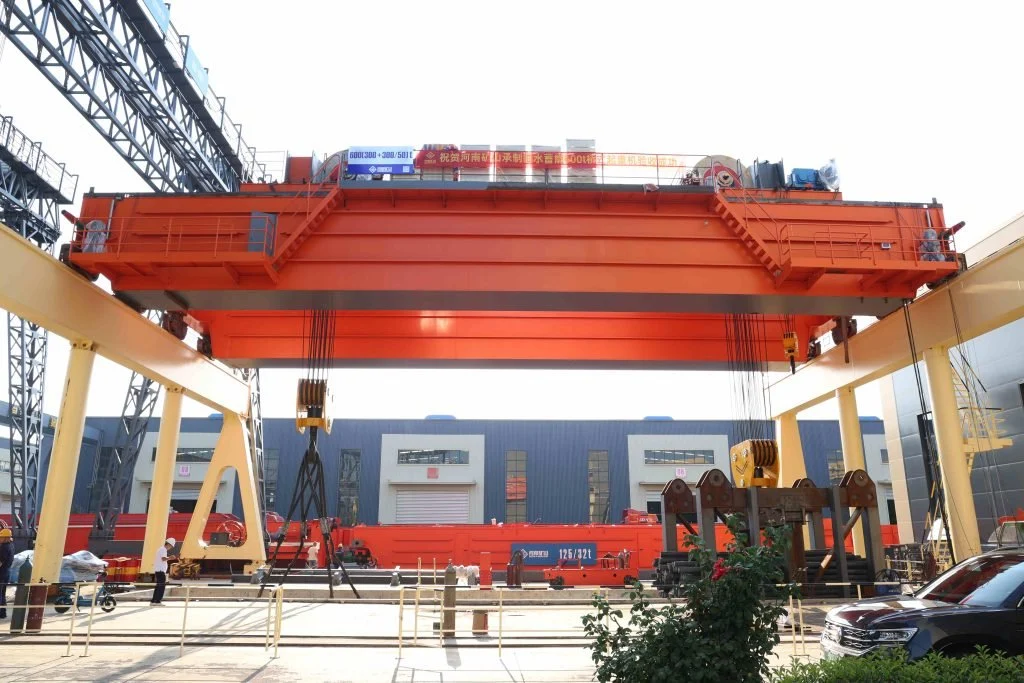
Henan Mine Crane matched crane types and capacities to the different production areas. Large double-girder overhead cranes serve heavy fabrication and assembly bays, while other fleet units are selected for the loads and cycles of their assigned workstations.
The crane schedule can standardize common wheels, drives, brakes, motors, electrical components, control philosophy and document formats. Capacity, trolley arrangement, hooks, lifting attachments, speeds and duty class remain workstation-specific.
This approach gives the factory heavy lifting where the process requires it without oversizing every crane. Buyers comparing possible structures can review Henan Mine Crane’s overhead crane range before preparing the bay schedule.
100/100+50t Heavy Assembly Crane
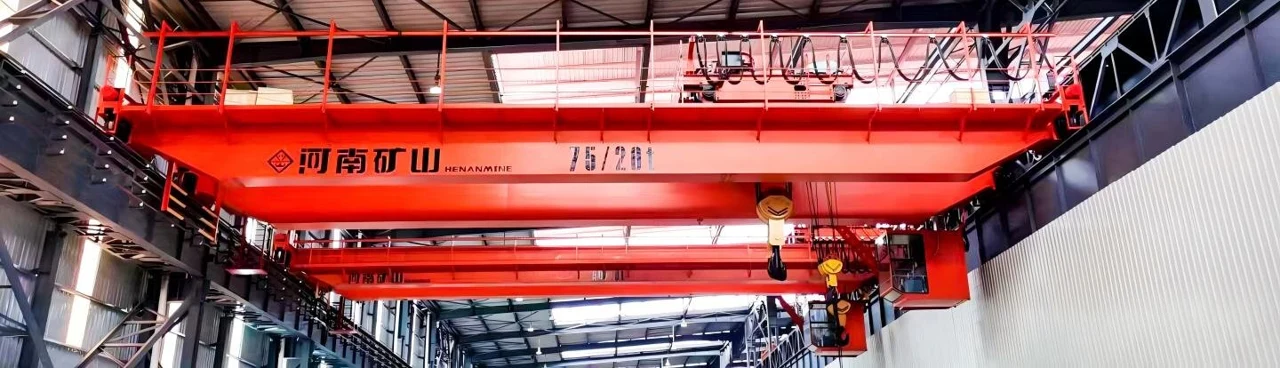
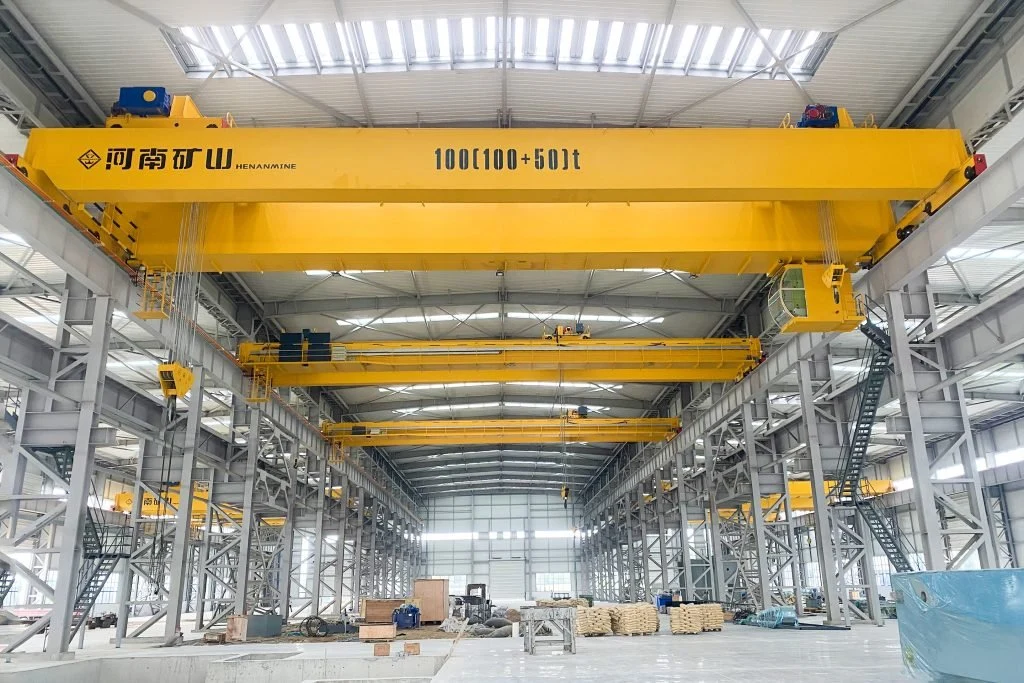
The project images include a 100/100+50t overhead crane installed in a tall heavy-machinery assembly workshop. Its multi-hook capacity arrangement provides lifting options for large components and assembly operations with different load configurations.
The commercial specification must define the permitted load on each hook, allowed combined loads, hook spacing, simultaneous movements and whether the crane will turn, tail or align components. The crane rating alone does not authorize every possible main-and-auxiliary-hook combination.
When a load requires two cranes or several hooks, the lifting plan should state load sharing, allowable difference, communication, travel sequence and response to a mechanism fault. Lifting beams and rigging weights are included in the total crane load.
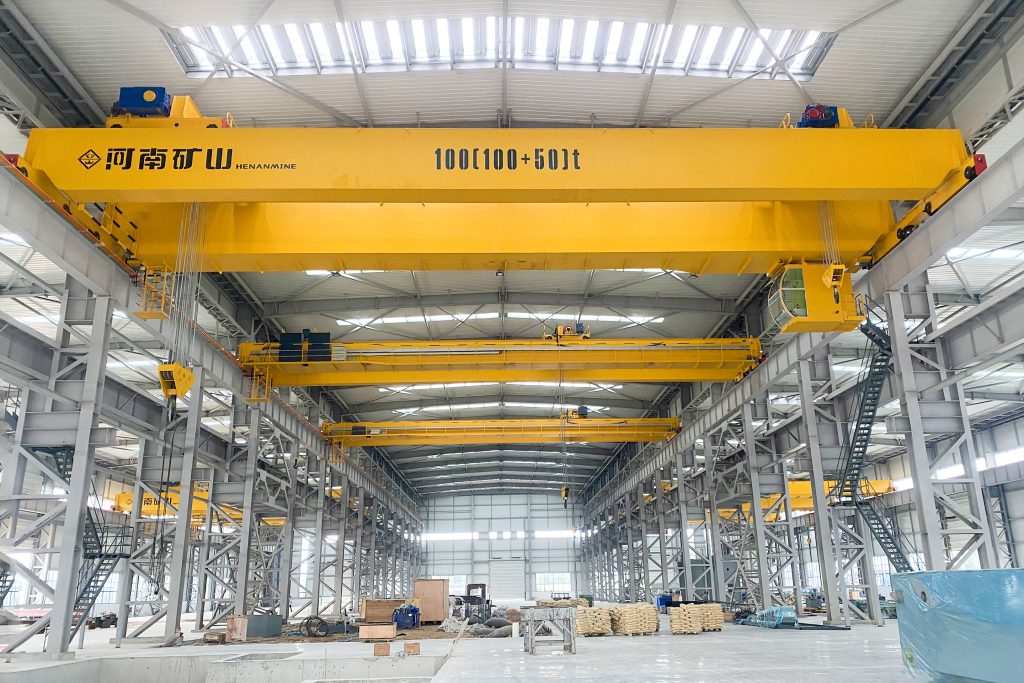
100/100+50t double-girder overhead crane serving a heavy equipment assembly bay.
Crane Planning for 25 m-High Workshops
A 25 m-high workshop provides vertical space for large-machine assembly, but the usable hook height depends on the crane rail elevation, girder depth, trolley arrangement, hook block, lifting beam and rigging. Buyers should calculate required hook height from the tallest assembly condition rather than building height alone.
Hook approach affects whether a crane can place components near columns, end walls or production equipment. Side approach, end approach and the lowest hook position should be checked against every workstation and maintenance area.
Tall buildings also increase maintenance-access requirements. Platforms, walkways, lighting and access routes should allow technicians to inspect wheels, drives, brakes, ropes, hooks and electrical systems without interfering with production equipment below.
Smooth Travel and Accurate Positioning
The project highlights smooth crane operation and accurate positioning. Controlled acceleration and deceleration help stabilize large suspended components as they move between fabrication and assembly stations.
Low-speed control supports final alignment with fixtures or other subassemblies. The buyer should define the required minimum stable speed and positioning tolerance, including whether the value applies to the bridge, trolley, hook or final load position.
Positioning performance depends on the drive system, feedback, rail alignment, wheels, structural deflection, rigging and load swing. Factory and site acceptance methods should state the measurement point, load condition and number of test cycles.
High-Density Near-Net-Shape Crane Wheels
The complete project line uses Henan Mine Crane’s independently developed high-density crane wheels manufactured with near-net-shape forming technology. Wheel manufacturing is important in a large fleet because wheels operate continuously against the runway and directly influence travel behavior.
Wheel diameter, material, hardness, tread profile, flange geometry and heat treatment are selected for wheel load, rail type, travel speed and duty. Matched wheel and rail geometry supports contact performance and reduces abnormal flange interaction.
Wheel condition still depends on runway alignment, crane skew, bearing condition and maintenance. A fleet maintenance plan should include tread and flange inspection, diameter comparison, bearing checks and rail survey when abnormal wear appears.
Production-Flow Engineering
Crane quantity should be determined from production flow, not floor area alone. The engineering study maps material receipt, fabrication, machining, subassembly, final assembly, inspection and dispatch, then identifies every crane movement between these stages.
A shared crane may be economical where tasks are occasional and travel distances are short. Production-critical stations may need a dedicated crane or an overlapping backup route to prevent one handling delay from stopping the whole line.
Cycle analysis includes pickup, rigging, lifting, travel, positioning, release and empty return. The required number of cranes can then be checked against target output, crane utilization and peak simultaneous demand.
Fleet Standardization and Lifecycle Maintenance
A 100+ crane project benefits from common component families. Standard drives, motors, brakes, wheels, contactors, controls and operator interfaces can reduce spare-parts variety and shorten technician training.
Standard documentation formats also simplify maintenance. Equipment tags, electrical drawings, parameter lists, alarm names, inspection forms and spare-parts catalogs can follow one project structure across all buildings.
Standardization must remain compatible with each crane’s duty, environment and safety role. Production-critical assembly cranes may need different braking, redundancy, monitoring or service access from occasional maintenance cranes.
Energy-Efficient Fleet Selection
The project fleet is described as green and energy-efficient. For a new factory, energy performance should be evaluated from actual motor sizes, operating hours, load spectrum, travel distances, acceleration profiles and standby time.
Variable-frequency control, correctly sized motors, efficient transmissions and coordinated standby functions can reduce unnecessary energy use when selected for the operating cycle. Regenerative functions may be considered for cranes with frequent heavy lowering when the electrical system can receive the returned energy.
A commercial comparison should use estimated annual consumption under the same duty assumptions. Energy savings should not be judged from installed motor power alone.
Key Project Configuration
| Project Element | Configuration and Buyer Value |
|---|---|
| Fleet Scale | More than 100 large-capacity cranes for a trenchless-equipment industrial park. |
| Plant Scale | More than 40,000 m² of production area with 25 m-high heavy steel workshops. |
| Heavy Crane Example | 100/100+50t overhead crane for heavy equipment assembly duties. |
| Handled Components | Large frames, cutterheads, drive assemblies and fabricated trenchless-machine structures. |
| Positioning | Smooth travel and accurate positioning for fabrication and assembly alignment. |
| Wheel System | Independently developed high-density wheels manufactured using near-net-shape forming. |
| Fleet Strategy | Common components standardized while capacity and attachments remain workstation-specific. |
| Production Support | Crane fleet supports the project’s reported annual output target of 500 sets. |
Project Result
The 100+ crane fleet provides Tangxing Equipment with lifting coverage across fabrication, machining, subassembly and final assembly. Large-capacity cranes handle heavy trenchless-machine components inside the 25 m-high workshops.
Smooth travel and accurate positioning support component alignment, while the 100/100+50t crane configuration provides multiple lifting capacities for heavy assembly work. High-density near-net-shape wheels are used across the product line.
Fleet-level planning coordinates crane quantity and capacity with the factory material route and production target. Standardized common components reduce lifecycle complexity while station-specific hooks and attachments preserve process suitability.
Information Required for a Heavy Equipment Crane Fleet Quotation
Send the following data so the crane schedule, workstation configurations and commercial quotation can be prepared:
| Factory Layout Building, bay and runway drawings, spans, rail elevations, lengths, hook approaches and clearances |
Component Data Weights, dimensions, centers of gravity, lift points, orientations, rigging and assembly heights |
Crane Schedule Quantity by workstation, capacity, span, lifting height, speeds, duty, controls and installation date |
| Material Flow Pickup and placement points, travel routes, cycle times, peak demand and crane-sharing rules |
Fleet Standards Preferred drives, motors, brakes, wheels, controls, electrical components, documentation and spares |
Supply Scope Testing, transport, erection, commissioning, training, spare parts and long-term maintenance |
Use the overhead crane RFQ guide, crane duty class guide and crane hook and lifting attachment selection guide when preparing the procurement specification.
Frequently Asked Questions
How many cranes were supplied for the Tangxing project?
Henan Mine Crane supplied more than 100 large-capacity cranes for the trenchless-equipment industrial park.
What equipment does the crane fleet help manufacture?
The fleet supports pipe-jacking boring machines and related trenchless equipment, including fabricated frames, cutterheads, drive assemblies and large subassemblies.
How many cranes does a heavy-equipment factory need?
The quantity depends on production bays, material routes, cycle times, travel distances, crane sharing and whether critical stations require dedicated lifting coverage.
What should be standardized across a large crane fleet?
Suitable drives, motors, brakes, wheels, electrical components, control philosophy, operator interfaces, documentation and spare parts can be standardized while capacity and attachments remain station-specific.
Can one crane use several hook capacities?
Yes. The project includes a 100/100+50t crane. Permitted loads, combined operation, hook spacing and simultaneous movements must be stated in the technical agreement.
Can crane delivery follow factory construction phases?
Yes. Design, manufacturing, shipment and installation can be scheduled by building and production line when the buyer provides runway-readiness and commissioning milestones.
Request a Heavy Equipment Crane Fleet Quote
Send your factory layout, crane schedule, component drawings, assembly process, target output and installation milestones. Henan Mine Crane will prepare a coordinated crane-fleet proposal and commercial quotation.